
Last updated September 20, 2026
Full 25-point door and opener safety check with every visit - springs, cables, rollers, tracks, and your LiftMaster or Chamberlain opener included
You get a price before we start. It does not change when the truck arrives.
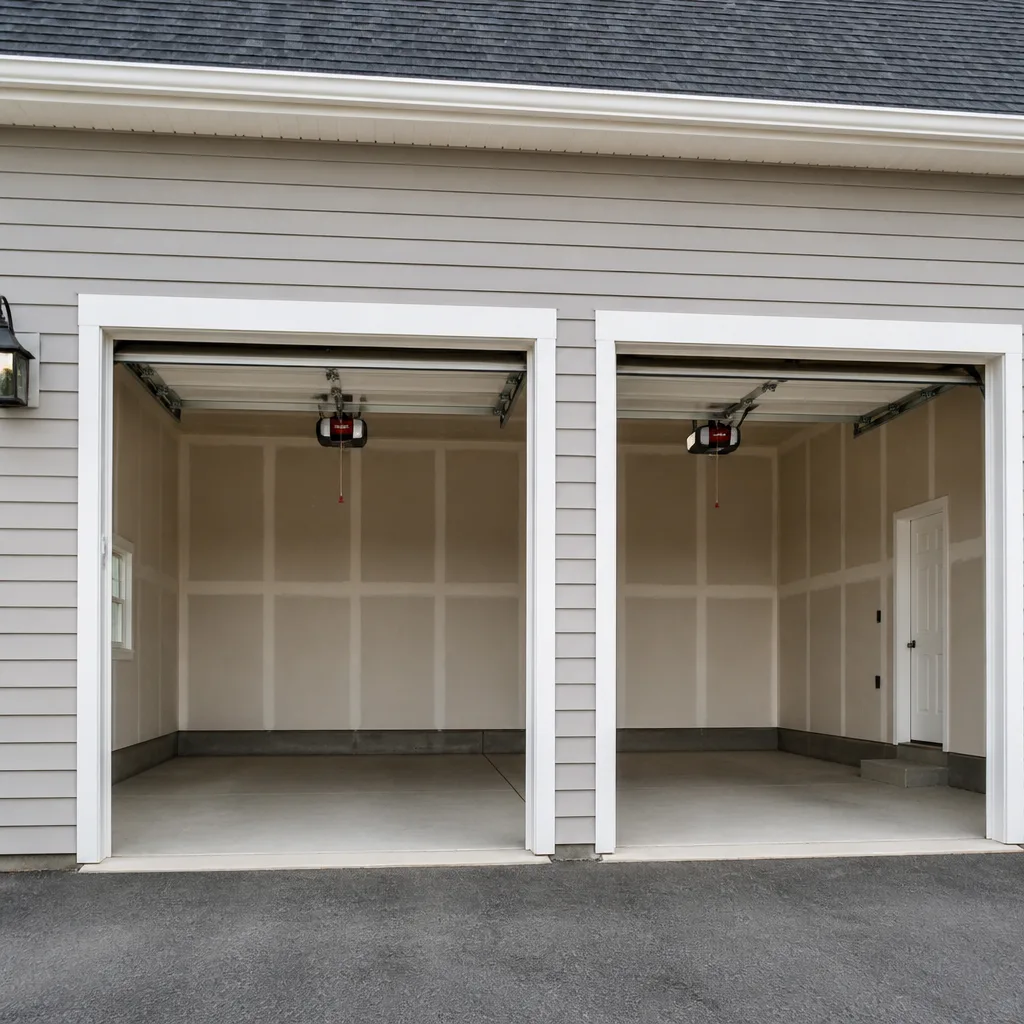
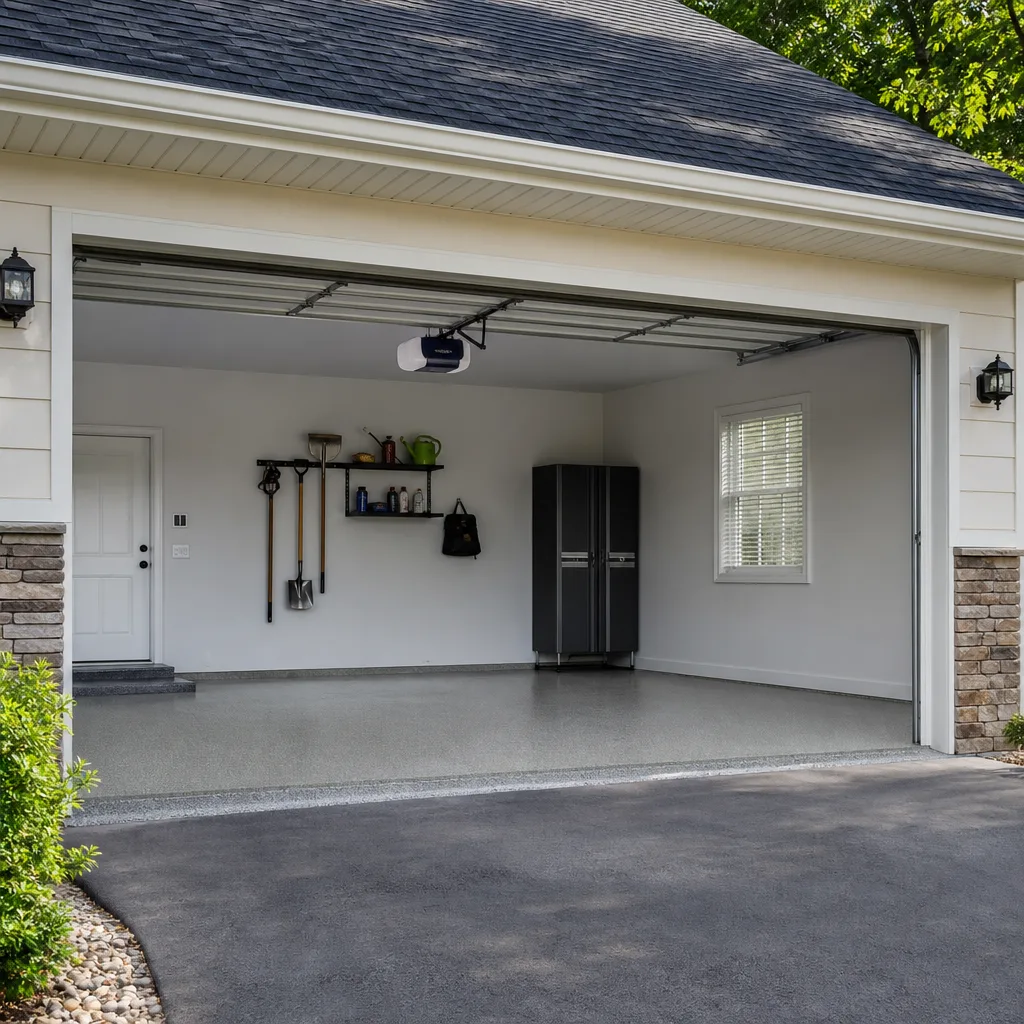
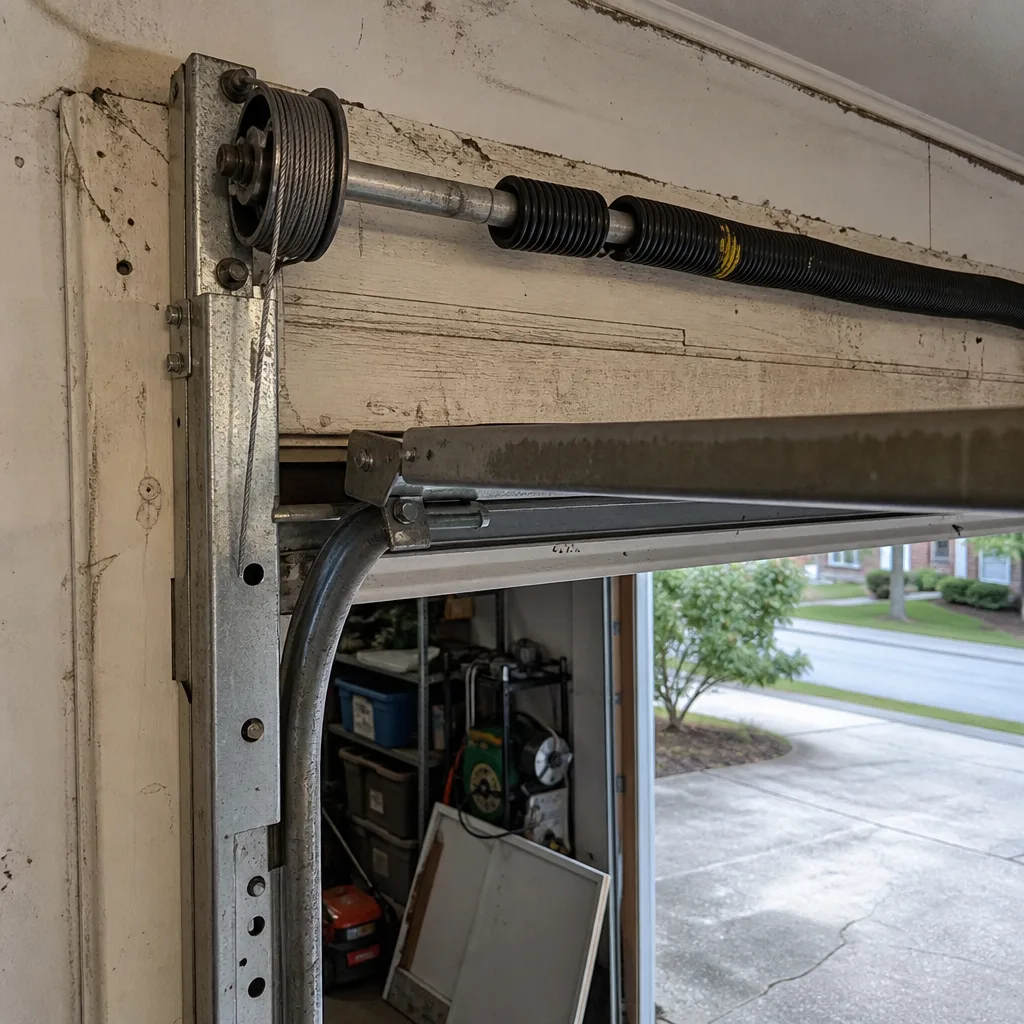 Before
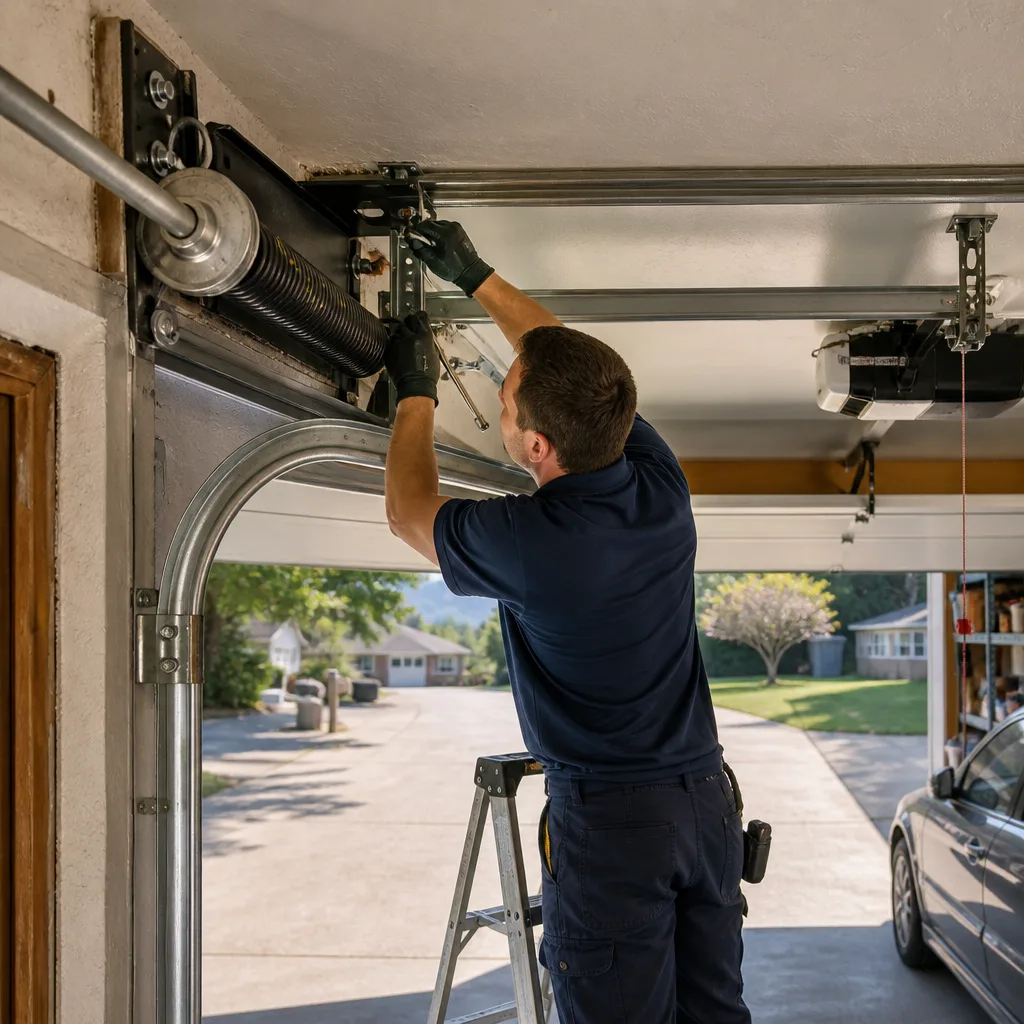 After
After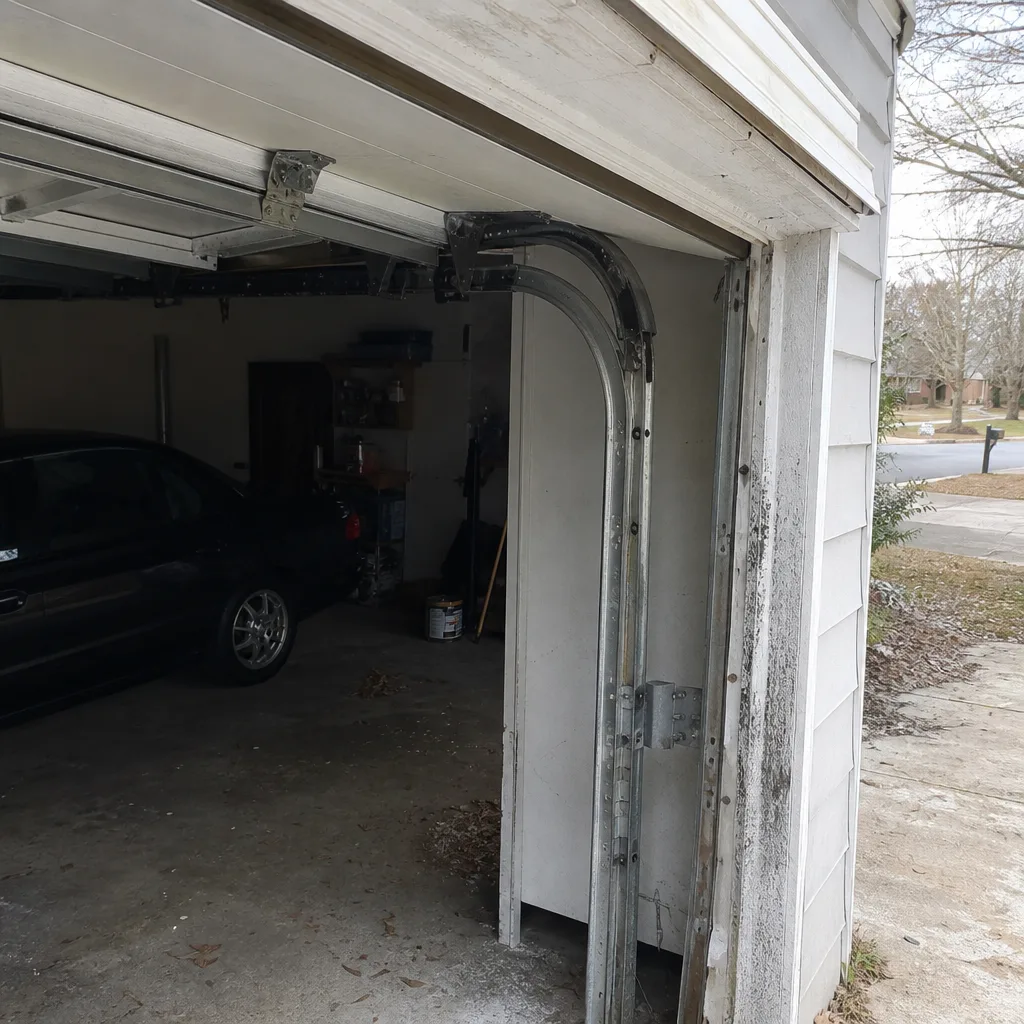 Before
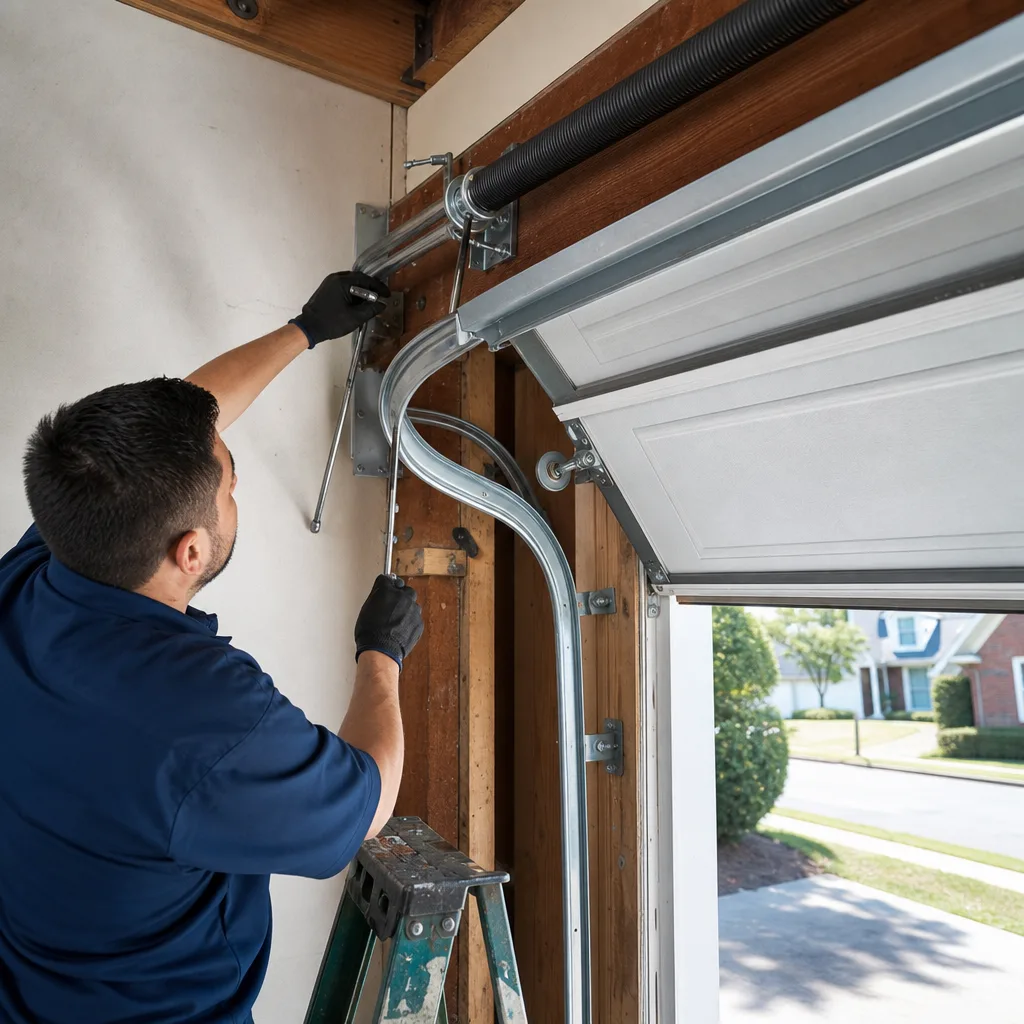 After
After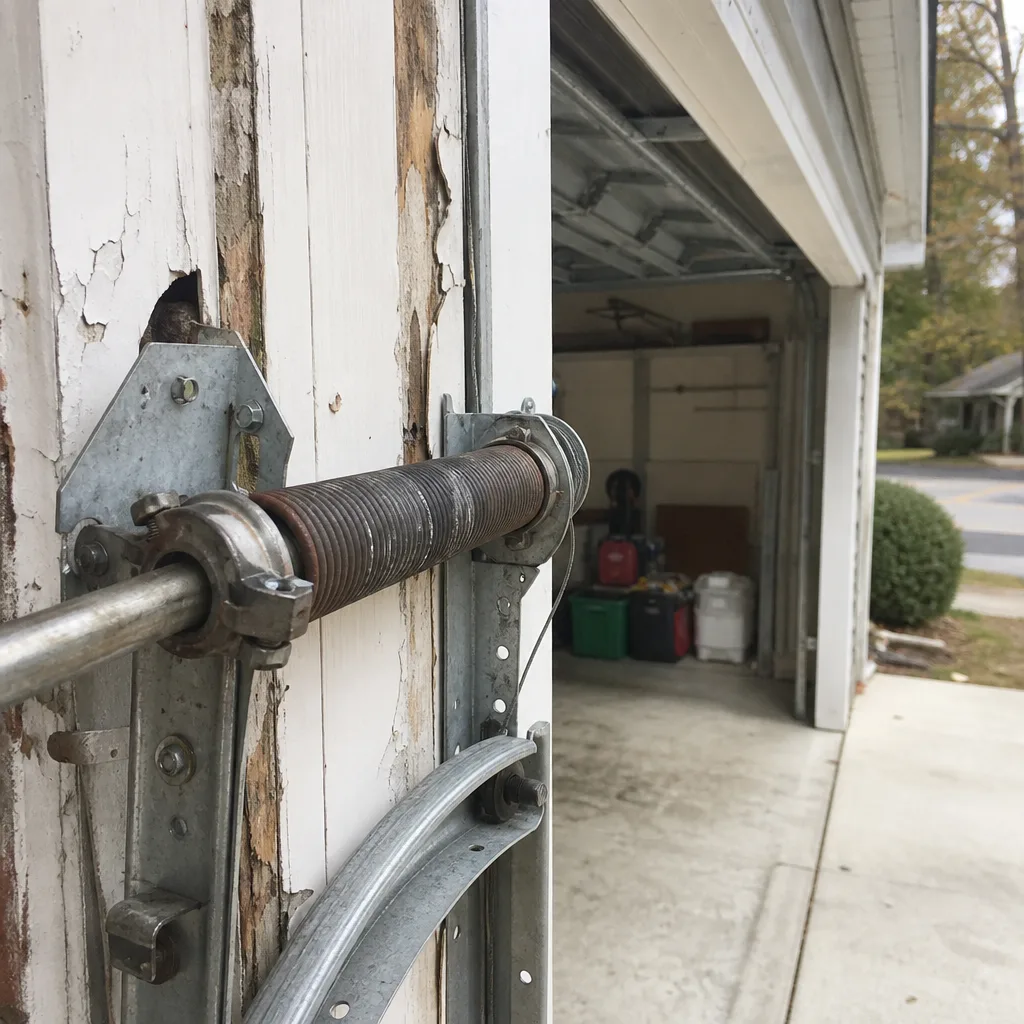 Before
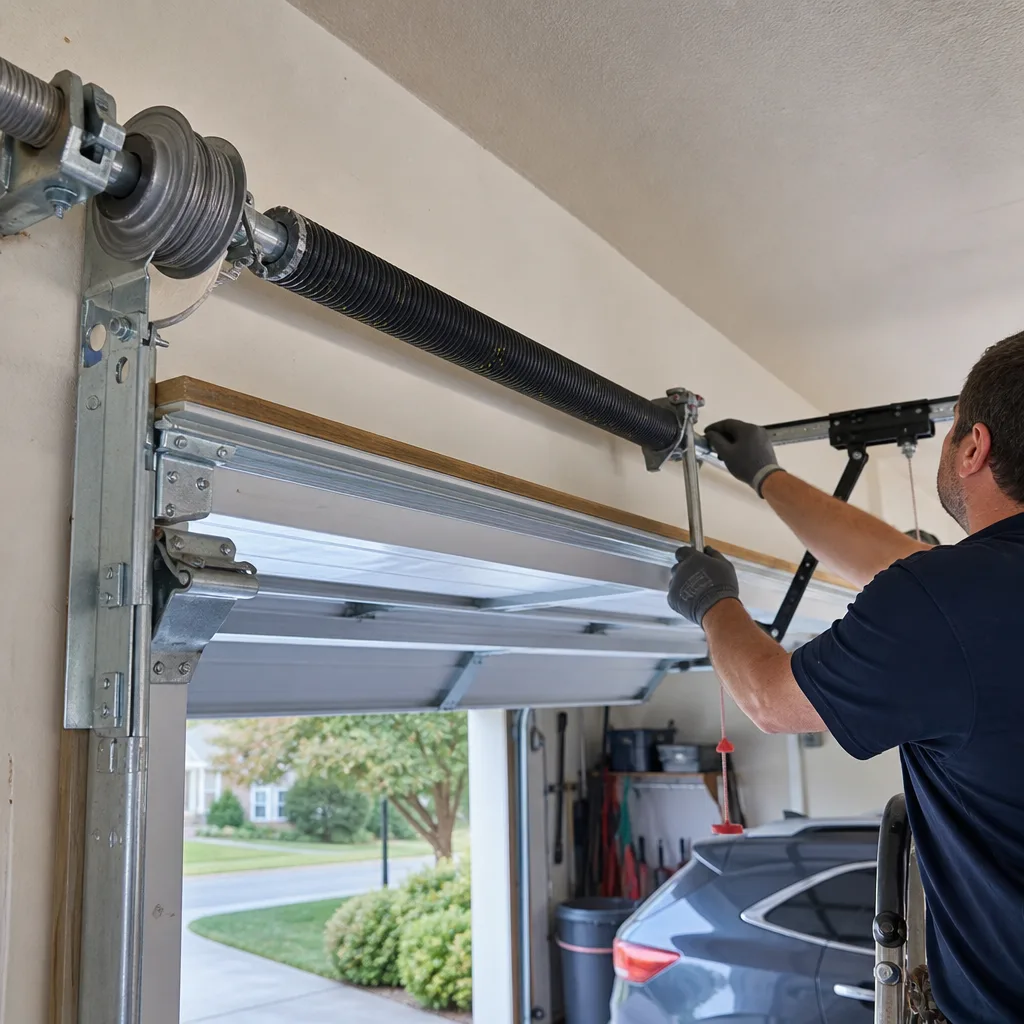 After
AfterSeasonal Garage Door Care for Marietta: Year-Round Homeowner’s Guide
Marietta averages 50 inches of rainfall a year. That’s nearly double the national average, and it means the moisture load on your garage door never really lets up. Most maintenance guides you’ll find online are written for places with four distinct seasons and a dry cold. Marietta doesn’t work that way. What we see across thousands of service calls in this city is a two-stress pattern: humidity expansion from April through September, and thermal contraction from November through February. Each stress produces its own predictable failures. This guide explains what those are, when they hit, and what to do about them before a minor issue becomes a service call you didn’t plan for. For a deeper dive, see our Complete Guide to Garage Door in Marietta.
Quick Answer
Seasonal garage door care in Marietta means addressing two climate stresses, not four seasons: high-humidity expansion cycles in spring and summer that bind panels and throw off opener limits, and thermal contraction in late fall and winter that shifts torsion spring tension and hardens seals. The highest-return maintenance window is October through early November, when you should lubricate moving parts, test spring balance, inspect the bottom seal, and recalibrate opener force settings. Doing this once in the fall and once in early spring prevents most failures we see in Marietta year-round.
Table of Contents
- Marietta’s Humidity Stress Cycle: April Through September
- Thermal Contraction: November Through February
- Bottom Seal Inspection for Marietta’s Storm Season
- Why Fall Is the Highest-ROI Maintenance Window in Marietta
- How to Document Seasonal Condition with Photographs
- The 10-Minute Monthly Checklist for Marietta Homeowners
- What We See on Genie, Clopay, and Amarr Doors in This Climate
- Common Mistakes to Avoid
- When to Call a Professional
- Frequently Asked Questions
- The Bottom Line
BeforeAfterMarietta’s Humidity Stress Cycle: April Through September
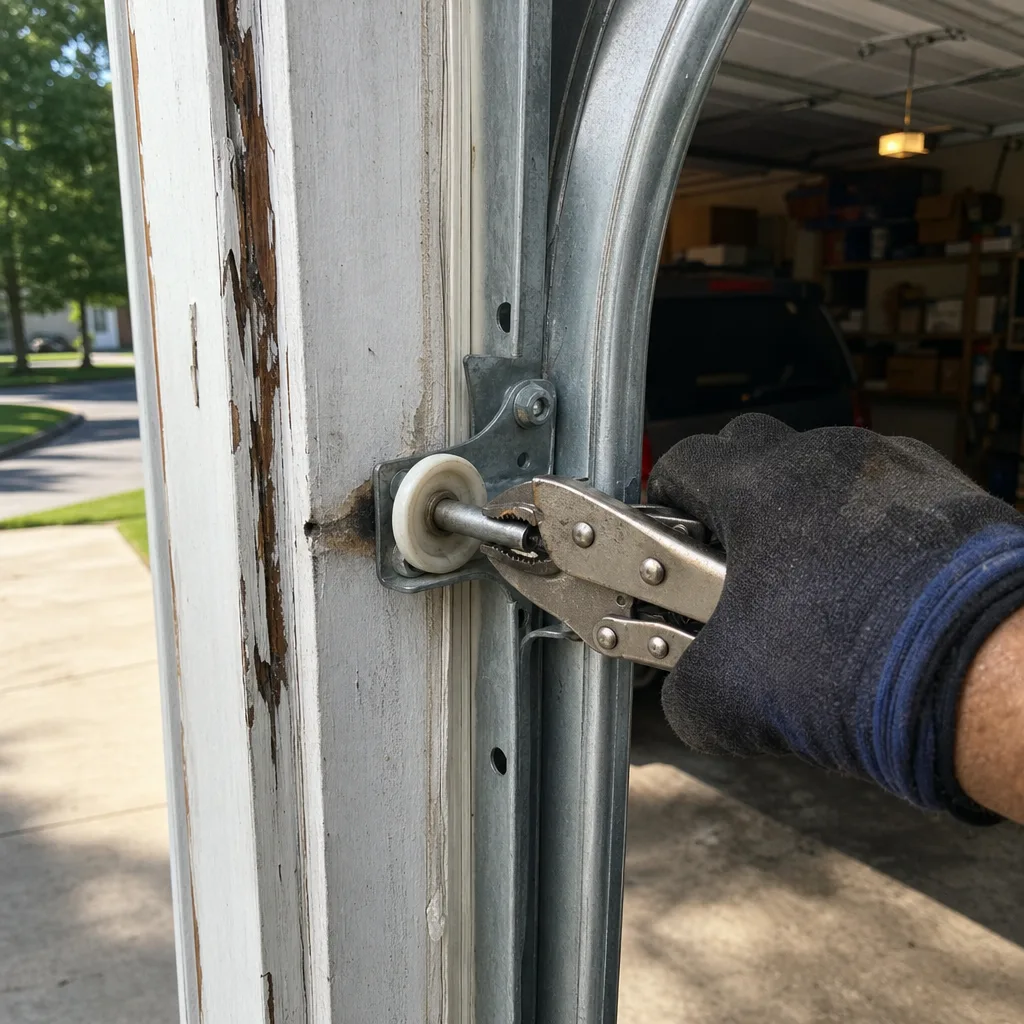
From April through September, Marietta’s dew point regularly sits above 65 degrees. That’s the threshold where wood and engineered wood products begin measurable expansion. If your garage door has wood or wood-composite panels, they will expand during these months. It’s not a defect. It’s physics. The problem is that most doors were installed during a drier period, and the clearance between panel edges was set then. When humidity peaks in July and August, panels swell and begin to bind against each other at the section joints. You’ll hear it as a creaking or rubbing sound when the door moves, and you may see paint wear or exposed wood fibers at the panel edges.
This expansion also affects your opener. Belt-drive openers from Genie and LiftMaster use a limit switch to determine where the door stops in the open and closed positions. Limits are set in inches of travel. When humid air causes the door itself to expand slightly, the physical travel distance shifts by a fraction of an inch. The opener doesn’t know the door got bigger. It only knows the limit setting it was given. The result: the door stops just short of fully closed, or presses harder into the ground than it should. We see this most often on doors facing east or north in Marietta, where morning sun exposure is lower and moisture lingers longer on panel surfaces.
What to do about it:
- Check panel clearance in late May. With the door closed, look at the seam where two panels meet. If the gap is visibly narrower than it was in March, humidity expansion is underway. You don’t need a tool for this. A visual check against a reference photo from winter is enough.
- Listen during operation. Run the door once with the opener and once manually (pull the red release cord). If you hear rubbing that disappears when the door is manually operated slowly, the opener limit is fighting panel expansion. If the rubbing persists in manual operation, the panels themselves are binding.
- Re-set opener limits in June if needed. On most Genie and LiftMaster models, limit adjustment is a small dial or screw on the motor unit. Turn it one notch toward less travel and test. This is a homeowner-level adjustment, but if you’re uncertain, the cost of a wrong adjustment is a door that doesn’t seal or a stripped gear. We’d rather you call than guess.
One thing worth stating plainly: you will not fix panel expansion with lubricant. Lubricant addresses friction. Expansion is a dimensional change. If your wood door is binding badly enough that it won’t operate, the fix is often trimming the panel edge or adjusting the track spacing, not spraying something on it. We’ve seen homeowners in the Whitlock Avenue and Indian Hills neighborhoods apply garage door lubricant to swollen panels repeatedly through a summer, only to call us in September once the door finally stopped moving. For help deciding when to DIY and when to call, read our DIY vs Professional Garage Door: The Marietta Homeowner’s Decision Guide. The fix took 45 minutes.
Thermal Contraction: November Through February
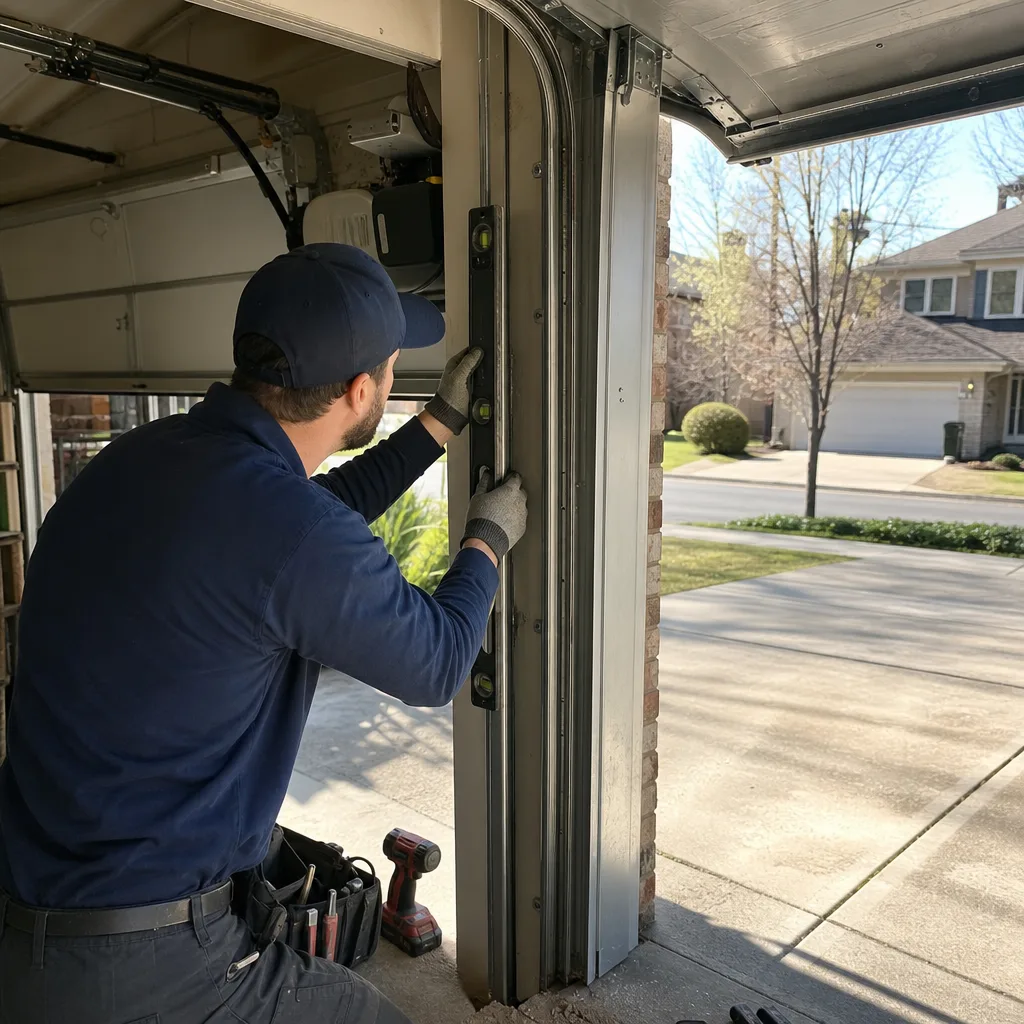
The second stress pattern in Marietta is thermal contraction. When overnight temperatures drop into the 20s and low 30s, steel torsion springs, steel track, and steel cables contract. Steel shrinks predictably at roughly 0.0000065 inches per inch per degree Fahrenheit. That sounds academic. In practice, a 10-foot torsion spring assembly that drops from 70 degrees to 25 degrees loses about a quarter-inch of effective length across the system. That quarter-inch changes spring tension. Not by a lot. But torsion spring tension is calibrated in quarter-turns, and a quarter-inch across a shaft that holds four springs adds up to a door that sits slightly heavier in its travel path.
What you’ll notice first is that the door feels heavier when you operate it manually, or the opener strains slightly more on the initial lift. You might also hear a soft thunk as the door passes the halfway point, which is where the weight transfer from vertical track to horizontal track happens. None of this means your spring is about to break. It means the tension needs re-indexing to the colder temperature. Most homeowners will never need to re-index a spring themselves. The test, though, is straightforward.
How to test spring balance without a tension gauge:
- Close the door. Pull the red emergency release cord to disconnect the opener.
- Lift the door manually to waist height and let go. A properly balanced door stays roughly where you put it, moving less than six inches either way. A door that drops more than six inches is undertensioned. A door that climbs on its own is overtensioned.
- Repeat the test at knee height and shoulder height. Inconsistent behavior across the travel path indicates a spring that is losing tension unevenly, which happens naturally with age but accelerates with temperature swings.
- If the door sags or drops at any point, reconnect the opener and call a professional. Do not attempt to adjust torsion spring tension yourself. Torsion springs hold enough stored energy to cause serious injury. This is the one component on a garage door system that we tell every customer, in every season, to leave alone.
The good news for Marietta homeowners is that thermal contraction rarely causes sudden failure on its own. It’s a slow drift. What kills springs is the cumulative effect of thousands of cycles under slightly wrong tension, year after year. A spring that should have lasted 10,000 cycles might only manage 7,500 because it spent winters undertensioned. That’s the argument for checking balance in November, when the first hard cold snap arrives, rather than waiting until the spring finally gives out in July, which is when we get a lot of the emergency garage door repair in Marietta calls.
Bottom Seal Inspection for Marietta’s Storm Season
Marietta’s storm season runs from March through September, with the heaviest wind-driven rain usually arriving in late spring and early summer. When rain comes at a 30-degree angle or steeper against a 9-foot residential garage door, the bottom seal is the only thing standing between your garage floor and a puddle. Most bottom seals fail slowly: they flatten under the weight of the door, develop cracks where they fold over the threshold, or lose the flexible lip that actually contacts the concrete. Homeowners don’t notice until a summer thunderstorm pushes water under the door and soaks whatever is stored on the garage floor.
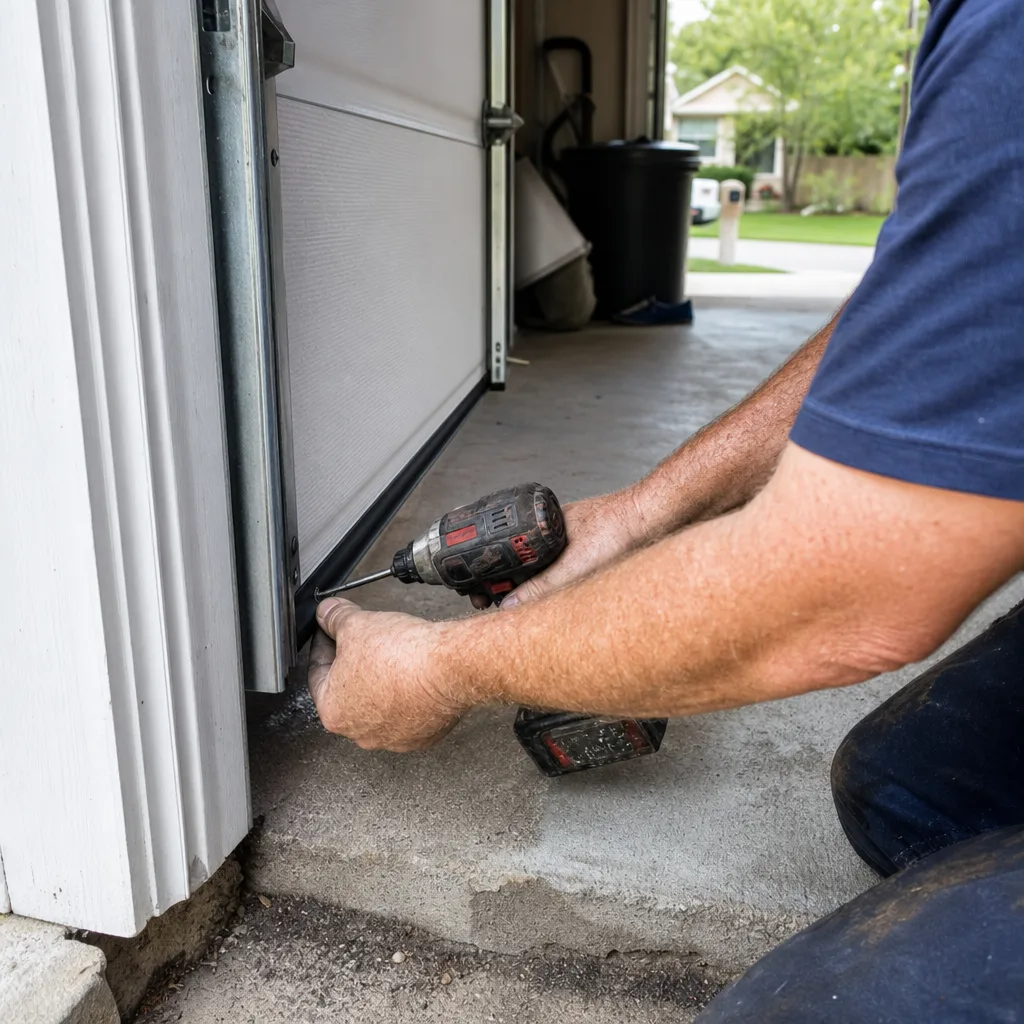
The material spec matters more than most people realize. There are two common profiles for residential garage doors: T-end and beaded. The T-end style slides into a T-shaped channel on the bottom of the door. It’s common on steel doors from Clopay and Wayne Dalton. The beaded style has a round bead that rolls into a narrower channel, and it’s more common on Amarr and some aluminum doors. They are not interchangeable. If you buy a T-end seal for a beaded channel, it won’t fit. If you force it, it tears during installation. Knowing which profile your door uses before you order a replacement is the difference between a 20-minute fix and a second trip to the hardware store.
For Marietta’s specific storm pattern, we recommend a seal with at least 3 inches of flexible flap, not the thinner 2-inch profiles sold as universal fit. The extra flap height matters when wind-driven rain hits the seal at an angle and tries to push under it. A 3-inch flap has more surface area to stay in contact with the concrete when the seal is deflected. We also recommend checking the seal in October, before winter, because cold temperatures harden rubber compounds. A seal that is marginal in October will be too stiff to flex properly in January, and the first thaw-plus-rain day in February is exactly when you’ll get water under the door.
When to replace: if you can see daylight under the seal with the door closed and the garage light on, or if the rubber feels stiff and no longer bends easily when you pinch it, the seal is done. Replacement is under $30 for the seal itself and about 20 minutes of work. We stock both T-end and beaded profiles on our trucks in Marietta, so if you’d rather not crawl on the concrete, it’s a quick service visit.
Why Fall Is the Highest-ROI Maintenance Window in Marietta
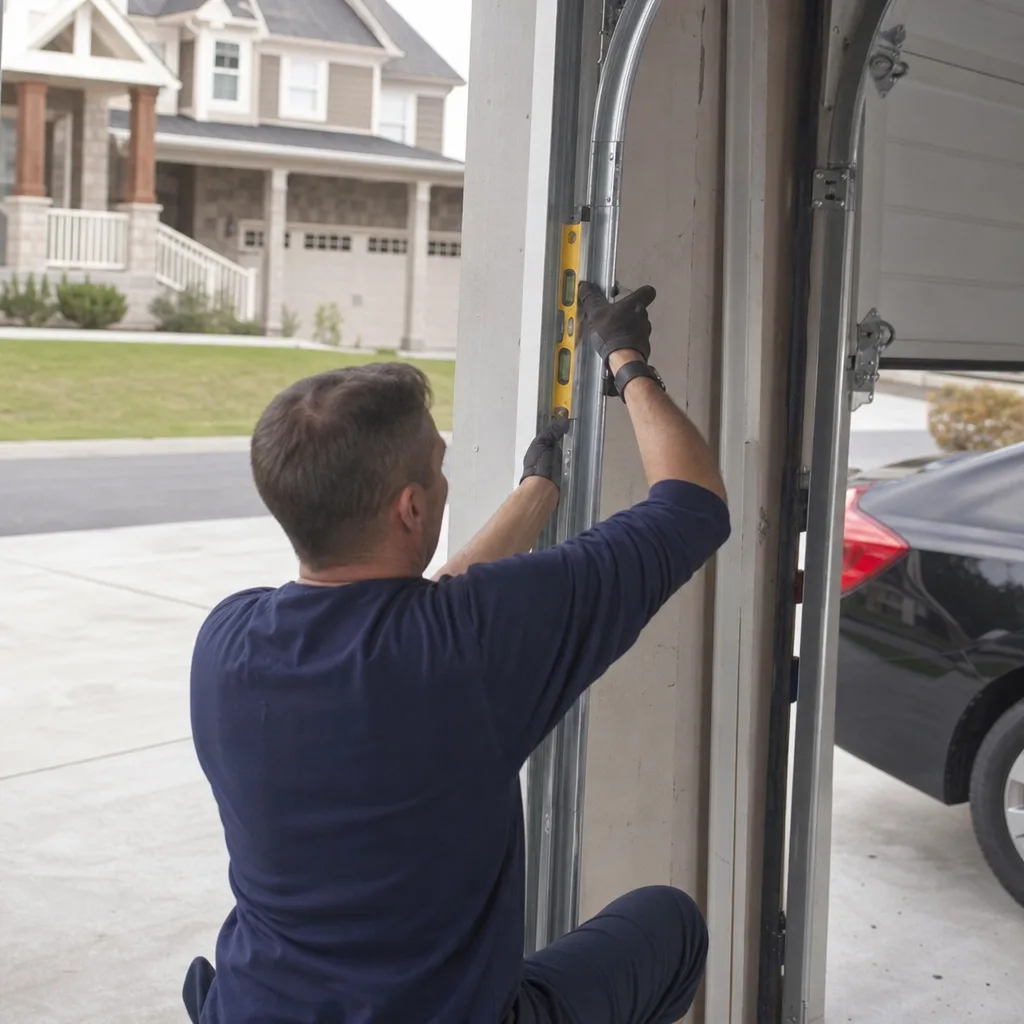
Every season has a maintenance argument, but October and early November are uniquely valuable in this climate. Here’s the reasoning: by early fall, the humidity cycle has run its course and panel expansion has peaked. The door is at its maximum dimension. That’s the most accurate time to check clearances, because you’re seeing the door at its largest. If clearances are acceptable in October, they’ll be acceptable all year. Conversely, the thermal contraction cycle hasn’t started yet, so spring tension is still at its neutral warm-weather setting. You can check balance without the cold-weather drift confusing your measurements. And the bottom seal is still flexible enough to assess accurately, before winter cold stiffens it and masks the condition.
In order of failure-risk reduction, here’s the full fall sequence we recommend for Marietta homeowners:
- Inspect and replace the bottom seal if needed. A failed seal causes immediate, visible water damage. It is the cheapest fix with the highest downside prevention.
- Test spring balance manually. A door that is out of balance applies uneven load to every other component: opener gear, rollers, hinges, cables. Correcting balance prevents cascading wear.
- Lubricate moving parts. Torsion spring coils, hinge pins, roller bearings, and the opener rail. Use a white lithium or silicone-based garage door lubricant, not WD-40, which is a solvent and will strip existing lubricant.
- Check and re-set opener force and limit settings. After a summer of humidity cycling, most openers are slightly off. This is a 10-minute adjustment that reduces strain on the opener motor and extends its life.
- Tighten track bolts and hinge screws. Thermal cycling loosens hardware. A loose track bold creates play in the track, which causes rollers to bind and wear unevenly. Ten minutes with a socket set prevents a roller replacement later.
- Photograph everything. Document what you found and what you did. More on this below.
That’s about 90 minutes of work, most of it inspection and tightening, none of it requiring special tools beyond a socket set, a ladder, and a can of proper lubricant. If you’d rather have a technician do it and document the findings, that’s what we do every day at Servo Garage Doors Marietta, and the photo record is included on every visit.
How to Document Seasonal Condition with Photographs
The single most useful habit any Marietta homeowner can develop is photographing their garage door system twice a year, in the same spots, under the same lighting. Here’s why: when something fails, whether it’s a snapped cable or a logic board that stops responding, the technician who shows up has never seen your door before that moment. They have no baseline for what “normal” looked like. They can only assess the current state. If you have photos from six months ago showing the spring coils evenly spaced and the track bolts clean, that context informs the diagnosis. It’s the difference between “this part failed suddenly and everything else looks fine” and “this part has been degrading since spring and the technician can see the progression.”
What to photograph, and from where:
- Both torsion springs, from a step ladder, wide shot and close-up. Look for gaps in the coil spacing, rust at the coil edges, or a difference in how the two springs sit on the shaft. A close-up with a flash is best, because coil cracks often only show with direct light.
- Each roller and hinge point, from inside the garage with the door closed. You’re looking for wear on the roller wheels, play in the hinge pins, and the condition of the track at each bracket.
- The bottom seal from both ends, at ground level. Focus on the flap where it contacts the concrete. These are the photos that will show seal flattening over time.
- The opener rail and belt or chain tension, from the center of the garage. This documents belt sag or chain wear before it becomes audible.
- The full closed door from outside, centered and straight-on. This shows panel alignment, any bowing, and paint condition in one shot.
Store these photos in a folder on your phone labeled with the month and year. When you call any garage door company, you can send the most recent set with your service request. It doesn’t replace a technician’s on-site inspection, but it gives them the context they would otherwise have to infer. Five minutes twice a year, and you’ve built a service history for your door that no one can argue with.
This is also, frankly, the philosophy behind how we work. Marcus Deller founded this garage door installation in Marietta business on the rule that the customer sees the failed part before anyone quotes a replacement. The photo record we deliver after every visit is Clause 4 of The Haven Standard, and it exists because a homeowner should never have to take a technician’s word for what was wrong. Your own seasonal photos apply the same principle to your own maintenance, and that’s a good way to live with a garage door.
The 10-Minute Monthly Checklist for Marietta Homeowners
Between the seasonal sessions, there’s a short version. This takes ten minutes and catches most problems before they become emergencies. It’s designed for a homeowner who doesn’t want to think about their garage door until it stops working.
- Run the door once and watch it. Does it move smoothly? Any hesitation at a particular point? Any noise that wasn’t there last month? Most failures announce themselves weeks in advance through sound or movement changes.
- Look at both spring coils. Do they look the same as last month? A visible gap in a coil, or a spring that looks shorter or sits differently on the shaft, is an early warning for spring failure. Don’t touch anything here. Just look.
- Check the bottom seal visually. Is the flap still making contact with the concrete? Any tears, flat spots, or daylight visible under the door? If it looks wrong, it is wrong, and it’s a cheap fix.
- Test the auto-reverse safety feature. Place a 2×4 on the ground under the door and close it. The door should reverse within seconds of contacting the wood. This is the single most important safety test on the system, and it takes 30 seconds.
- Check the emergency release. Pull the red cord and make sure the door disconnects from the opener. Then reconnect it. You want to know this works before you need it in a power outage.
- Look at the floor bolts on the vertical track. Are any of them loose or pulled away from the wall? A loose track is a common cause of roller binding, and it’s a 10-minute fix with a socket wrench.
None of these steps require touching the dangerous components. Torsion springs remain untouched. Cables remain untouched. The safety test uses the opener, not your hands in the mechanism. If any of these checks reveals a problem you don’t understand, make a note and call someone who does. That’s the appropriate division of labor.
What We See on Genie, Clopay, and Amarr Doors in This Climate
Every brand has its own interaction with Marietta’s humidity and temperature patterns, and over nine years of service work in this city, we’ve developed a clear picture of what fails, on what equipment, under what conditions. This isn’t a brand quality ranking. It’s an observed pattern from thousands of service calls.
Genie openers are common in Marietta, particularly the belt-drive models installed in newer homes. The belt itself is not the usual problem. It’s the limit switch calibration drifting in high-humidity months, especially on units installed in unconditioned garages where the opener itself cycles through 15-degree daily temperature swings. We also see Genie wall consoles susceptible to humidity-related button contact corrosion in garages without ventilation. If your garage has no vent and no window, and you have a Genie, expect to replace the wall console every 4 to 6 years. It’s a $30 part and a 15-minute job.
Clopay steel doors hold up well in Marietta’s humidity, with one exception: the bottom seal channel on lower-cost models is shallower than on premium lines, which means the T-end seal doesn’t seat as deeply and is more likely to pull free when the seal hardens in winter. These are the doors we find dragging a detached seal behind them in February. The fix is simple: replace the seal and, if it recurs, upgrade to a heavier-profile T-end that seats more firmly. Clopay’s own replacement seals are fine. The issue is the shallow channel, not the seal material.
Amarr doors, particularly the aluminum and glass models popular in some of the newer townhome communities in Marietta, have a different failure mode: the roller carriers on aluminum frames expand and contract at a different rate than the steel rollers, which leads to roller wobble. You’ll hear it as a rattle when the door moves. It’s rarely a functional failure. It’s a noise issue, and it’s addressable with nylon rollers that have a slightly larger diameter tolerance, or with carrier shims. Not urgent. Worth knowing.
The practical takeaway: your opener’s manual contains a maintenance schedule written for an average climate. Marietta isn’t average. Our moisture load is double the national norm, and our temperature swings, while not extreme, happen fast enough that metal and rubber components are constantly adjusting. The maintenance schedule that matters is the one based on what’s actually happening in your garage, not what the manufacturer printed in 2018.
Common Mistakes to Avoid
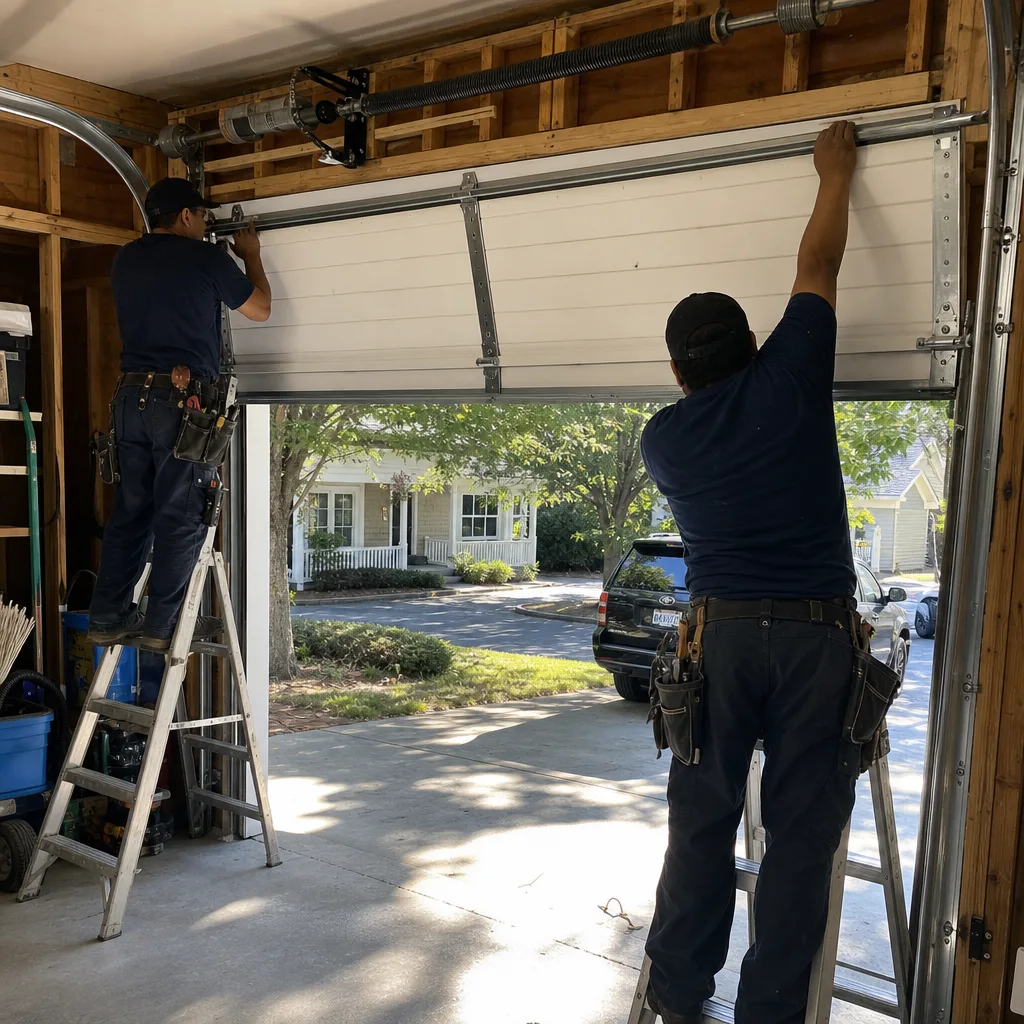
- Using WD-40 on hinges and rollers. WD-40 is a water displacer and light solvent. It strips existing lubricant and leaves metal dry. Use a white lithium or silicone garage door lubricant instead. This is the most common mistake we see in Marietta garages, and it creates the very squeaks homeowners are trying to fix.
- Waiting until the door stops working to address balance. A door out of balance still opens and closes, just with more strain. By the time it fails, you’ve likely damaged the opener gear, rollers, and hinges along the way. Balance is a $125 service call. A stripped opener gear is $250 plus the service call.
- Buying a universal bottom seal without checking the profile. T-end and beaded are not interchangeable. We’ve seen homeowners tear a new seal during installation because they bought the wrong profile, and then call us with a bare door channel and a spring rainstorm forecast. Check the profile before you spend any money.
- Ignoring a noisy door because “it’s always done that.” Noise is data. A door that groans through its travel path is telling you about roller wear or track misalignment. Addressing the noise early fixes the underlying condition before it becomes a stoppage. The door is not supposed to be loud.
- Adjusting torsion spring tension based on a YouTube video. Torsion springs hold enough stored energy to cause life-altering injuries. We do not care what the video showed. This is the one repair that is never a DIY project. Call a professional. If the cost of a service call is the concern, know that a spring injury costs more in every currency that matters.
- Running your door opener during a power outage via generator without disconnecting the opener. Openers are sensitive to voltage fluctuation. A generator that’s running your refrigerator and lights is not delivering the clean power your opener’s logic board expects. Disconnect the opener and run the door manually during an outage, or run a properly sized inverter generator with clean sine wave output. We’ve replaced more logic boards after storm outages than any other single cause.
- Assuming the auto-reverse feature still works because it worked when the house was purchased. Safety systems degrade silently. The sensors drift out of alignment, the force setting gets adjusted by someone along the way, and suddenly the door doesn’t reverse when it should. The 2×4 test is 30 seconds. Do it monthly.
When to Call a Professional
There are conditions that warrant a technician, no exceptions. If your torsion spring has broken (you’ll hear it as a loud bang from the garage, often mistaken for a car backfiring), do not attempt to open the door manually or with the opener. A broken spring means the full weight of the door is unmanaged, and that weight will win. Call a professional immediately. If you see a frayed or kinked cable near the bottom bracket, or if the cable has come off the drum, that’s another instant call. Both scenarios involve stored energy and sharp failure modes. If your door has come off its track, or a roller has broken inside the track, the door can drop without warning. If your opener’s logic board is behaving erratically (door opens on its own, won’t respond consistently, reverses without obstruction), that’s an electrical fault that can damage the motor if left running. Servo Garage Doors Marietta offers free estimates throughout Marietta; call (470) 486-7771 and we’ll send someone out with a written price before any work begins.
Frequently Asked Questions
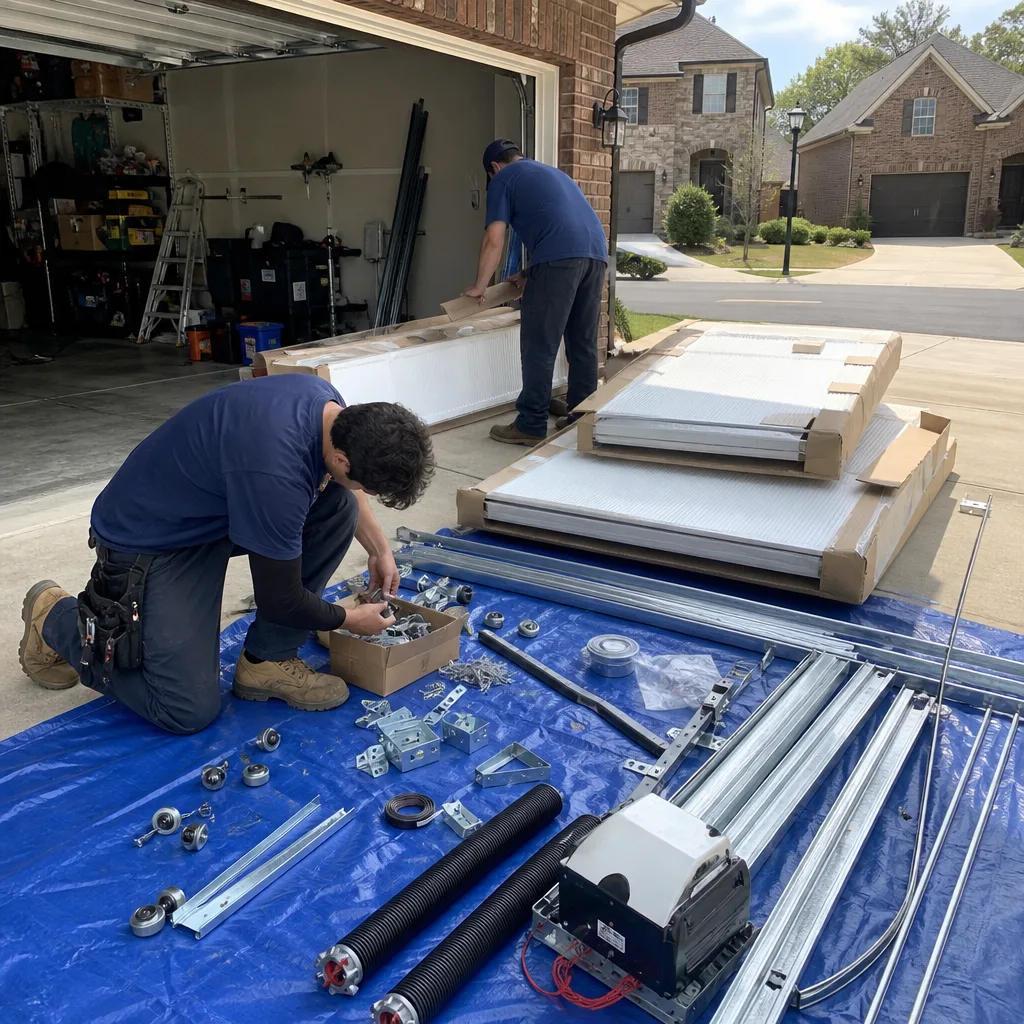
Seasonal garage door maintenance in Marietta typically runs between $85 and $185, depending on whether it includes a tune-up with lubrication and minor adjustments, or a full inspection with parts replacement like a bottom seal or rollers. For detailed pricing context, see our Garage Door Cost Breakdown: The Marietta Homeowner’s Reference for 2026. At Servo Garage Doors Marietta, every maintenance visit is priced upfront with a written scope before work starts, so you’ll know the exact number before you agree to anything. Call (470) 486-7771 for a free estimate on seasonal maintenance.
In Marietta’s humidity, you should lubricate the springs, hinges, and rollers twice a year: once in October and once in April. The summer humidity degrades lubricant faster than dry climates, and winter cold thickens whatever remains. Twice-yearly lubrication keeps the door moving smoothly and extends the life of rollers and hinges. If you use the right product (white lithium or silicone, not WD-40), two applications per year is sufficient.
Your garage door sticks in the summer because high humidity in Marietta causes wood and wood-composite panels to expand, reducing clearance at the panel joints. This expansion is most noticeable from June through August, when dew points stay above 65 degrees. The fix is usually a track spacing adjustment or panel edge trim, not lubrication. Browse our more guides & resources for year-round maintenance tips. Call (470) 486-7771 and we’ll diagnose the specific binding point with a written price before any work begins.
Replace your garage door bottom seal when you can see daylight under the closed door, or when the rubber flap no longer bends easily when pinched. In Marietta, the best time to check is October, before winter cold hardens the rubber and masks deterioration. If your seal is marginal in October, it will fail during the winter thaw-and-rain cycle. A replacement seal is under $30 and takes about 20 minutes to install, and we stock both T-end and beaded profiles on our trucks.
No, you should never adjust garage door spring tension yourself. Torsion springs hold enough stored energy to cause serious injury or death if they release unexpectedly. If your door fails a balance test, call a professional who has the proper winding bars and training. This is not a DIY repair, regardless of what any video shows. Call (470) 486-7771 and we’ll assess the balance with a written price before touching anything.
Yes, Servo Garage Doors services all major brands including LiftMaster, Chamberlain, Genie, Clopay, Amarr, Wayne Dalton, Craftsman, and Raynor. Our technicians work on doors and openers from every major manufacturer, and we stock common parts for all these brands on our trucks in Marietta. Every service visit includes a documented photo record of what we found and what we did, so you’ll see exactly what was addressed.
The Bottom Line
Marietta’s climate punishes garage doors in two predictable patterns: humidity expansion in the warm months and thermal contraction in the cold months. Neither is a mystery, and neither requires heroic measures. What they require is attention at the right times, in the right order, with the right materials. Check your springs in November, check your bottom seal in October, lubricate twice a year, and photograph everything so you and any technician who works on your door have a real service history. If you’d rather have a professional handle the seasonal checks, Servo Garage Doors Marietta provides garage door opener repair and installation in Marietta with a written price before any work starts, a photo record when we leave, and a 365-day promise on the work. Call (470) 486-7771 for a free estimate.
Written by Marcus Deller, Owner at Servo Garage Doors Marietta, serving Marietta since 2015.