
Last updated September 20, 2026
Full 25-point door and opener safety check with every visit - springs, cables, rollers, tracks, and your LiftMaster or Chamberlain opener included
You get a price before we start. It does not change when the truck arrives.
 Before
 After
After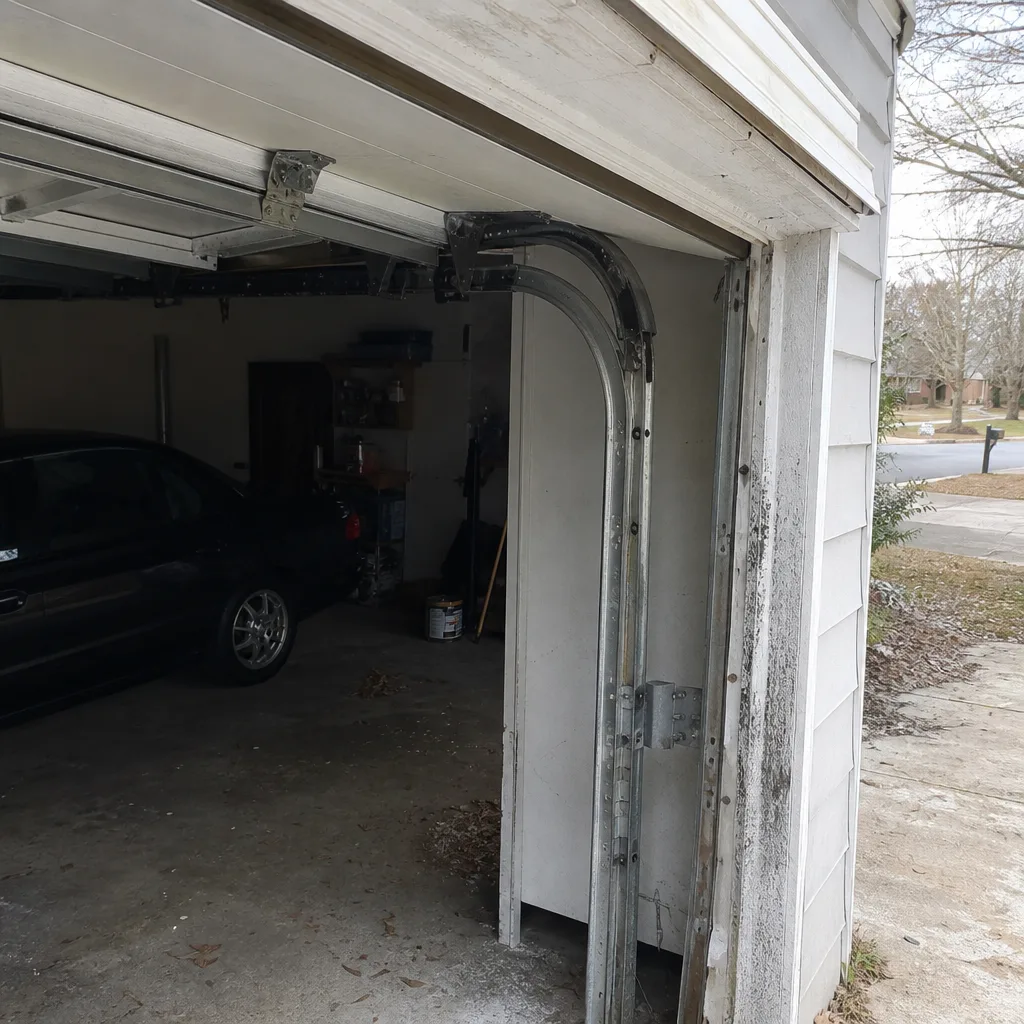 Before
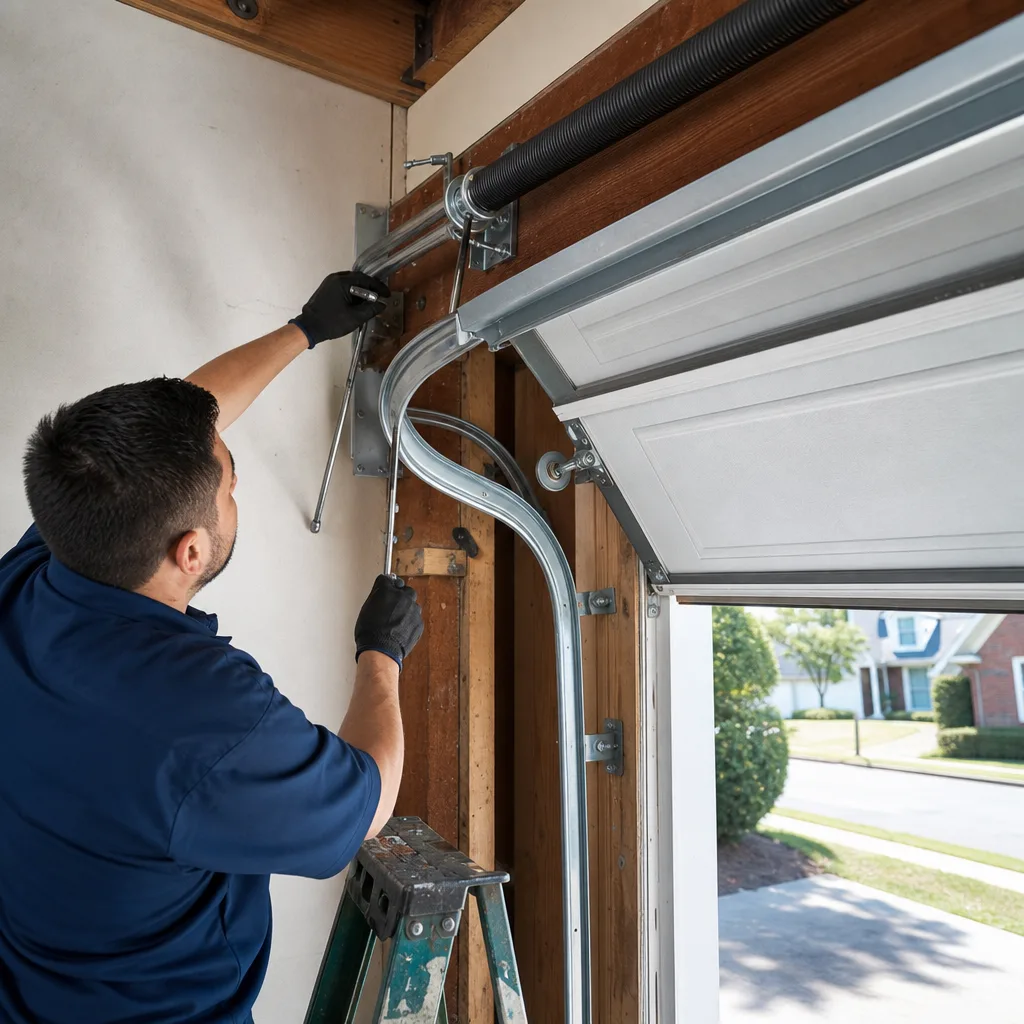 After
After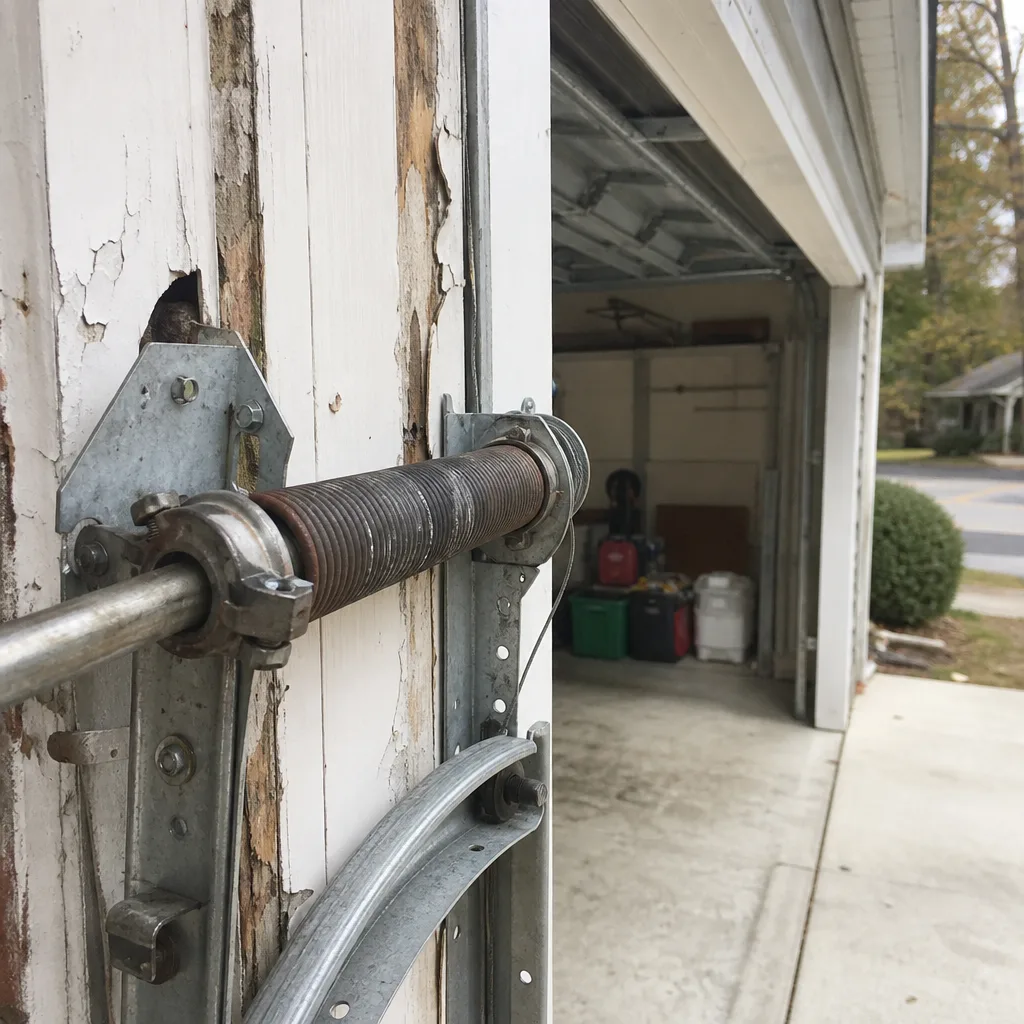 Before
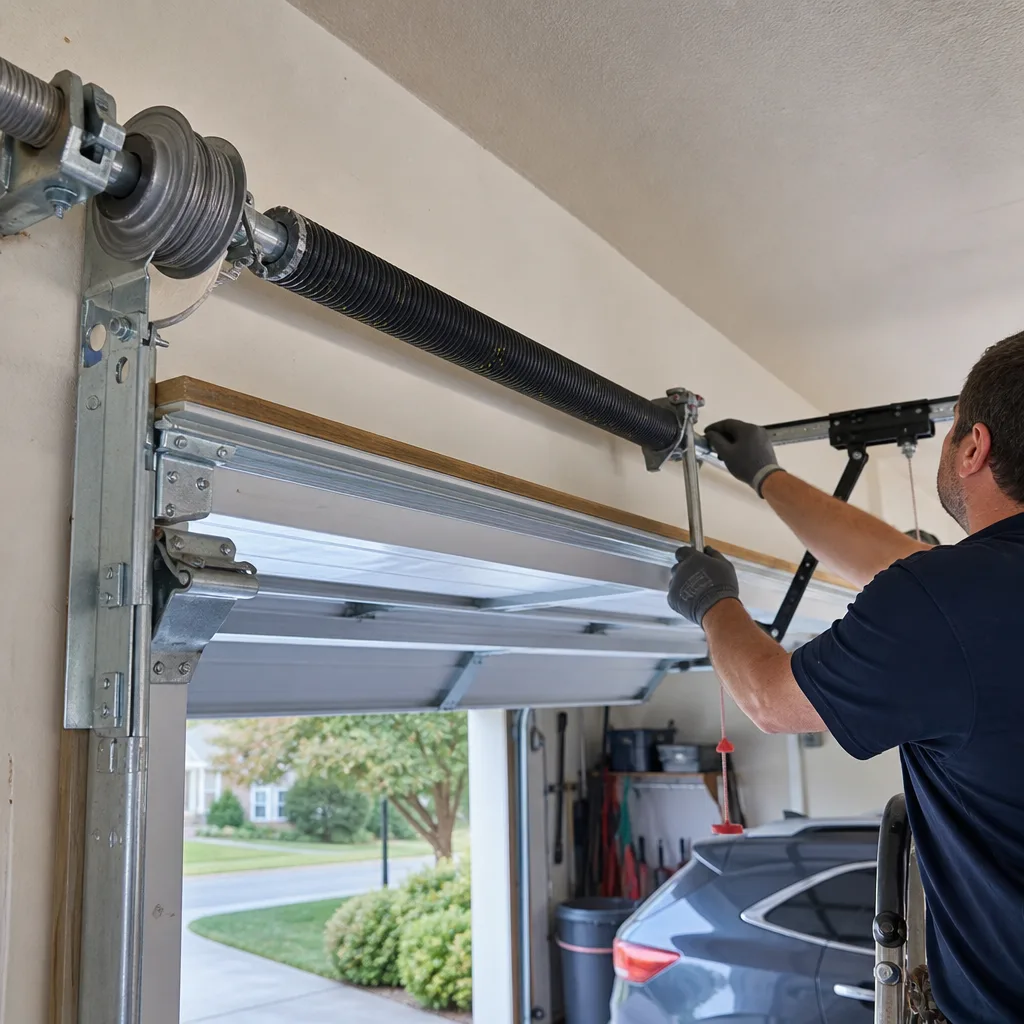 After
AfterThe Complete Guide to Garage Door in Marietta
Most Marietta homeowners replace a garage door once in 15 to 20 years, which means the garage door industry holds a structural information advantage over nearly every buyer. You don’t do this often enough to know the vocabulary, and that gap is where the upsell lives. A garage door in Marietta isn’t a single product decision. It’s a stack of interdependent choices: material, insulation R-value, spring type, opener compatibility. One misinformed pick cascades into the next repair call. This guide maps every decision node so you walk into any quote knowing what you’re looking at.
Quick Answer
A complete garage door system in Marietta involves five linked decisions: door material and thickness, insulation level, spring type, opener compatibility, and installation clearance. For a detailed Garage Door Cost Breakdown: The Marietta Homeowner’s Reference for 2026, prices for a full door replacement in Marietta typically run $1,400 to $4,800 depending on material, insulation, and size, while spring replacement runs $180 to $380. Getting a written, line-item price before work starts is the single most reliable way to avoid overpaying in this market.
Table of Contents
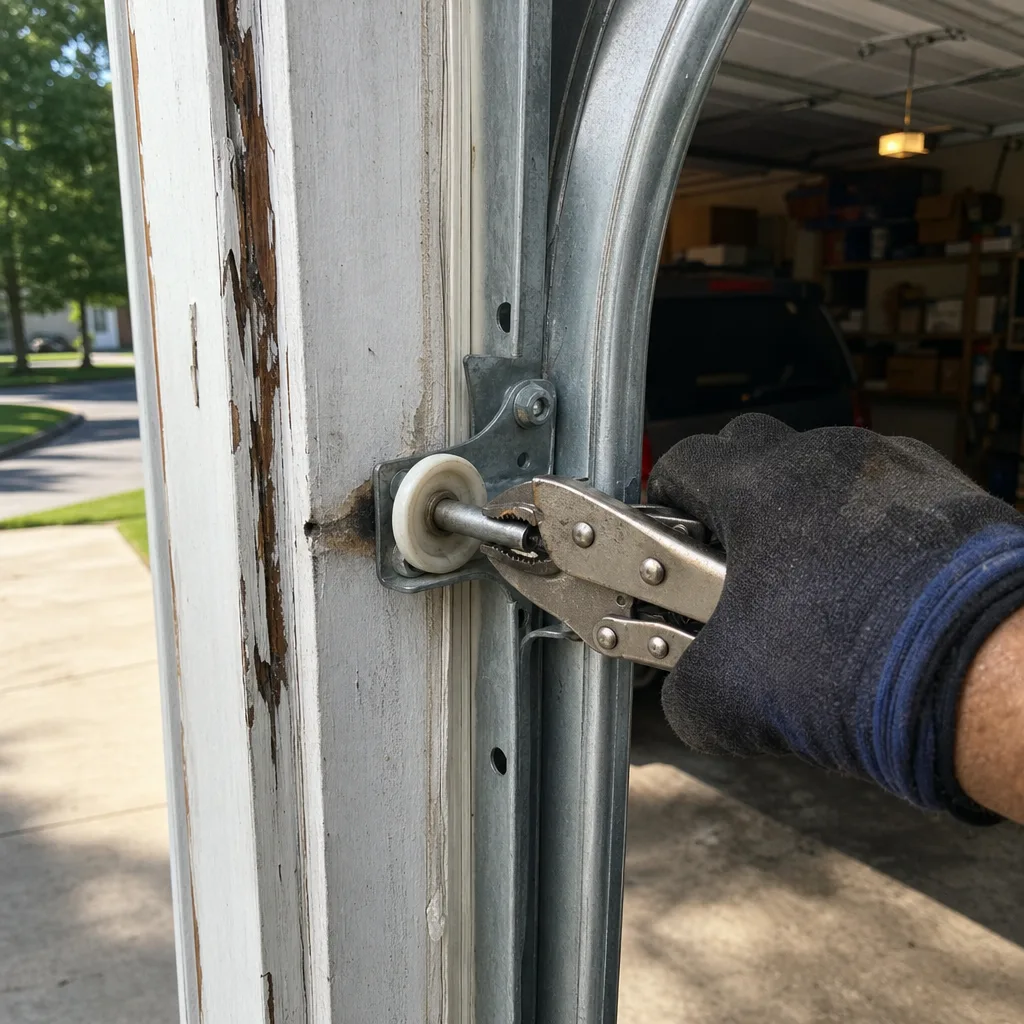
- How Marietta’s Climate and Soil Affect Door Material Choices
- The Interdependency Chain: Why Door Thickness Drives Opener Choices
- Spring Systems Explained by Replacement Cost, Not Just Mechanics
- How to Read a Data Plate and Cross-Reference Cycle Ratings
- Insulation and R-Value in North Georgia: What Actually Matters
- What a Written, Price-First Quote Should Contain, Line by Line
- Choosing Between Repair and Replacement in Marietta
- Opener Compatibility: What Fits What
- Common Mistakes to Avoid
- When to Call a Professional
- Frequently Asked Questions
BeforeAfterHow Marietta’s Climate and Soil Affect Door Material Choices
Marietta sits in USDA Zone 7b, with humid summers that push dew points above 70°F for weeks at a time, and clay-heavy soil that holds moisture against concrete slabs and foundation walls. Both facts matter when you’re choosing a garage door. The humidity means any steel door with a scratched or cut edge will eventually show rust at the seam. The clay soil means water wicks up through slab edges, keeping the bottom panel of the door in a microclimate that’s damper than the rest of the wall.
We see the same pattern across Marietta neighborhoods: steel doors with factory paint hold up fine until the bottom weather seal degrades and the panel soaks. Composite and vinyl doors resist that moisture cycle better, but they cost more upfront. Wood doors, particularly in older neighborhoods near the Marietta Square with original carriage-house styling, require sealing and maintenance that most homeowners skip after year three.
Here’s what holds up in this specific climate:
- Steel gauge matters more than warranty length. A 24-gauge steel skin is thin enough to dent from a basketball; 25-gauge is barely better. Look for 24-gauge minimum, ideally 26-gauge on higher-end doors. The coating matters too: a galvanized base with a baked-on polyester topcoat resists Marietta humidity better than raw steel with primer.
- Composite doors resist the moisture cycle. They won’t rot, won’t rust, and don’t need sealing. The tradeoff is weight and price.
- Aluminum frames with glass panels work in modern builds but conduct heat faster than insulated steel. If your garage faces west in a neighborhood like West Cobb, that afternoon sun will turn an aluminum door into a radiator.
We’ve replaced doors in East Cobb that rusted through in eight years and doors in the same neighborhood that were fine at twenty. The difference was never the brand. It was whether the original installer sealed the cut edges and maintained the bottom seal. Raynor and Clopay both make steel doors with factory-finished edges that reduce the rust problem, but no steel door survives a missing weather seal in this climate.
The Interdependency Chain: Why Door Thickness Drives Opener Choices
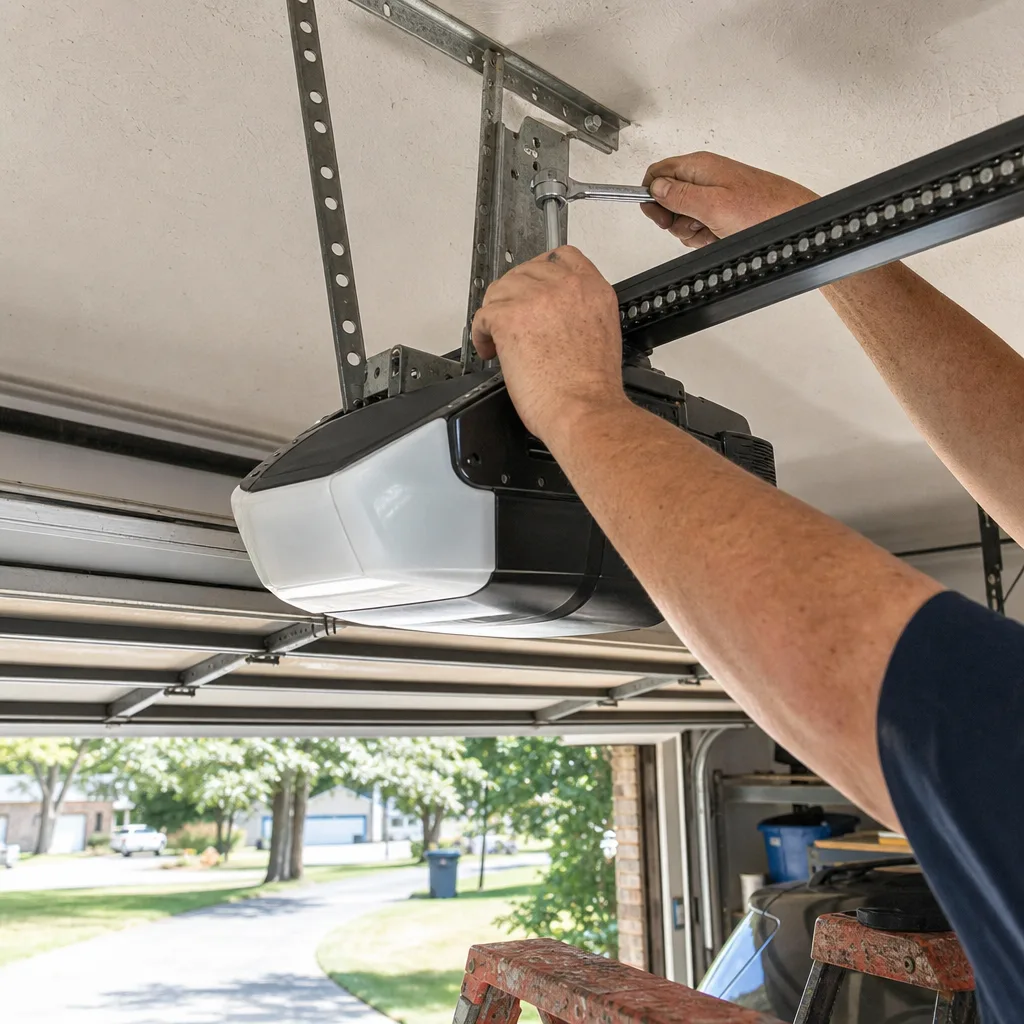
Here’s the part most guides skip: a garage door is not a standalone product. It’s a system where each component limits the next. You cannot pick a door thickness, insulation level, and spring type independently. They’re chained.
The chain starts with headroom, which is the clearance between the top of the door opening and the ceiling of the garage. Standard torsion spring setups need 12 inches of headroom. Low-headroom kits work with 9 to 12 inches. If your garage has less than 9 inches, you’re looking at a side-mount opener like a LiftMaster 8500W or a significant rebuild of the opening.
- Door thickness determines weight. A 1 3/8-inch non-insulated steel door might weigh 120 pounds for a 16×7 opening. A 2-inch insulated steel door with polyurethane core weighs closer to 200 pounds.
- Weight determines spring size. Torsion springs are rated by wire diameter and inside diameter. A heavier door needs springs with more lifting capacity, which means thicker wire or more coils.
- Spring size determines opener load. An opener that handles a 120-pound door comfortably may strain against a 200-pound door. The opener’s motor isn’t doing all the lifting, the springs are, but a mismatched opener will fail its gears and logic board faster.
- Opener type may be constrained by headroom. If you need a low-headroom spring setup, a traditional ceiling-mounted chain-drive opener might not fit. You’re forced into a side-mount opener, which changes the budget by $150 to $350.
We see this chain break most often when a homeowner buys a door online, gets it delivered to a Marietta address, and then discovers the opener won’t pair with it or the springs are undersized. That’s a callback waiting to happen. A good Garage Door Installation in Marietta starts with measuring the opening and the headroom before selecting anything.
Spring Systems Explained by Replacement Cost, Not Just Mechanics
When a spring breaks, the question isn’t “how does it work?” The question is “what does it cost and how long will the fix hold?” Here’s the plain version.
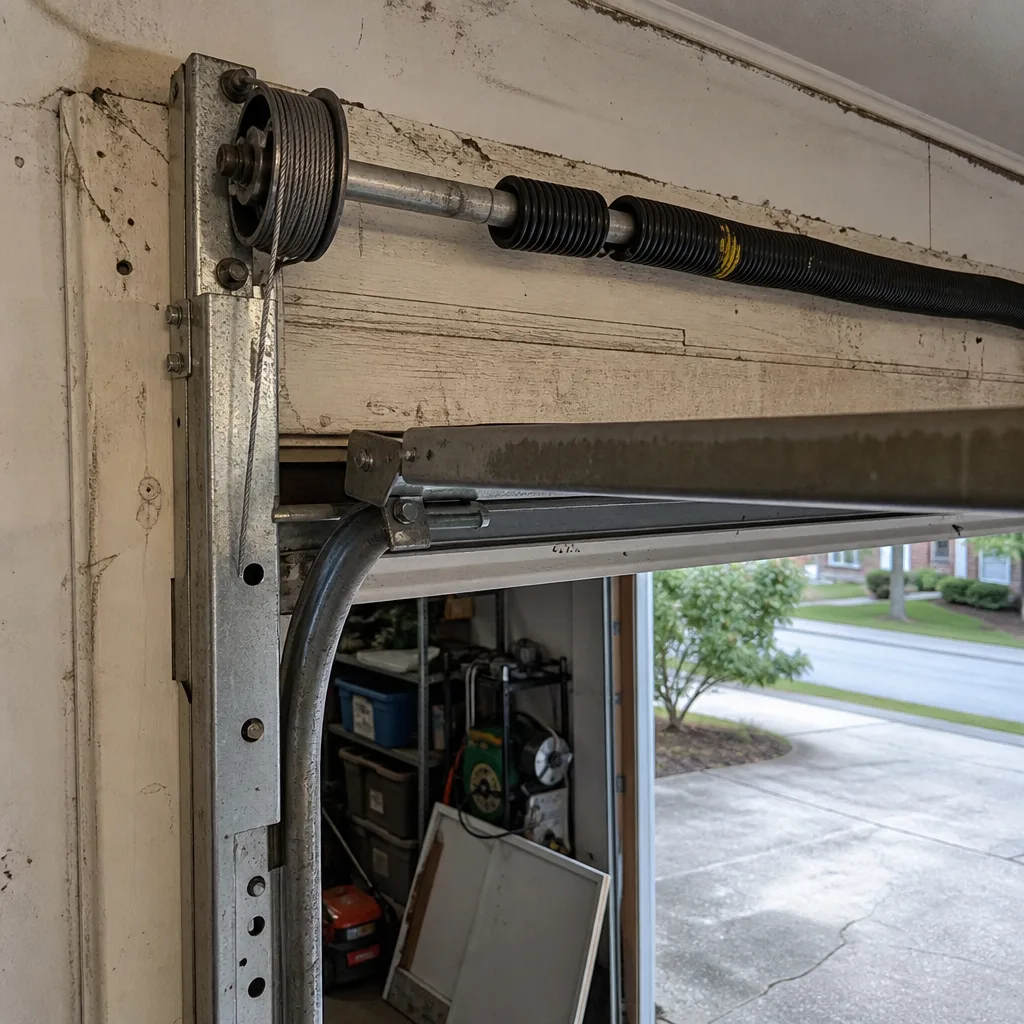
A torsion spring is a coiled steel spring mounted horizontally on a metal shaft directly above the closed door. When the door opens, the spring unwinds, releasing the tension that was stored when the door closed. An extension spring is a long, thinner spring mounted above the horizontal tracks on either side of the door. It stretches when the door closes and contracts when the door opens.
In Marietta, most homes built after 1990 use torsion springs. Older homes, particularly ranch-style houses from the 1960s and 1970s around the Sprayberry and Lassiter areas, often still have extension spring systems. Here’s what each costs to replace:
| Spring Type | Typical Replacement Cost in Marietta | Average Lifespan in Cycles | Notes |
|---|---|---|---|
| Torsion, single | $180-$260 | 10,000-15,000 | Standard on most modern doors. Requires winding bars and precision. |
| Torsion, pair | $240-$380 | 10,000-20,000 | Both springs should be replaced together, even if one is intact. |
| Extension, pair | $160-$280 | 7,000-10,000 | Less common in newer homes. Safety cable required by code. |
We always recommend replacing both torsion springs at once even if only one broke. Here’s why: the second spring has the same cycle count and is likely to fail within months. Replacing one means paying for labor twice. Replacing both gets you another full service life for the incremental cost of a second spring, which is usually $60 to $100.
Safety note: torsion springs are under 100 to 200 pounds of torque even when the door is closed. The winding and unwinding procedure is the most dangerous maintenance task on a garage door system. We don’t give DIY instructions for this one. If a spring breaks, leave the door closed if possible, disconnect the opener, and call someone who does this daily. For more detail on repair costs and timelines, see our Garage Door Repair in Marietta guide.
How to Read a Data Plate and Cross-Reference Cycle Ratings
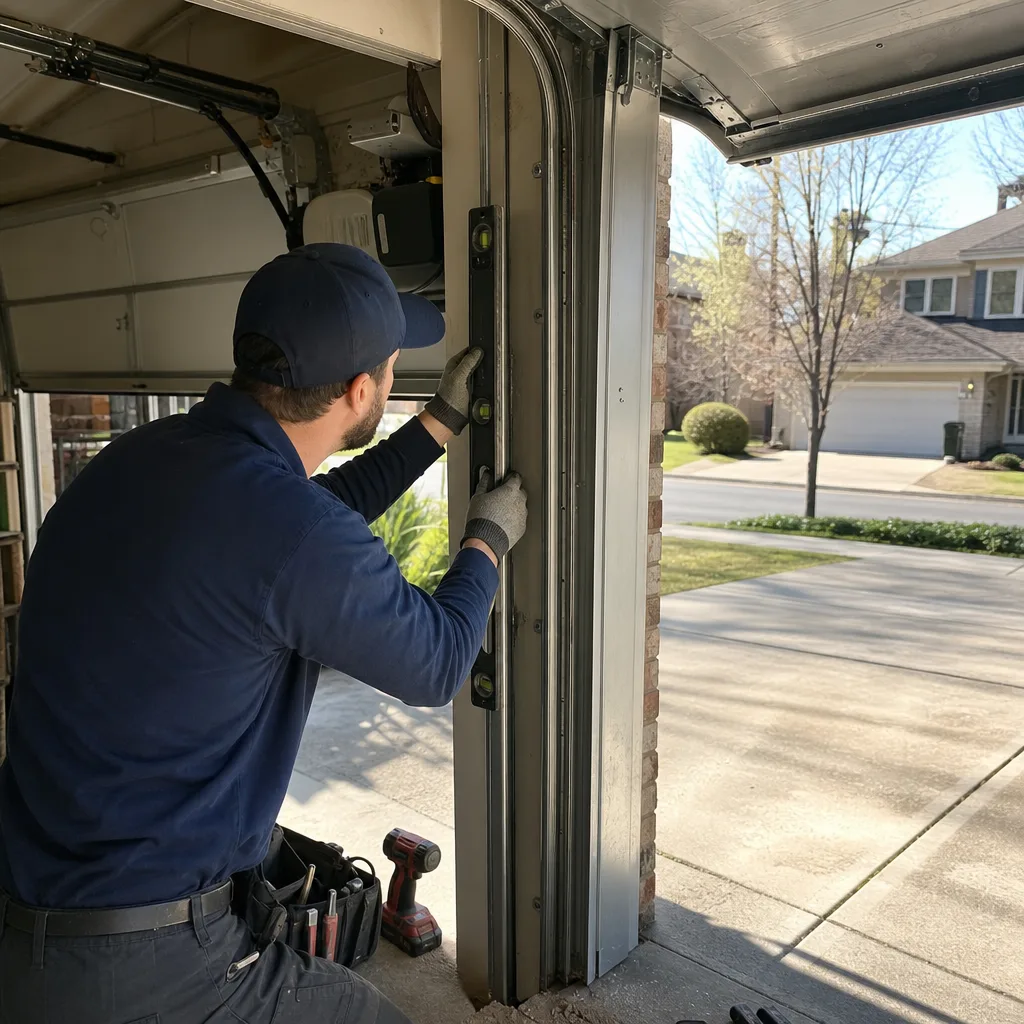
Every garage door has a data plate, usually a metal or vinyl tag riveted to the inside of the door panel, near the bottom edge or on one of the vertical stiles. This plate is the closest thing to a birth certificate your door has. Before any service call, walk into your garage and read it.
What the plate tells you:
- Manufacturer name and model. Usually printed in bold at the top. This is what a technician needs to order matching panels or hardware.
- Serial number. Used for warranty verification. If the door is under 10 years old, parts may be covered by the manufacturer, not out of your pocket.
- Door size. Listed as width x height, like 16×7 or 9×8.
- Weight. Often listed on higher-end doors. This matters because the springs and opener must be matched to this number.
- Cycle rating for springs. Some manufacturers list the expected spring life in cycles: 10K, 15K, or 20K. A cycle is one full open and close.
Here’s how to use the cycle rating. The average Marietta household opens and closes the garage door two to three times per day, which is 730 to 1,095 cycles per year. A 10K-cycle spring lasts 9 to 14 years under that usage. A 20K-cycle spring lasts 18 to 27 years. If your house was built in 2010 and still has the original springs, you’re past the expected service life regardless of what the door looks like.
When a technician from Servo Garage Doors arrives, the first thing we do is photograph the data plate. It goes into the written documentation you receive. That photo, plus a photo of the failed component, is part of the documented record on every visit. Clause 4 of The Haven Standard says the customer sees the failed part before anyone quotes a replacement. We built our process around that rule in 2015, and it has never changed.
Insulation and R-Value in North Georgia: What Actually Matters
The R-value on a garage door measures thermal resistance, which is a polite way of saying how much heat the door blocks. In Marietta, the question isn’t whether you need insulation. It’s how much, and whether you’re buying real insulation or the illusion of it.
Three facts most buyers don’t hear:
- Polystyrene insulation is the cheap stuff. It’s the foam-board look, it typically runs R-6 to R-9, and it’s installed in panels that leave gaps at the seams. It helps, but it’s not the same product as polyurethane.
- Polyurethane insulation is injected between the door skins. It bonds to both surfaces, fills the entire cavity, and typically runs R-12 to R-18. It also makes the door stiffer and quieter because it eliminates the drumming effect of empty steel panels.
- An insulated garage door on an uninsulated garage is wasted money. If the garage walls and ceiling are uninsulated, heat flows around the door. Insulate the garage shell first, then buy the door that matches.
In Marietta’s climate, the practical range is R-9 to R-12 for attached garages and R-12 to R-18 for detached garages or workshops. Anything above R-18 is marketing. The temperature difference between a 90-degree July day and a conditioned interior is roughly 15 to 20 degrees. An R-18 door handles that fine, and so does an R-12. The extra cost doesn’t buy measurable comfort in this climate.
One more thing we tell every Marietta customer: insulation is not a structural feature. A dented insulated door is still dented. The insulation doesn’t make the steel stronger. If you have kids and a driveway basketball hoop, that’s an argument for a thicker gauge steel or a composite door, not for more insulation.
What a Written, Price-First Quote Should Contain, Line by Line
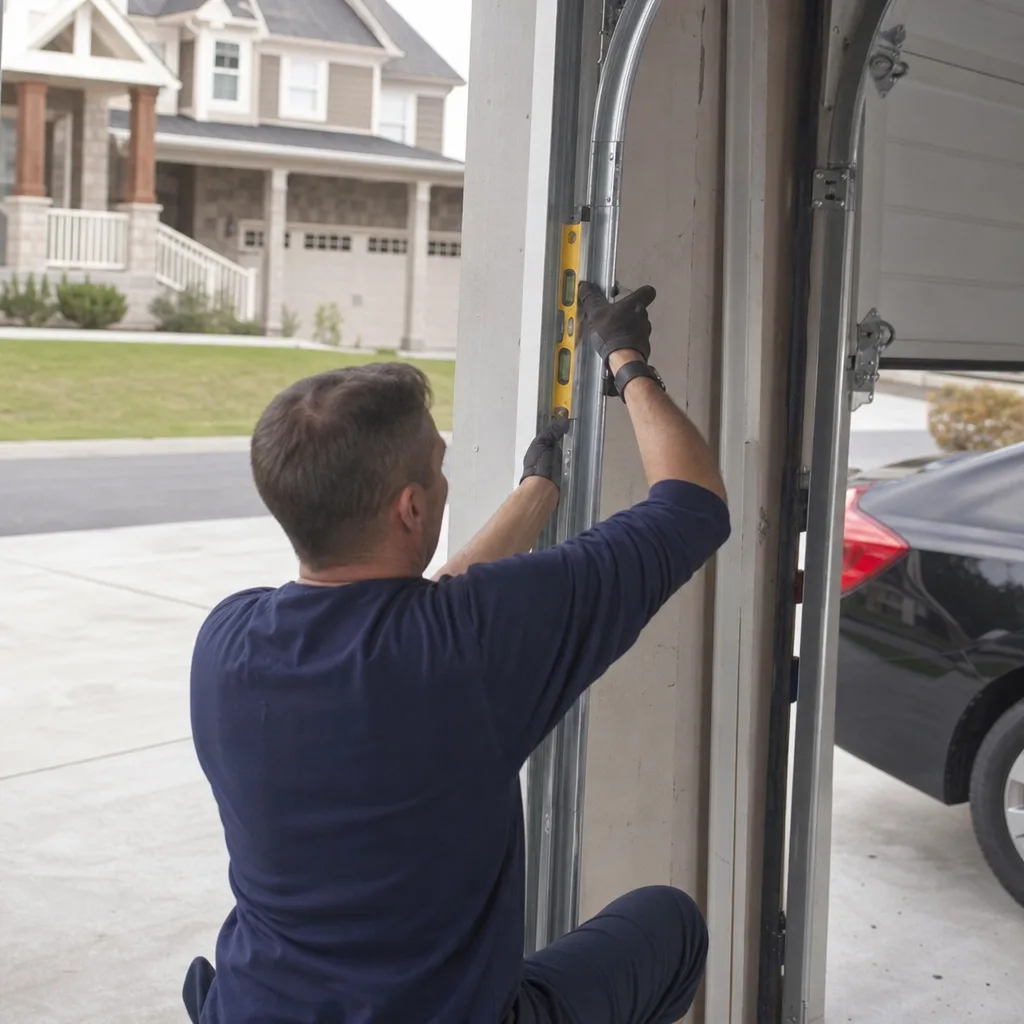
A verbal estimate is not an estimate. It’s a conversation. In Marietta, where garage door companies compete for the same homeowner dollar, the difference between a company you can trust and one you can’t is whether the price is written down before the work starts.
A legitimate written quote for garage door work contains these items, each on its own line:
- Parts by name and part number. Not “new spring.” It should say “Torsion spring, 0.225-inch wire diameter, 2-inch inside diameter, 24-inch length, right-hand wind.” The part number lets you verify the price independently.
- Labor as a separate line item. You should know what you’re paying for the technician’s time versus what you’re paying for the physical parts.
- Hardware and consumables. Hinges, rollers, brackets, mounting bolts, lubricant. A company that lumps these into “miscellaneous” is not tracking its own job cost, which means it’s not tracking your price either.
- Haul-away and disposal. Old doors, old springs, packaging. This should be explicit, not assumed.
- Warranty terms in writing. What’s covered, for how long, and what voids it. If the warranty is verbal, it’s not a warranty.
At Servo Garage Doors Marietta, we deliver a flat, written price and a written scope before any work begins. That’s Clause 1 of The Haven Standard, and it has been our practice since 2015. The price you see on the quote is the price you pay. If something changes during the job, the new price is written down and agreed to before the additional work happens. There is no surprise at the end.
What the absence of a written quote signals is simple: the company wants room to adjust the price after the work is done. Walk away from that. In our experience across 18,000+ jobs since 2015, the companies that won’t write the price down first are the ones that add “unforeseen complications” to the final invoice. We’ve built our entire reputation on not doing that.
Choosing Between Repair and Replacement in Marietta
Here’s the decision framework we use when helping a Marietta homeowner choose between fixing what’s there and replacing the whole door-see our DIY vs Professional Garage Door: The Marietta Homeowner’s Decision Guide for related context. This is the exact logic a good technician applies, and you can use it before anyone shows up.
Repair makes sense when:
- The door is under 12 years old, and the failure is a single component: a spring, a roller, a hinge, a cable.
- The panels are straight, the paint is intact, and the data plate shows a model number that’s still supported by the manufacturer.
- The repair cost is under 30% of the replacement cost. A $250 spring replacement on a door that would cost $1,800 to replace is a repair, not a debate.
- The door operates smoothly except for the failed part. If the spring breaks but the tracks are true and the opener engages cleanly, you’re looking at a one-part fix.
Replacement makes sense when:
- The door is 15 to 20 years old and showing signs of multiple failures: rusted panels, worn hinges, sagging sections, and a spring that’s approaching its cycle limit.
- The repair estimate is more than half the cost of a new door, especially if the new door comes with a warranty.
- The door has a structural issue: a cracked stile, a bowed panel, or damage from a vehicle impact that bent the tracks.
- You’re already planning to insulate the garage or add living space above it. A new insulated door pairs with that work more efficiently than retrofitting insulation into an existing door.
A free second opinion on any written estimate is something we offer without conditions. Bring us the paperwork from another Marietta company. We’ll go through it line by line and tell you what’s fair, what’s missing, and what we’d charge. No coupon, no code, no obligation.
Opener Compatibility: What Fits What
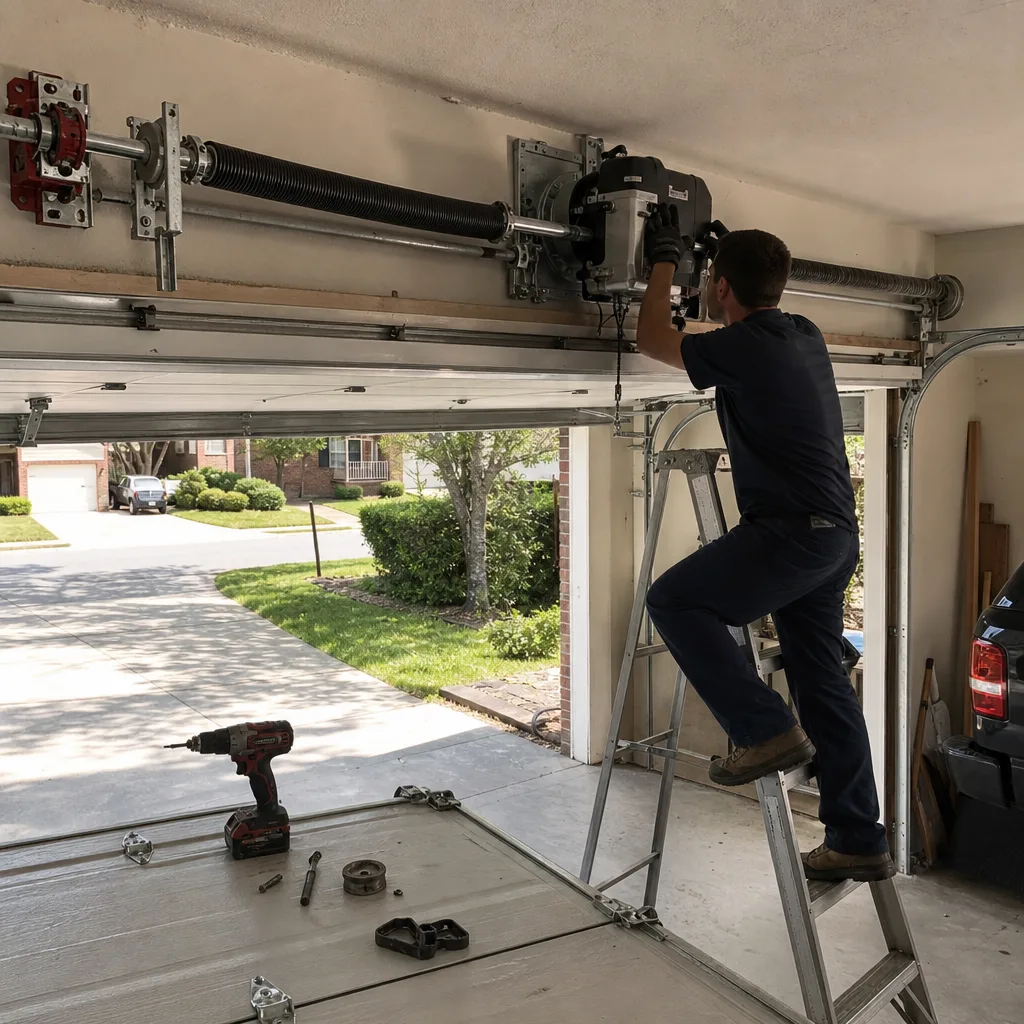
Garage door openers are not universal, and the compatibility issue trips up more Marietta homeowners than any other single factor. The opener you have may not work with the door you’re buying, and the opener you’re buying may not work with the door you have.
The key terms:
- Chain drive: A metal chain pulls the trolley carriage along the rail. Reliable, loud, and the most common type in older Marietta homes. LiftMaster and Chamberlain both make solid chain-drive units.
- Belt drive: A reinforced rubber belt does the same job more quietly. Costs $50 to $100 more than chain. Worth it if the garage is below a bedroom.
- Screw drive: A threaded steel rod rotates to move the carriage. Fewer moving parts, but more sensitive to temperature swings. Genie’s screw-drive units are common.
- Side mount: Mounts on the wall beside the door, eliminating the ceiling rail entirely. Required for low-headroom garages. Pricier, but quieter and frees up ceiling space.
The compatibility rules we check before recommending anything:
- Horsepower must match door weight. A 1/2-horsepower opener is fine for a lightweight non-insulated door. A heavy insulated door needs 3/4 horsepower or more.
- The opener’s travel limits must match the door’s travel path. This sounds obvious, but we’ve seen openers that physically cannot be adjusted to match high-lift track setups.
- Battery backup is now standard on premium openers. In Marietta, where thunderstorms knock out power regularly, a battery backup means you can still open the door during an outage. It’s worth the incremental $50 to $80.
- Smart features require Wi-Fi reach. If your garage is detached or at the far end of the house from the router, a smart opener may not connect. We test this during the quote if it matters to you.
- Buying a door online without measuring headroom. The door arrives, the installer arrives, and the headroom is 8 inches. Now you’re paying restocking fees and buying a different door.
- Replacing one torsion spring instead of both. The second spring fails within months, and you’ve paid for labor twice. The incremental cost of a second spring is the best value in garage door work.
- Accepting a verbal quote. “Should be about $400” is not a quote. A written line-item price is a quote. Without it, you have no documentation and no recourse.
- Ignoring the cycle rating on the data plate. A door that’s 15 years old with 10K-rated springs is on borrowed time. Waiting for the spring to break in the middle of a workday costs more than replacing it on your schedule.
- Choosing a door by appearance alone. The prettiest door with the wrong gauge steel dents in six months. The prettiest door with the wrong spring rating fails early. The prettiest door with no headroom clearance won’t install at all.
- Skipping the haul-away conversation. Some companies leave the old door and springs in your driveway. It’s not enough to know the install price. Know the total price, including what leaves your property and what stays.
- Not photographing the room before the installer arrives. If the track bends during installation and you have no “before” photos, you have no claim. Take five pictures of the garage interior before any work starts.
For more on opener repair and replacement specifics, see our Garage Door Opener Repair & Installation in Marietta page.
Common Mistakes to Avoid
After 18,000+ jobs in Marietta since 2015, these are the mistakes we see repeat.
When to Call a Professional
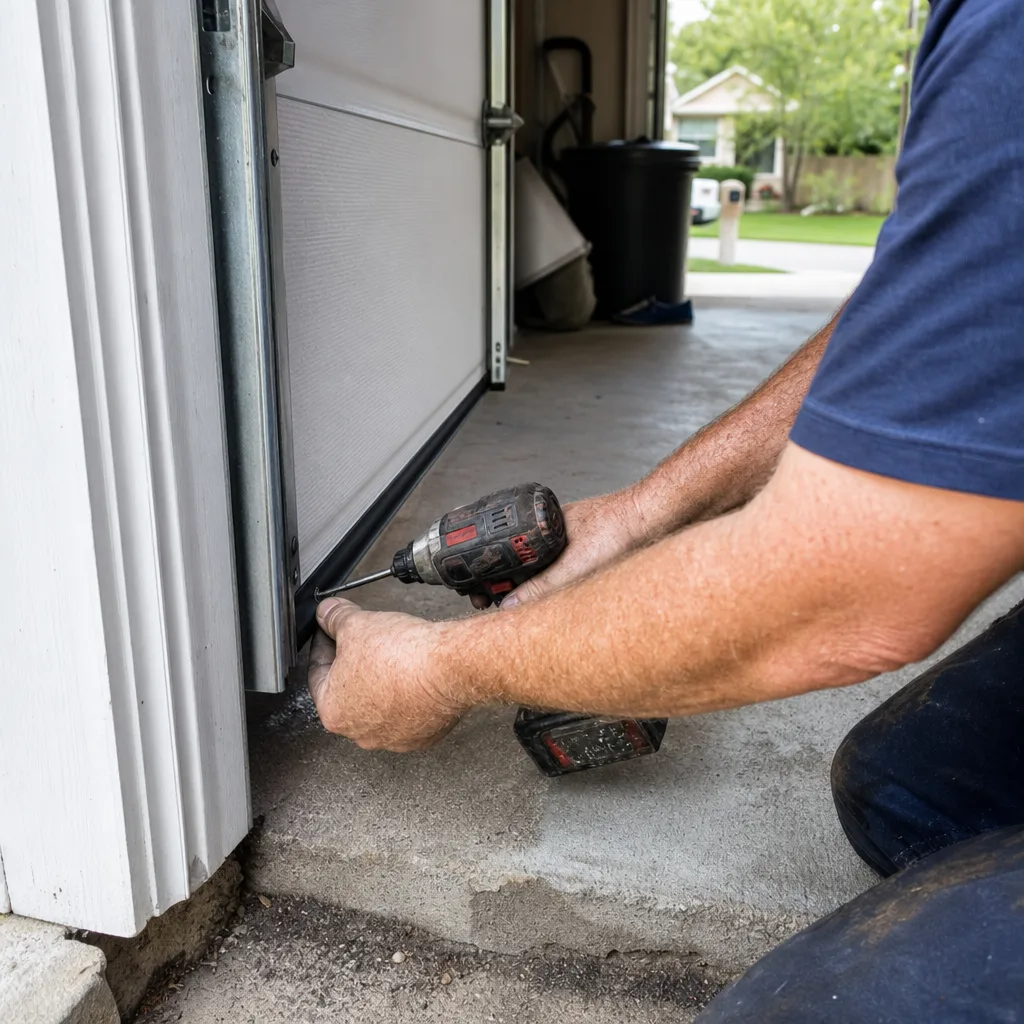
Here’s the short version. If the problem involves torsion springs, cables under tension, a door that has come off its tracks, or an opener that’s making grinding noises, call someone. These failures involve stored mechanical energy or misaligned components that can cause serious injury or further property damage if handled incorrectly.
We also tell Marietta homeowners to call us if they’re uncertain about the data plate, unsure whether the quote they received is fair, or standing in the garage with a door that won’t close and a car they can’t protect overnight. That last one is a security issue, not just a convenience issue. We answer the phone live, 24/7, including holidays. Servo Garage Doors Marietta offers free estimates in Marietta. Call (470) 486-7771, and you’ll get a named technician and an on-the-way text, not a callback window.
Frequently Asked Questions
A full garage door replacement in Marietta typically costs $1,400 to $4,800 depending on material, insulation level, and size. A basic 16×7 non-insulated steel door with installation starts around $1,400. A premium insulated steel door with a belt-drive opener runs $3,000 to $4,800. The price should be written and itemized before work starts. Call (470) 486-7771 for an exact quote, estimates are free.
Garage door springs last 10,000 to 20,000 cycles depending on their rating. In Marietta, where the average household opens and closes the door two to three times daily, that’s 9 to 27 years. Most builder-installed springs are 10K-rated and fail between years 10 and 14. When one torsion spring breaks, replace both. Call (470) 486-7771 for a written quote on spring replacement, our technicians carry the common sizes on the truck.
Yes, in most cases. Spring replacement, roller replacement, cable repair, and opener troubleshooting are all same-day jobs if we have the parts, and our trucks carry the most common spring sizes and opener components. A full door replacement takes longer because the door is measured, ordered, and scheduled. But repair work is typically dispatched the same day you call, including weekends. Call (470) 486-7771 and you’ll get a named technician, not a recording.
No, not with us. The price we quote on the phone is the price you pay, and if something changes during the job, the new price is written down and agreed to before any additional work happens. That’s Clause 1 of The Haven Standard: a flat, written price and written scope before any work starts. It has been our rule since Servo Garage Doors opened in 2015.
Yes, for the common repairs. Our technicians carry multiple spring sizes, rollers, hinges, cables, and opener components. That’s what allows same-day repair in most cases. For full door replacements, the door is ordered from the manufacturer and scheduled for installation once it arrives.
We service all eight major garage door brands: LiftMaster, Chamberlain, Genie, Clopay, Amarr, Wayne Dalton, Craftsman, and Raynor. We stock parts for all of them. If your opener is a discontinued model, we can usually source a compatible replacement board or motor rather than forcing a full system replacement.
If your door is over 15 years old, shows rust or panel damage, or needs multiple repairs in a single season, replacement usually costs less over five years than repeated repairs. A new door with a fresh warranty also addresses insulation and security issues that old doors have. Bring us any written estimate from another company and we’ll give you a free second opinion, line by line.
The Bottom Line
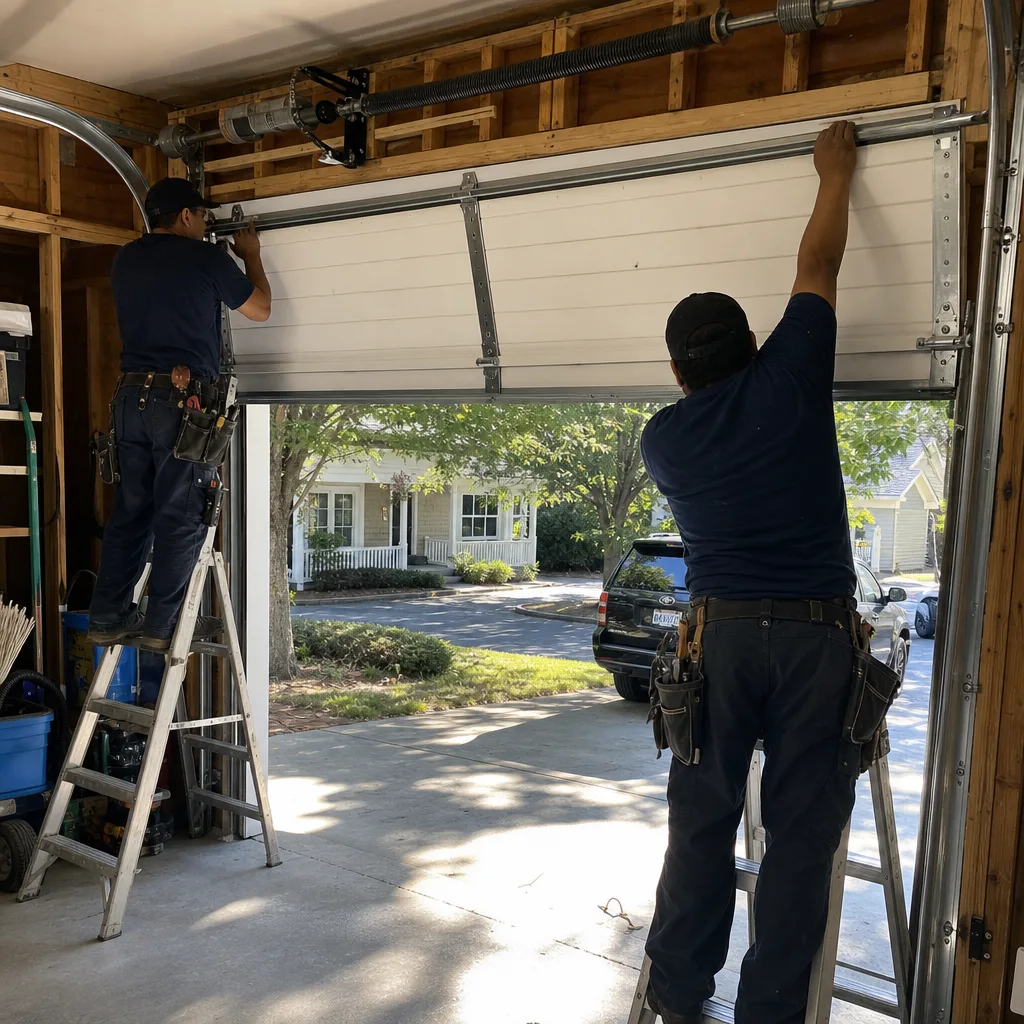
A garage door in Marietta is not one purchase. It’s five linked decisions: material, insulation, springs, opener, and clearance, and each one constrains the next. The right door for this climate is a 24-gauge or heavier steel door with polyurethane insulation in the R-9 to R-12 range, matched springs, and an opener sized to the door’s actual weight. The right process is a written, line-item price before any work starts, and a documented photo record when the technician leaves. Get the door right once, and you won’t think about it again for 15 years. Get it wrong, and you’ll think about it every time you open the garage. For more guides & resources, or if you’re in Marietta and want a straight answer, call us at (470) 486-7771. We will show you the problem, write down the price, and do it right the first time.
Written by Marcus Deller, Owner at Servo Garage Doors Marietta, serving Marietta since 2015.