
Last updated September 20, 2026
Full 25-point door and opener safety check with every visit - springs, cables, rollers, tracks, and your LiftMaster or Chamberlain opener included
You get a price before we start. It does not change when the truck arrives.
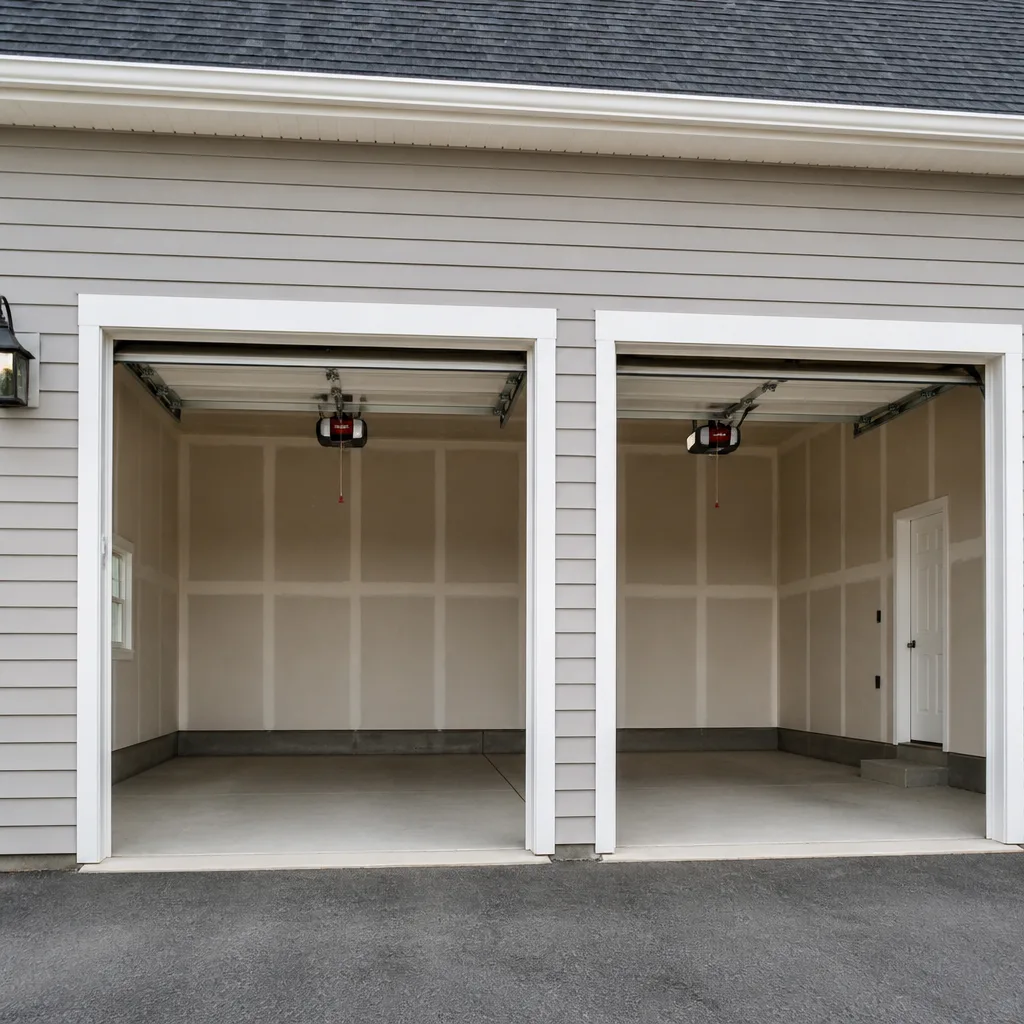
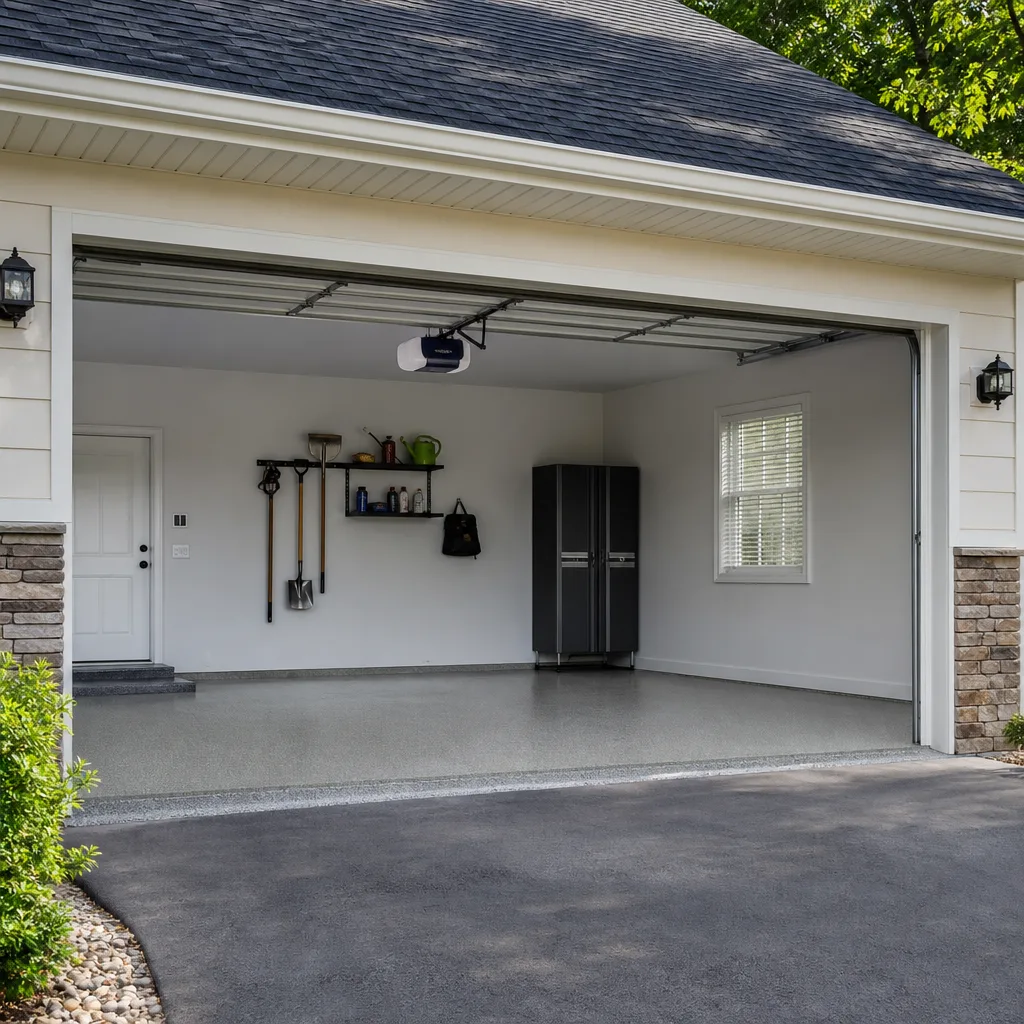
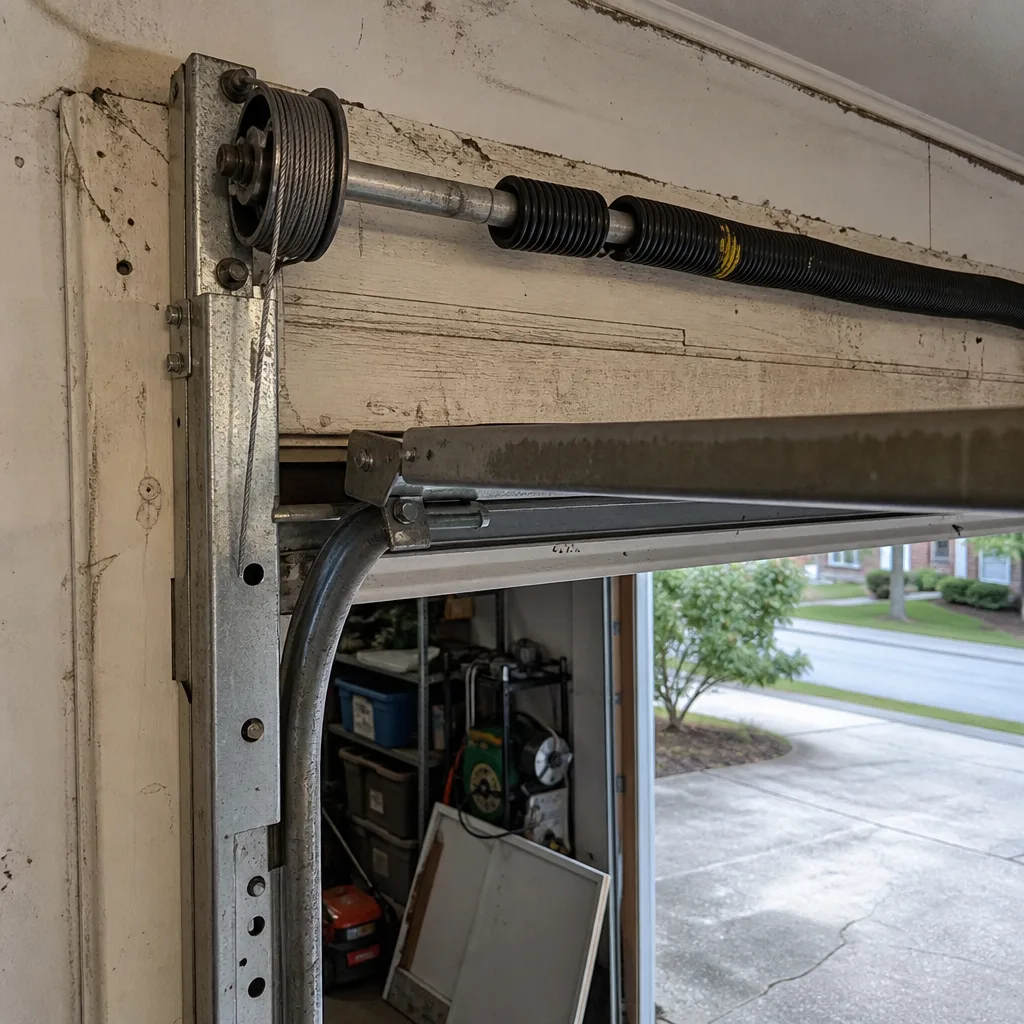 Before
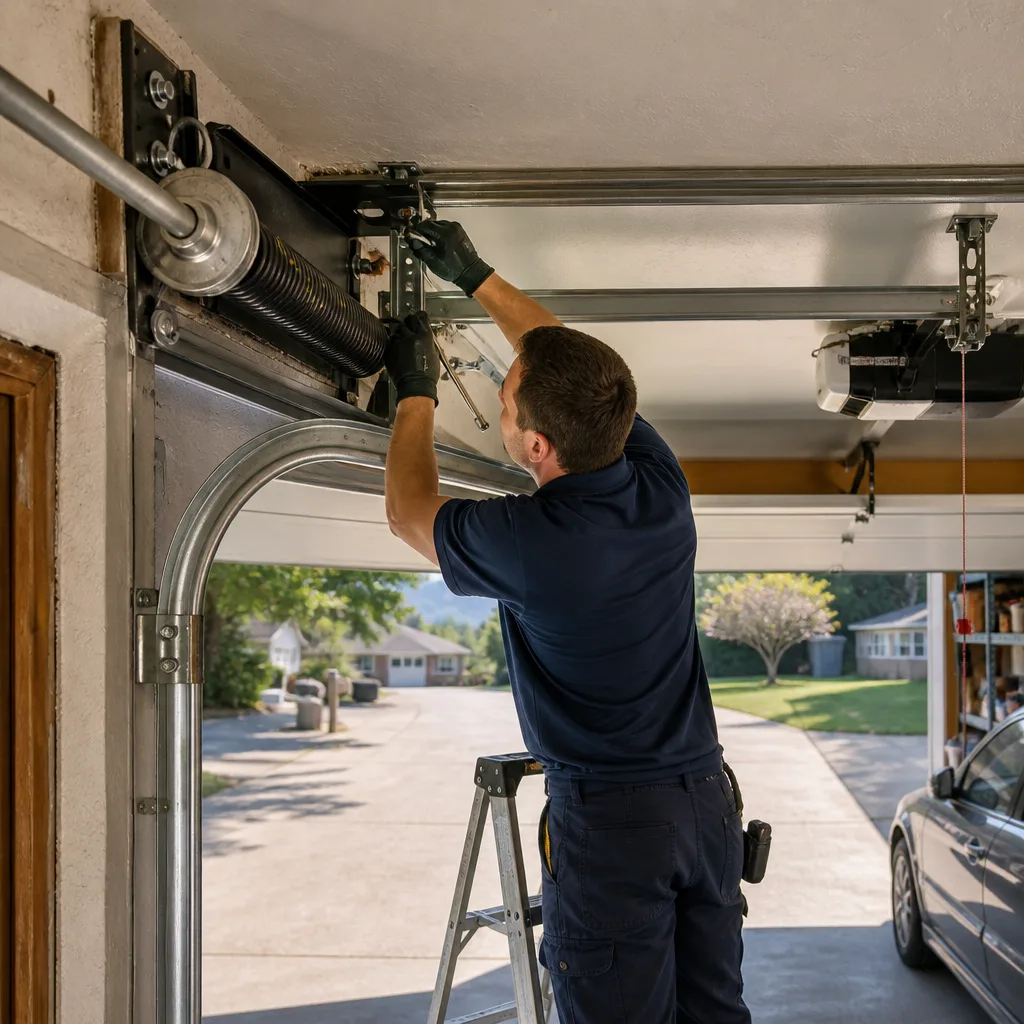 After
After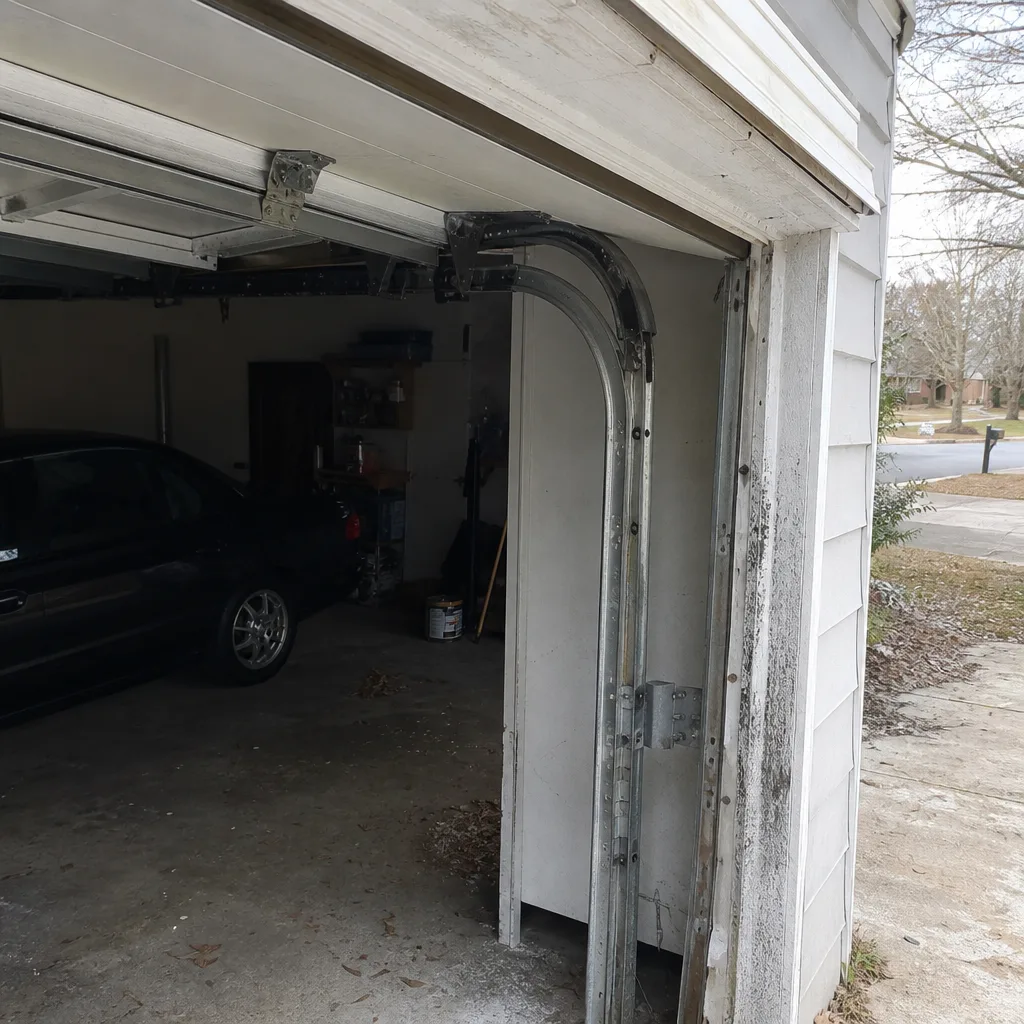 Before
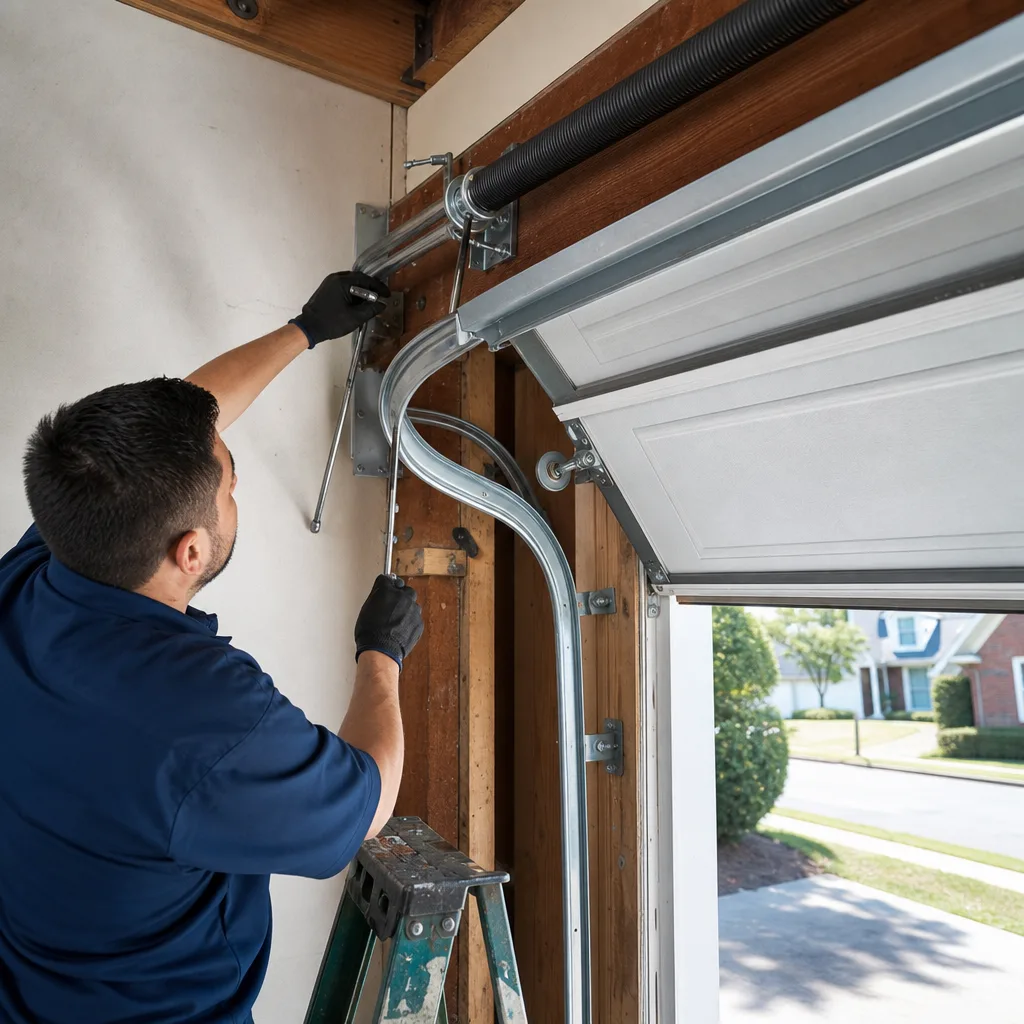 After
After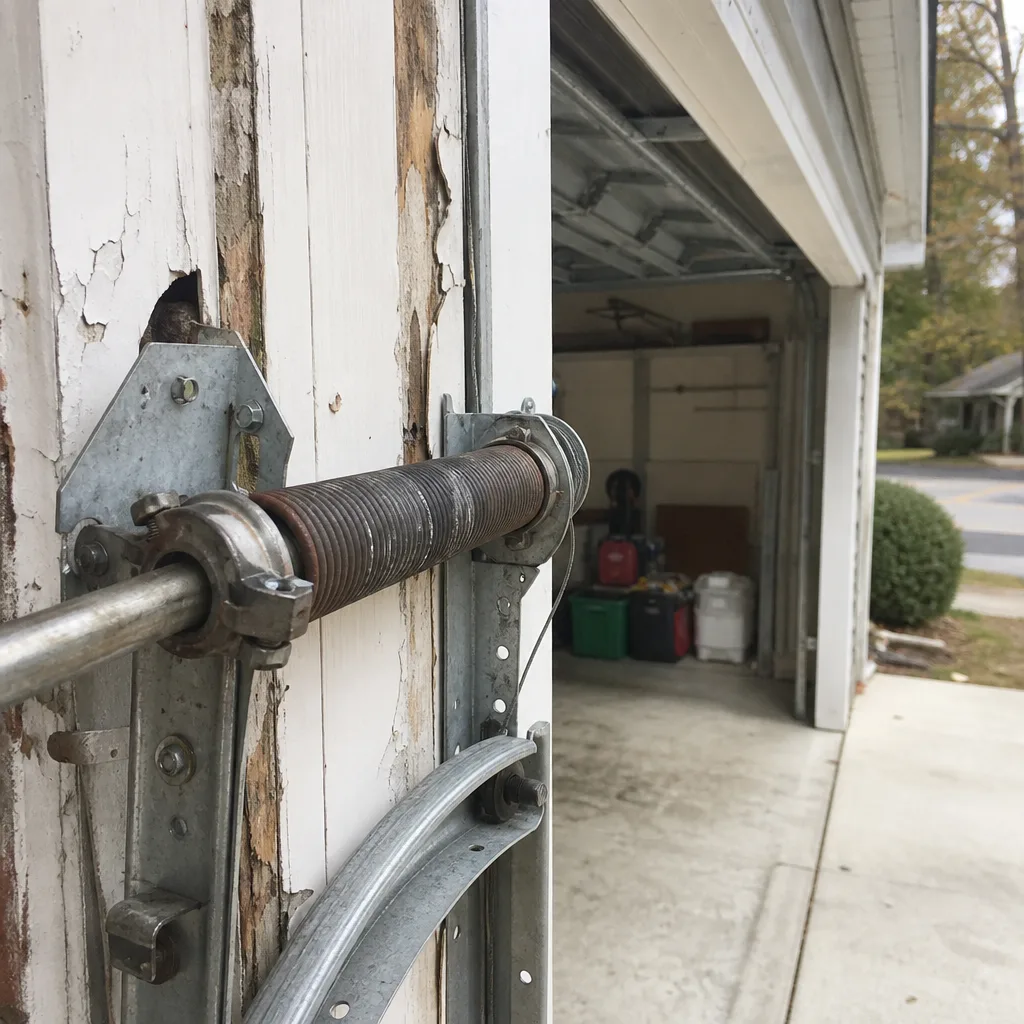 Before
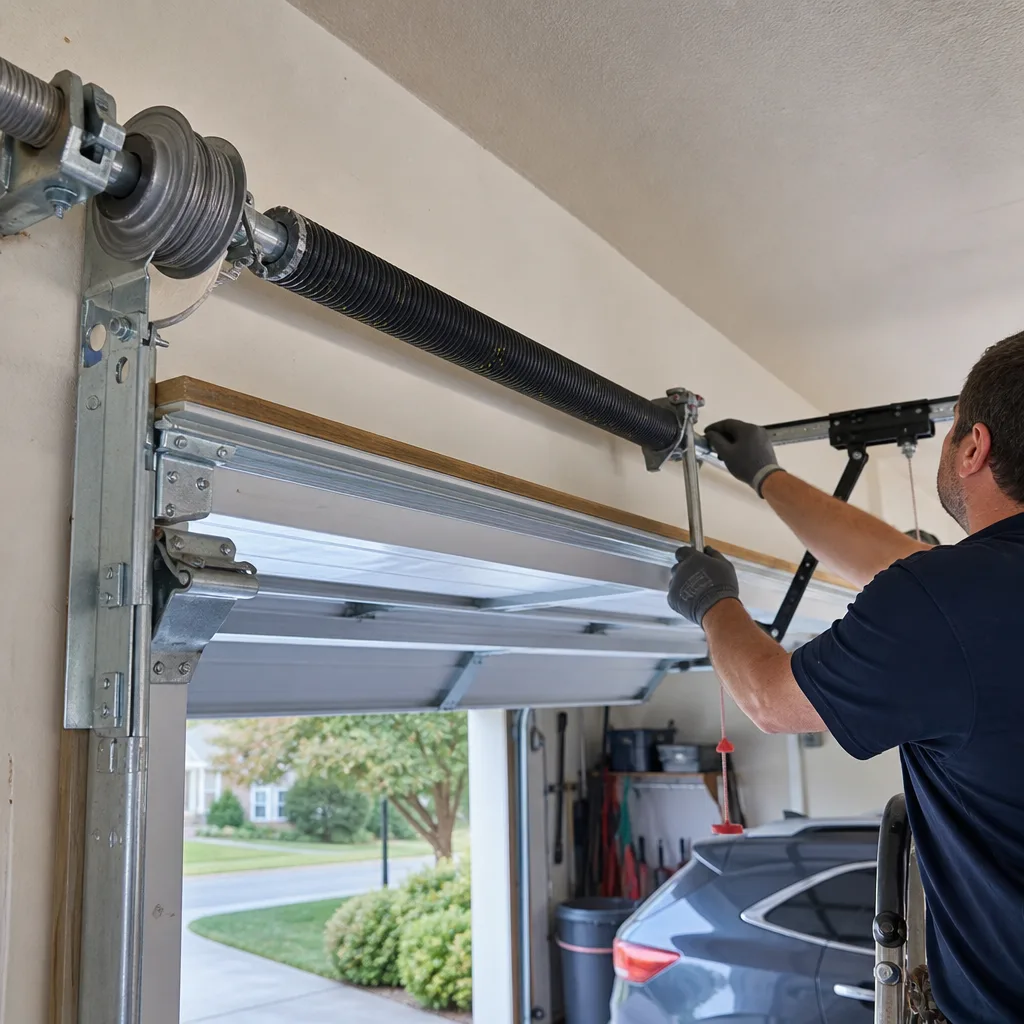 After
AfterDIY vs Professional Garage Door: The Marietta Homeowner’s Decision Guide
Torsion springs store energy proportional to their wire diameter and coil count. A standard residential spring holds roughly 100 foot-pounds of torque, which is why the CPSC’s garage door injury data is concentrated not in opener malfunctions but in spring and cable failures during homeowner repair attempts. This guide draws a hard line between garage door tasks a prepared Marietta homeowner can own and tasks where DIY attempt history tracks directly to hospital admissions, and points to our more guides & resources for related maintenance topics. You’ll learn the mechanical reason each task lands on one side of the line, the actual tools required, and what honest cost comparison looks like when you account for the probability of a correction call.
Quick Answer
Most garage door tasks that involve panels, weather stripping, sensors, and opener settings can be done safely by a Marietta homeowner with basic tools and patience. Spring replacement, cable work, and anything requiring torsion adjustment belong with a licensed professional, because a failed attempt on those components carries injury risk that no savings justify. The practical split is roughly 60% DIY-friendly tasks and 40% professional-required, and knowing which is which before you open the tool drawer is the entire decision.
Table of Contents
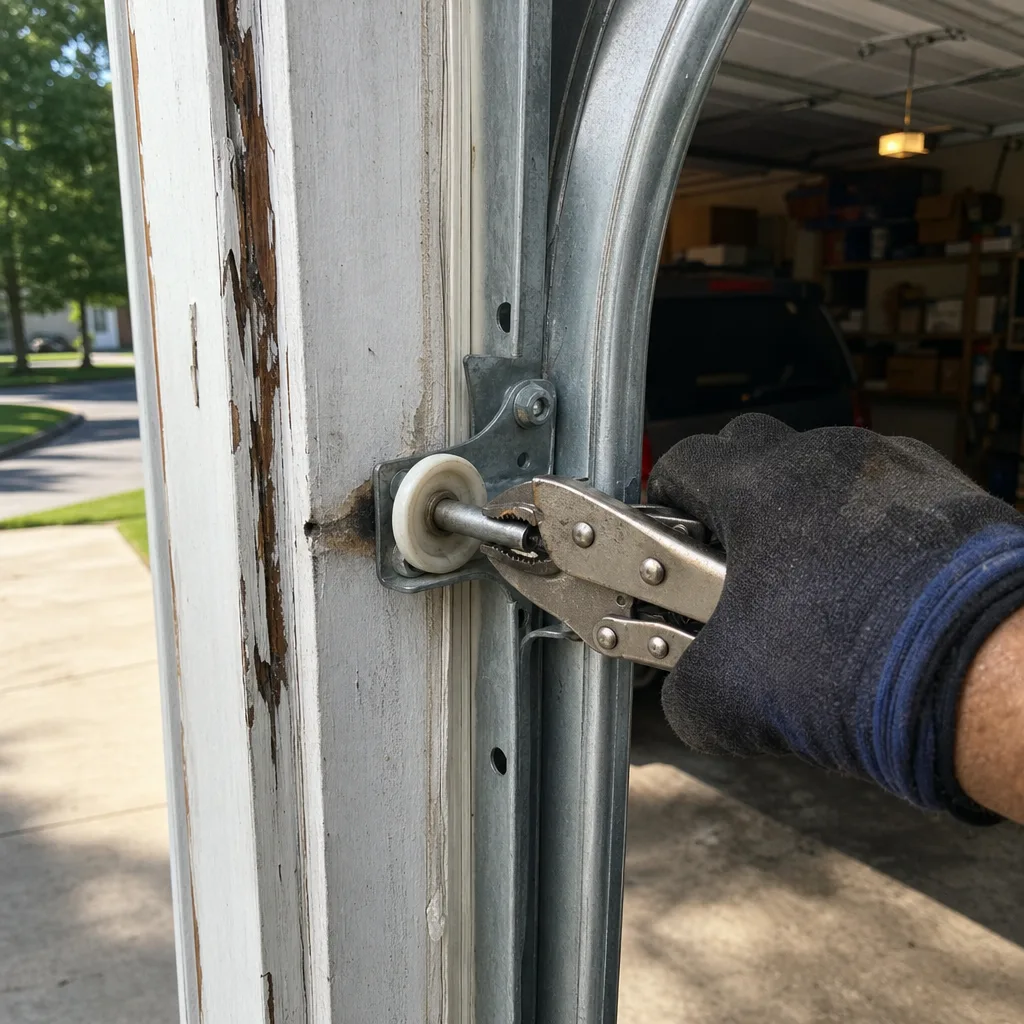
- The Risk-Allocation Framework: Why This Isn’t a Skills Question
- Twelve Common Garage Door Tasks, Classified
- The Tool and Skill Threshold for DIY-Appropriate Tasks
- Professional-Required Tasks and the Mechanical Reason Why
- The Liability and Insurance Dimension in Marietta
- Honest Cost Comparison: DIY vs Documented Professional Quote
- How to Use Partial DIY to Reduce Labor Time and Verify a Quote
- Common Mistakes to Avoid
- When to Call a Professional
- Frequently Asked Questions
- The Bottom Line
BeforeAfterThe Risk-Allocation Framework: Why This Isn’t a Skills Question
Every garage door task carries two kinds of risk: injury risk to the person doing the work, and failure-risk to the door system if the work isn’t right. A smart DIY decision weighs both against the actual savings, which is usually smaller than it looks once time and tool cost are counted. In Marietta, where summer heat pushes garage temperatures past 95 degrees and humidity rusts hardware faster than in drier climates, the failure-risk side of the equation is higher than the national average.
We’ve watched homeowners in Kennesaw and East Cobb replace their own weather stripping successfully, then call us in Powder Springs two weeks later because the same door’s spring snapped. The stripping job was fine. The spring was never going to be a DIY project, and waiting to call until the spring failed turned a $290 repair into a Saturday-morning extraction of a door off its tracks. Understanding where the line sits prevents that sequence.
The framework works like this: if a task failure mode involves the door falling, the spring unwinding, or the cable releasing stored tension, the risk isn’t manageable with caution or a YouTube tutorial. If the failure mode is a crooked sensor or a gap at the threshold, the worst outcome is a door that doesn’t open smoothly and a second attempt on a free weekend.
Twelve Common Garage Door Tasks, Classified
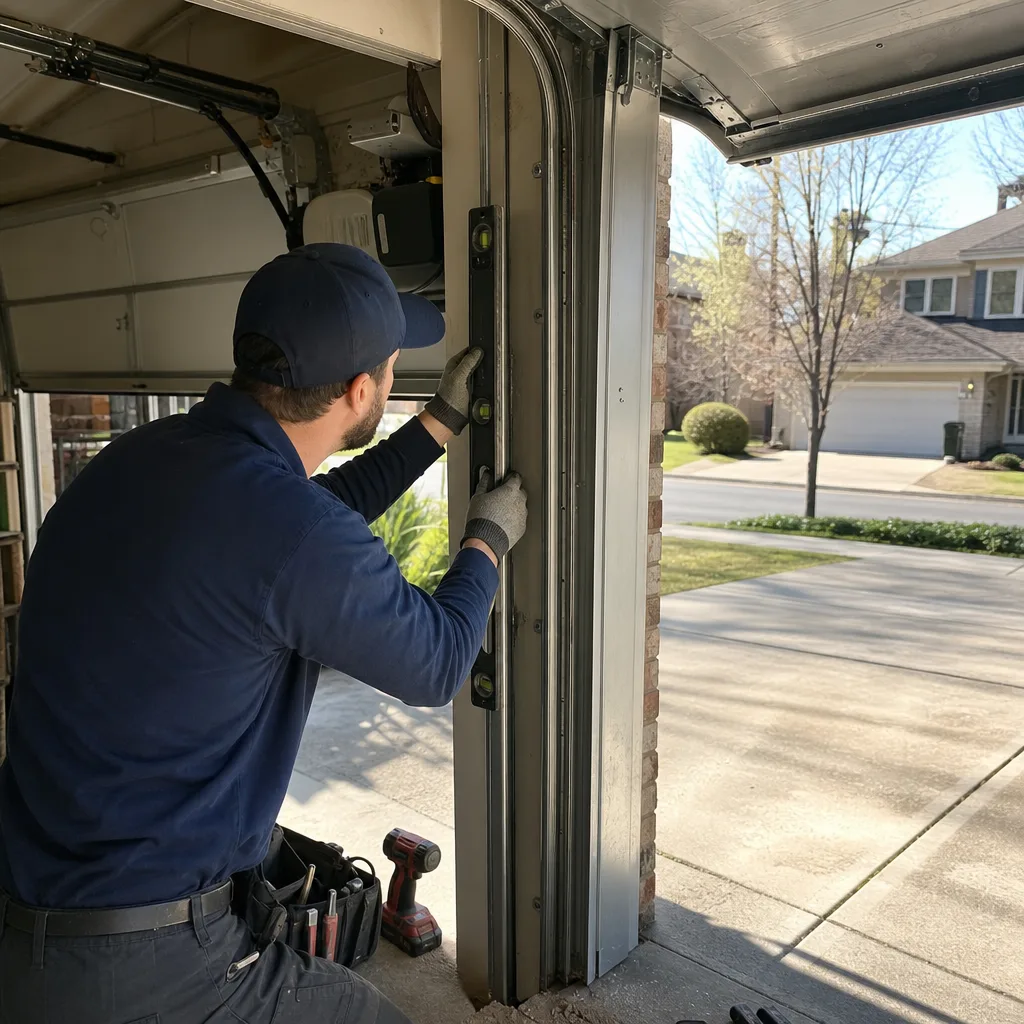
This list is the core of the guide. Each task is sorted into one of two categories with the mechanical reason stated plainly. Print this section if you own a home in Marietta with an attached garage.
Homeowner-Appropriate Tasks
- Weather seal replacement (bottom seal and side jambs): The seal is a friction-fit component held by an aluminum channel or screws. Failure mode is a draft, not a falling door. Tools: utility knife, flathead screwdriver, replacement seal matched to the door brand.
- Photo eye sensor cleaning and realignment: Sensors are low-voltage components that stop the door when the beam breaks. Dust, spider webs, and a bumped bracket are the usual culprits in Marietta garages. Tools: soft cloth, level, small wrench.
- Panel cleaning and repainting: Cosmetic work on a steel or aluminum panel. No tension is released, no fasteners are load-bearing. Tools: mild detergent, sanding sponge, exterior-rated paint.
- Opener limit switch adjustment: The limit switch tells the opener motor where to stop. If the door reverses before closing, the down-limit is set too low. Tools: stepladder, flathead screwdriver. Confirm success by testing the door twice and watching the full cycle.
- Remote control programming and keypad battery replacement: No mechanical contact with the door at all. Tools: the manual, or the model number to look the manual up online.
- Track inspection and debris clearing: You can inspect the vertical tracks, look for kinks or build-up, and clear out small obstructions. You should not attempt to bend a track back into shape, which is a professional task requiring the door to be in the down position with tension on the spring.
Professional-Required Tasks
- Torsion spring replacement: The spring above the door holds the entire counterbalance under load. Removing it without proper winding bars and the correct procedure releases the stored torque through the bar, not into the spring. The injury mechanism is a winding bar to the skull or a spring fragment to the face. This is the single most dangerous residential component in an American home.
- Extension spring replacement: The older-style springs on either side of the horizontal track stretch under tension. When one breaks, the cable and the remaining spring hold the remaining force. Replacing one involves managing that force. Mistake pattern: homeowner removes the cable without securing the door, and the spring retracts violently.
- Cable replacement and tensioning: The cables wrap around drums at the top of the door. They serve the same tension as the spring, which means a cable under load can amputate a finger or lacerate a hand if it releases while grabbed.
- Track bending or replacement: The track guides the rollers and supports the door weight through its full travel. Getting a track vertical and parallel within 1/8 inch requires lifting the door, which typically involves release of spring tension.
- Roller replacement (except bottom rollers on some models): Most rollers attach to brackets under spring tension. Top and middle rollers usually can be unbolted with the door down, which many homeowners do safely. But if the roller is on a bracket that’s under load, the job requires professional tools and attention. Our guideline: if the roller is above the bottom panel and the spring is torsion, call a technician.
- Opener motor replacement: This one isn’t usually dangerous, but it is rarely DIY-profitable. New openers from Genie or Chamberlain require exact header bracket positioning, correct rail assembly, proper chain or belt tension, and limit calibration. A misinstalled opener strips the rail gears within months, which is why most DIY opener installs in Marietta get corrected on a warranty call by someone else. The correction costs more than the initial professional installation would have.
The Tool and Skill Threshold for DIY-Appropriate Tasks
“Handy homeowner” is too vague. Each DIY task on this side of the line has a measurable outcome that confirms success, and that’s what you should aim for. If the outcome can’t be measured, the task isn’t really DIY-appropriate.
Task-Specific Thresholds
- Weather seal replacement: You need a replacement seal in the correct width and T-channel profile for your door brand, a utility knife, and 30 minutes. Success is measurable: close the door and hold a dollar bill under the seal. If the bill slips out easily, the seal isn’t seated, and you haven’t finished the job.
- Sensor realignment: Both sensors have an alignment light, usually green on the sender and red on the receiver. The receiver light stays solid when the beam is unbroken. Bump the bracket to center the beam. Success is a solid light with the door down and no interruption. This is a Saturday-morning job, not a call to us.
- Panel repainting: You need exterior paint rated for metal, a wire brush to remove rust at the bottom edge, and a drop cloth. Success is uniform coverage with no paint bridging between panels that would stick when the door opens. Put a strip of tape between panels before you paint, and pull it before the paint sets.
- Limit switch adjustment: The adjuster is a small dial or screw assembly on the opener body, usually labeled “down force” or “limit.” One quarter turn at a time. Success: the door closes fully onto the seal and doesn’t reverse, and the opener’s force safety mechanism still reverses the door when you block it with a roll of paper towels at the threshold. Test after every adjustment.
The pattern here is specific: each task has a narrow tool list that one hardware store trip covers, and each has an independent test that proves the correction. If a task doesn’t have a test like that, it fails the DIY threshold. Spring repair has no DIY success test. Cable tensioning doesn’t either. That’s the hard line.
Professional-Required Tasks and the Mechanical Reason Why
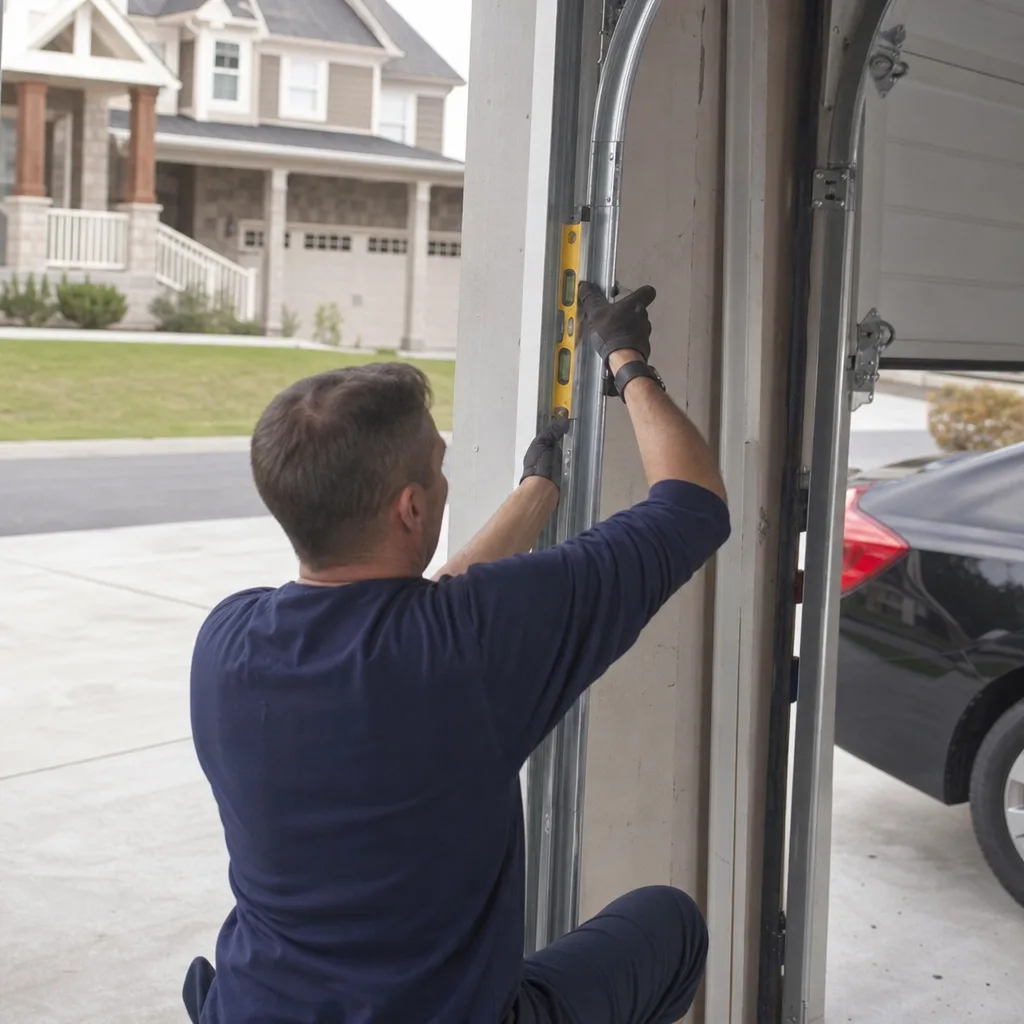
We’re not going to write a how-to for these tasks. We’re going to write what happens if you try, because that’s the detail most guides skip. In Marietta, where houses built in the 1980s and 1990s along Johnson Ferry Road and Roswell Road still run original torsion springs from builders like Wayne Dalton and Clopay, the spring you’re looking at is often two decades into its fatigue life.
A torsion spring is a steel coil that winds and unwinds to lift the door’s weight. The energy it stores is constant whether the door is up or down. Removing it requires inserting two steel bars into the winding cone, which acts as a lever against the torque. If the cone is rusted (and in Georgia humidity, it usually is), the bar can slip out. The result is a steel bar moving at roughly 300 feet per second. That’s the mechanism behind most garage door spring injuries, including the fatal ones.
Extension springs work differently but fail similarly. On older Marietta homes, you’ll see two long springs running parallel to the horizontal tracks. When one side snaps, the other side still holds enough force to pull the door sideways if the cable isn’t secured. Homeowners who replace only the broken spring often tension the new one incorrectly, and the door lifts crooked, which then grinds the rollers into the track until the other spring fails too.
The professional-required designation is about consequence, not difficulty. Some of these jobs are technically straightforward for someone with the winding bars, the right spring dimensions, the correct wire gauge, and the experience to feel when a cone is seated. But the first time you get one of those elements wrong is the problem. That’s why spring and cable work, along with track corrections, should be left to someone who photographs the failed component before quoting anything.
The Liability and Insurance Dimension in Marietta
Here’s a layer most DIY-vs-pro guides don’t cover, and it matters in Georgia. If a homeowner replaces a torsion spring themselves and that spring fails later, causing damage to the door, the vehicle, or a person, the property insurance claim runs into a documentation problem. The insurer asks who installed the spring, when, with what parts, and whether the installation met manufacturer specifications. A homeowner who can’t produce an invoice from a licensed technician and a photo record of the work is in a weaker claim position than one who can.
That’s why our documentation practice exists in the form it does. Every visit from Servo Garage Doors Marietta includes a documented photo record of what was found and what was done, and a written price before any work starts. If a spring we installed later failed under warranty, the paper trail is there: spring dimensions, wire diameter, batch information, tension setting, and before-and-after photos. That’s not theatre. That’s what an insurance adjuster in Cobb County asks for.
The Georgia state licensing board also matters here. A garage door repair carries no professional license requirement for the homeowner, but any company you hire should hold its own license and insurance. The homeowner who hires an unlicensed operator to save $80 has accepted liability for whatever happens on the property. The homeowner who hires a licensed technician with insurance has shifted that exposure.
Honest Cost Comparison: DIY vs Documented Professional Quote
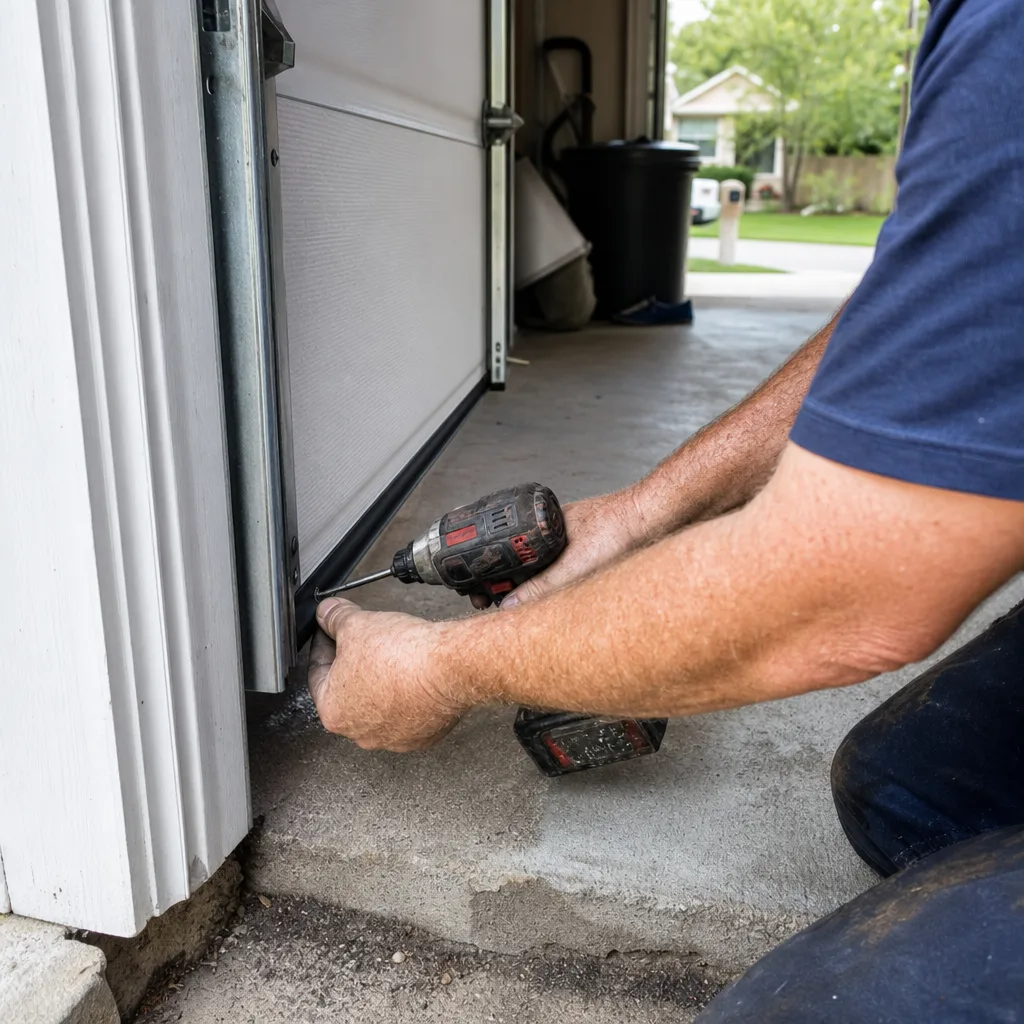
Cost comparison that only counts parts is dishonest. Here’s how the math actually works in Marietta for the three most common repair scenarios, with figures drawn from our Garage Door Cost Breakdown: The Marietta Homeowner’s Reference for 2026.
Scenario 1: Torsion Spring Replacement
- DIY parts: A pair of torsion springs matched to the door weight and wire diameter: $89 to $140 online. Winding bars: $25 to $35. Total materials: roughly $114 to $175.
- DIY time: For someone who has never done it: 3 to 5 hours, plus research time, plus the risk-adjusted cost of needing a professional correction. Let’s call the correction probability 40% for a first-timer, based on what we see from partial DIY attempts in Marietta.
- Actual DIY expected cost: $175 in parts plus 4 hours of your time, plus a 40% chance of a $290 to $340 professional repair to correct or replace what didn’t work. Expected total: $175 plus time plus $116 to $136 of risk-adjusted correction.
- Professional quote from a Marietta company: A torsion spring replacement in this market typically runs $290 to $340 installed, including springs matched to the door, tension set correctly, and a cycle test. Servo Garage Doors Marietta does this work with a written price before any work starts and a documented photo record when the technician leaves.
The DIY route saves maybe $114 on paper, then loses it in time and correction probability. The whole point of a written price is that the comparison stops being conjectural.
Scenario 2: Weather Seal Replacement
- DIY parts: A 9-foot bottom seal for a standard residential door: $18 to $35, depending on brand compatibility. If it’s Clopay or Amarr, the channel profile is proprietary and costs a few dollars more.
- DIY time: 30 to 45 minutes.
- Professional quote: Most companies charge $85 to $140 for a seal replacement in Marietta, which includes the part and the labor. The DIY savings here are real: you save $60 to $100 and the worst failure is redoing the job.
Scenario 3: Opener Limit Adjustment
- DIY cost: Zero dollars, unless you count the screwdriver you already own.
- DIY time: 20 minutes, plus testing.
- Professional quote: A service call in Marietta for a limit adjustment runs $75 to $110 as a standalone visit, though many companies will fold this into a broader inspection if you ask.
The honest table is this: DIY wins on weather seals, sensor cleaning, painting, and limit adjustments. Professional wins on anything involving tension, and the margin is not close once correction probability goes into the math.
How to Use Partial DIY to Reduce Labor Time and Verify a Quote
There’s a middle path that most homeowners miss, and it’s the one we recommend in Marietta because it aligns with how careful buyers actually operate. You don’t have to choose between doing everything yourself and calling blind. You can do the diagnostic and documentation work first, then hand a photographed, described problem to a technician. Here’s the step-by-step version of what we call partial DIY:
- Photograph the door from both sides before touching anything. Use the level on your phone camera to get a straight-on view of the tracks, the spring, the cables, and the bottom seal. These photos form the baseline, which is Clause 4 of The Haven Standard applied from the homeowner’s side.
- Write down the symptoms with specific language. Instead of “the door makes a noise,” write “the left-side roller squeals on the way up and the door shudders at the halfway point.” This level of detail reduces the technician’s diagnostic time by half, which reduces your labor charge.
- List the brand and model number. Look for the sticker on the inside of the door panel or on the opener rail. Genie, Clopay, Amarr, and Wayne Dalton all stamp model numbers in slightly different places, but most Marietta residential doors have them in the corner of the bottom panel or on the opener.
- Bring a competing written estimate if you have one. Our Free Second Opinion applies to any written estimate from another company. Bring the paperwork. If the diagnosis changes, you’ll see it in the documentation.
- Ask for the quote in writing before anyone starts work. This is where the industry separates. Any company working in Marietta should be able to give you a number in writing before work begins.
Partial DIY reduces labor time because the technician shows up with the right spring, the right seal profile, or the right circuit board already in the truck. The diagnosis you did means the first trip is the correction, not the investigation. In our experience, a prepared homeowner cuts the on-site time by half compared to a cold call.
Common Mistakes to Avoid
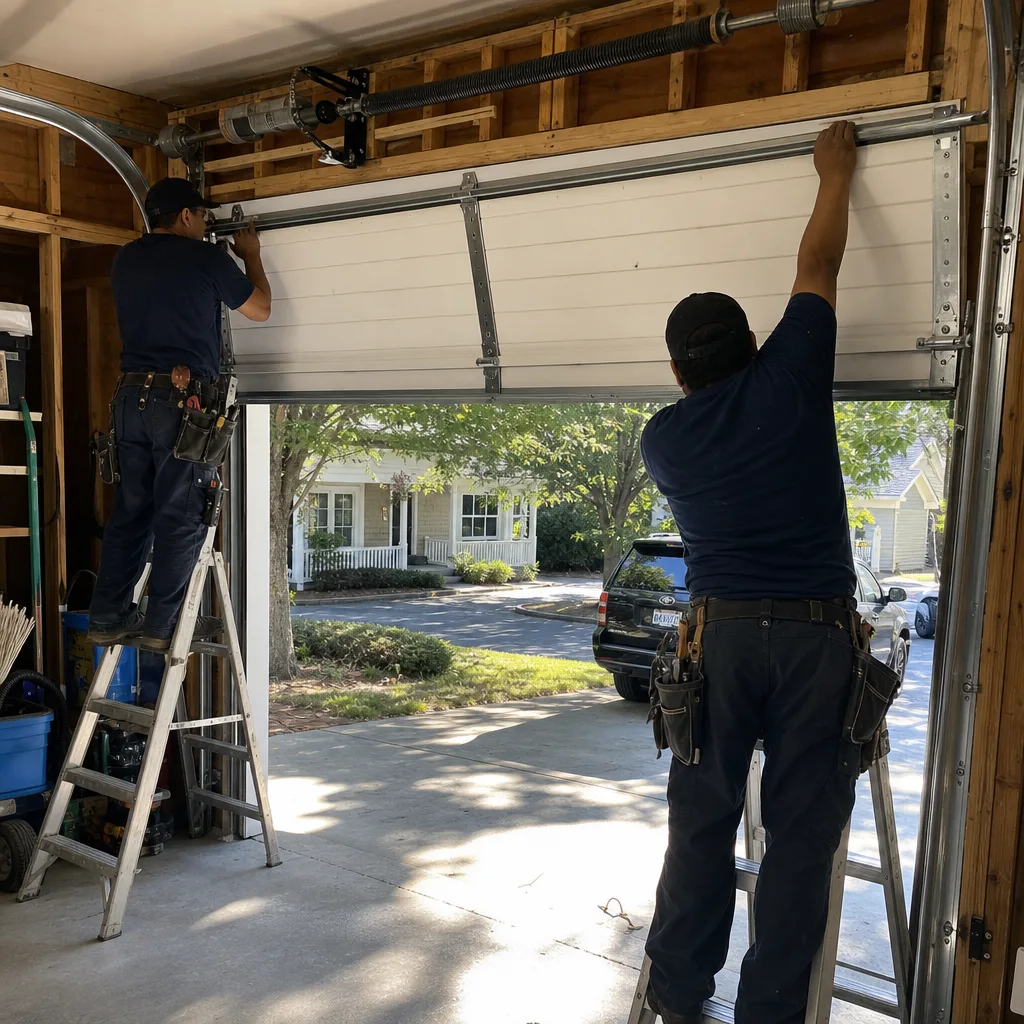
- Using a socket wrench as a winding bar substitute. The winding cone on a torsion spring is machined for 18-inch steel bars. A socket wrench handle can slip out of the cone, releasing the spring torque into your wrist. This substitution accounts for a measurable share of spring-repair injuries nationwide.
- Replacing one extension spring instead of both. Extension springs fatigue in pairs. The spring that didn’t break is near failure, and tensioning a new one against a worn old one makes the door run crooked. In Marietta garage humidity, that happens faster than you’d think.
- Painting over a rusted bottom panel without treating the metal first. Georgia humidity has already begun oxidizing the panel from beneath. Painting over active rust in a Cobb County garage is a three-year countdown to a panel replacement.
- Adjusting the opener force limiter to “help” a struggling door. When a door struggles to lift, the problem is usually spring tension or track friction, not the opener’s force setting. Overriding the limiter to force the door up is how rollers get yanked out of the track and doors come down hard.
- Buying a universal spring instead of matching the wire diameter and coil count to the door weight. A 0.225-inch wire diameter spring and a 0.250-inch spring are not interchangeable. The wrong spring cycles out within two years, and when it breaks, it takes the cables with it.
- Assuming new-build Marietta garage doors are modern enough to lack the old hazards. Builders in subdivisions around Powder Springs Road and Dallas Highway put in doors from regional suppliers that often used extension springs well into the 2000s. Your home’s age doesn’t tell you which style you have; you have to look.
- Using a rusty roll of interior tape to “align” photo sensors instead of leveling them properly. Photo eye alignment is a two-axis problem. Taping the sensors to the bracket doesn’t fix the alignment, and the door will reverse intermittently for years until you level them correctly or call a technician.
When to Call a Professional
Call a professional the moment the task involves a torsion spring, an extension spring, a cable under tension, or a track that’s visibly bent. Those four components carry the injury and failure risk that no DIY savings justify. You should also call if the door shudders mid-travel, lifts unevenly, or makes a distinct snapping noise during the cycle; those are pre-failure signals, and a technician can photograph the failing part and quote a written price before it breaks. If the door has come off its tracks, stop using it immediately and call. Servo Garage Doors Marietta offers free estimates in Marietta - call (470) 486-7771.
Frequently Asked Questions
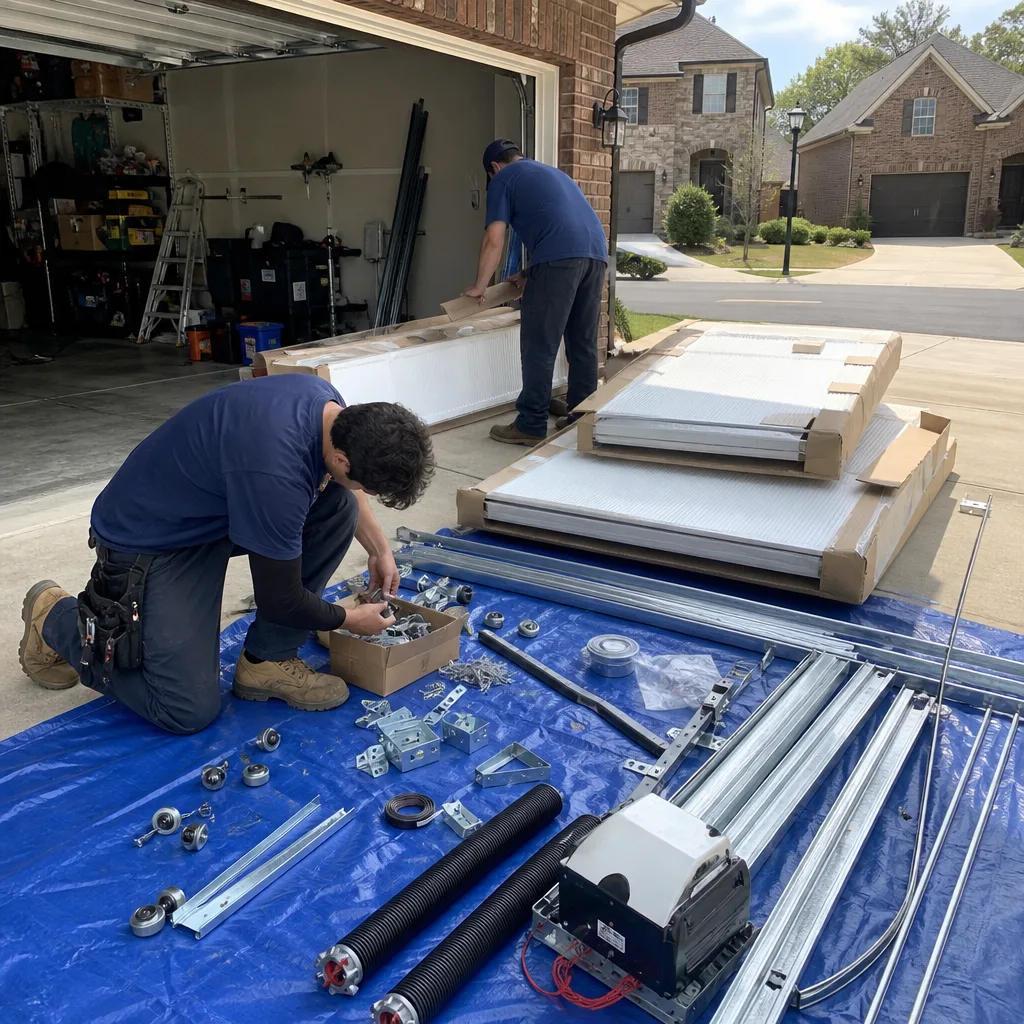
A torsion spring replacement in Marietta typically costs between $290 and $340 installed, including the pair of springs matched to your door’s weight and wire diameter, tensioning, and a cycle test. The price is quoted and agreed in writing before any work starts when you hire a company that operates on a written-price model. Call (470) 486-7771 for an exact quote on your specific door.
No, torsion and extension spring replacement is not safe as a DIY project, because the spring stores roughly 100 foot-pounds of torque and can release it through a winding bar at speeds that cause severe injury. The danger is mechanical, not a matter of skill. If a spring breaks in Marietta, leave the door down and call a technician.
Weather seal replacement, photo eye sensor cleaning and realignment, panel painting, opener limit adjustment, remote programming, and track inspection are all appropriate DIY tasks with the right tools and a measurable success test for each one. These tasks carry no serious injury risk and the worst outcome is usually a second attempt.
Look at the spring above the door when the door is closed. If you see a visible gap in the coil, rust lines along the wire, or if the door lifts heavier than it did a year ago, the spring is nearing failure. A torsion spring in Georgia’s humidity that shows rust along the coil faces typically has two to five years left, and the replacement is cheaper before it breaks than the emergency call after.
Yes, a DIY spring or cable repair that later fails can complicate a property insurance claim if the repair wasn’t documented by a licensed technician, because the insurer will ask for proof of parts and workmanship. A documented professional repair shifts that risk to the repair company’s insurance and warranty, which is one reason we deliver a photo record on every visit.
Estimates are free, and every job is quoted with a flat, written price and written scope before any work starts. The price you see on the written quote is the price on the invoice. Call (470) 486-7771 for a free estimate, or bring a competing written estimate for a Free Second Opinion.
The Bottom Line
The DIY-vs-professional garage door decision is a risk-allocation question, not a skills question. Tasks where the failure mode is cosmetic, adjustable, or low-tension are homeowner-appropriate, and Marietta’s specific climate and housing stock mean weather seals and paint need attention more often here than in drier markets-see our Garage Door Repair Maintenance Checklist for Marietta Homeowners for the full schedule. Tasks where the failure mode involves the spring, the cable, or the track fall on the professional side of the line because stored torque doesn’t forgive mistakes. Partial DIY, where you photograph and document the problem before calling, is the highest-leverage move a homeowner can make. The documentation you receive afterward matters for insurance, warranty, and resale, and that’s the paper trail every repair should leave.
Written by Marcus Deller, Owner at Servo Garage Doors Marietta, serving Marietta since 2015.