
Last updated September 20, 2026
Full 25-point door and opener safety check with every visit - springs, cables, rollers, tracks, and your LiftMaster or Chamberlain opener included
You get a price before we start. It does not change when the truck arrives.
 Before
 After
After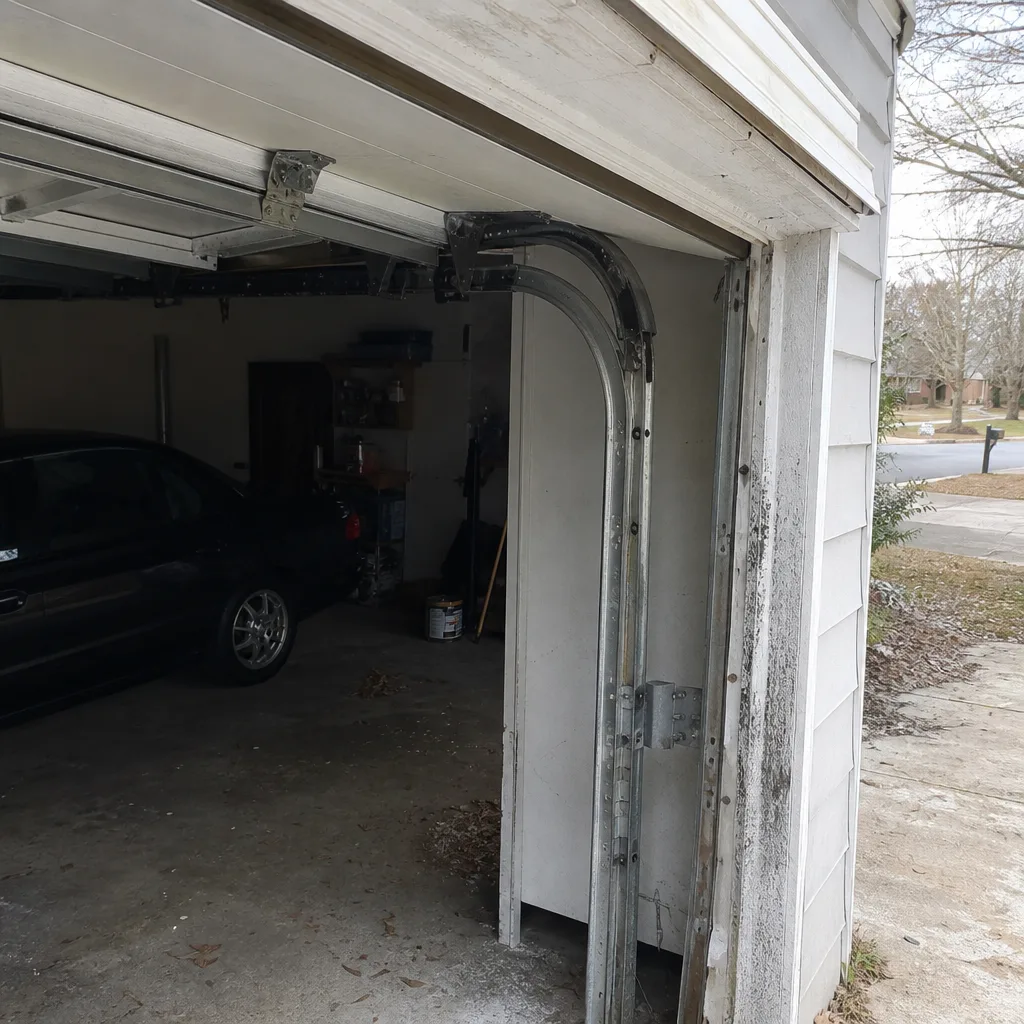 Before
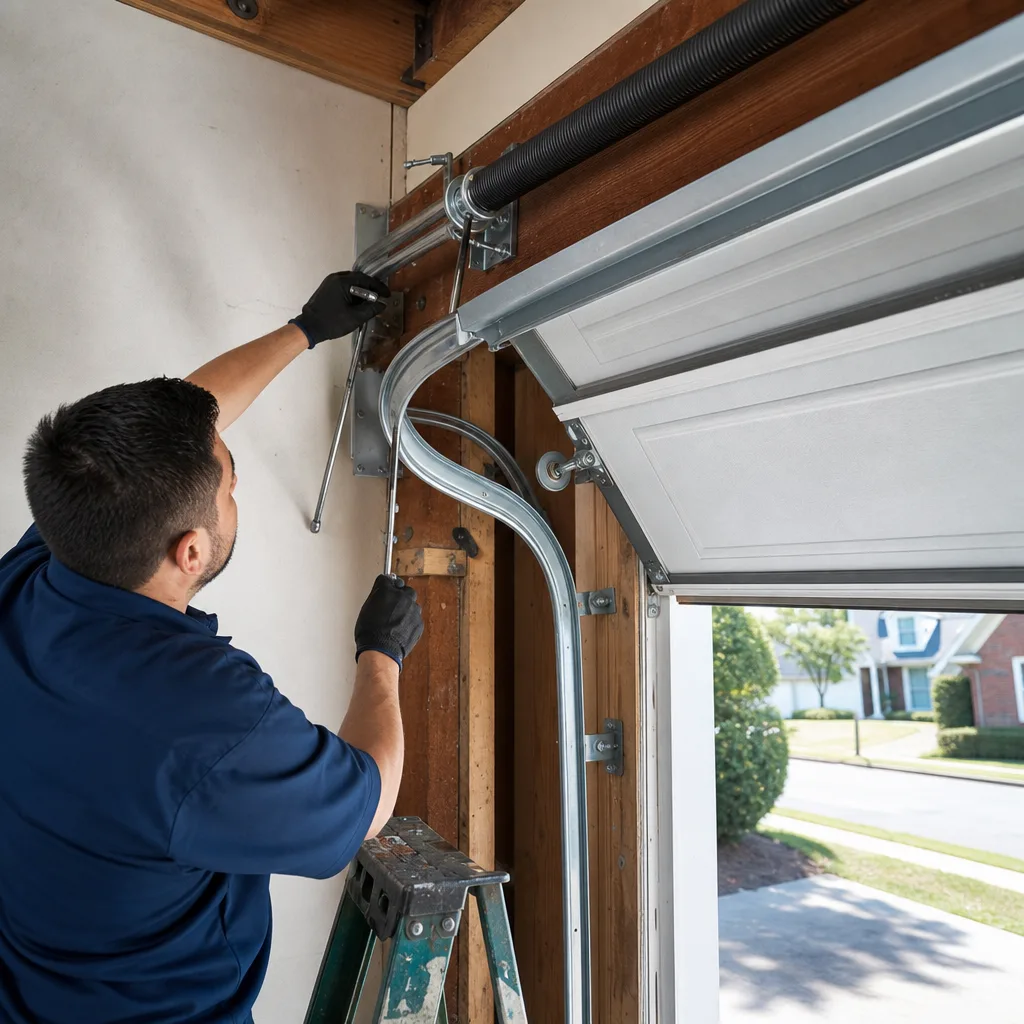 After
After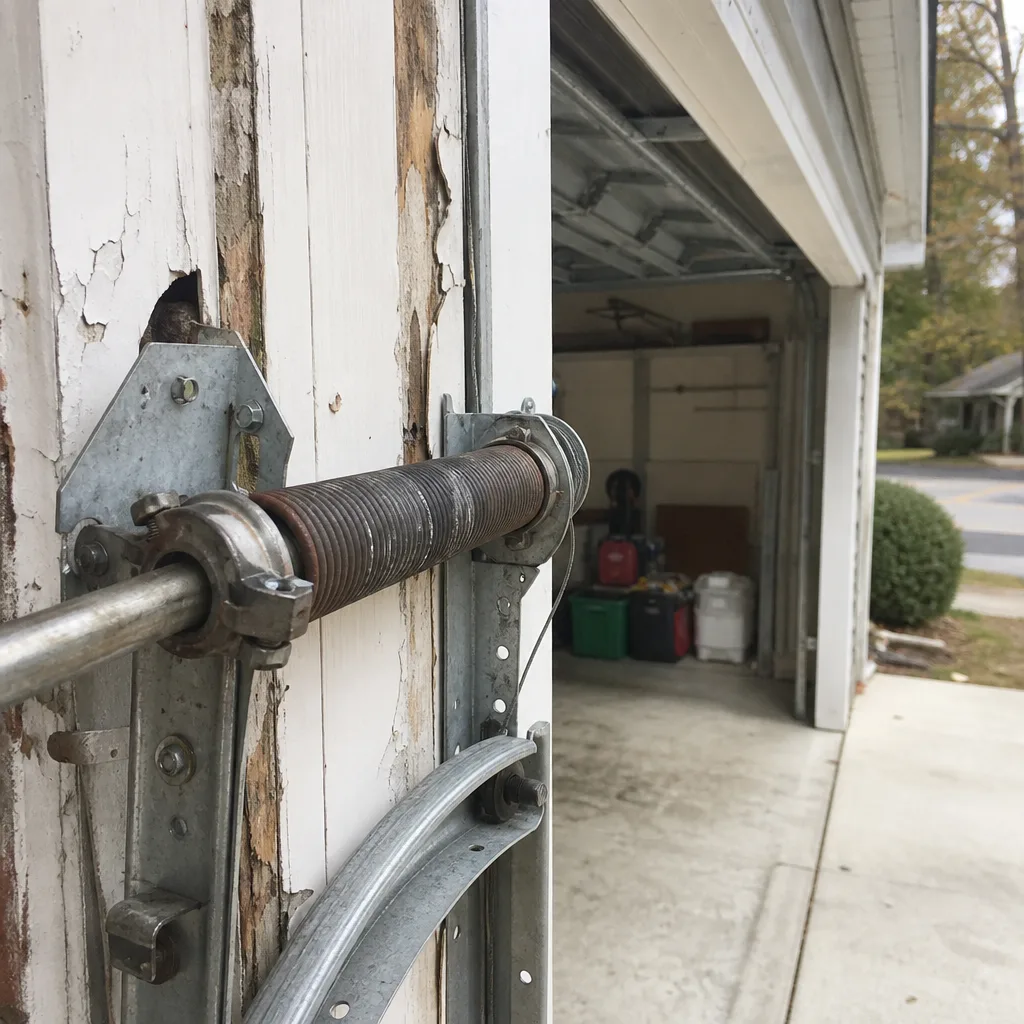 Before
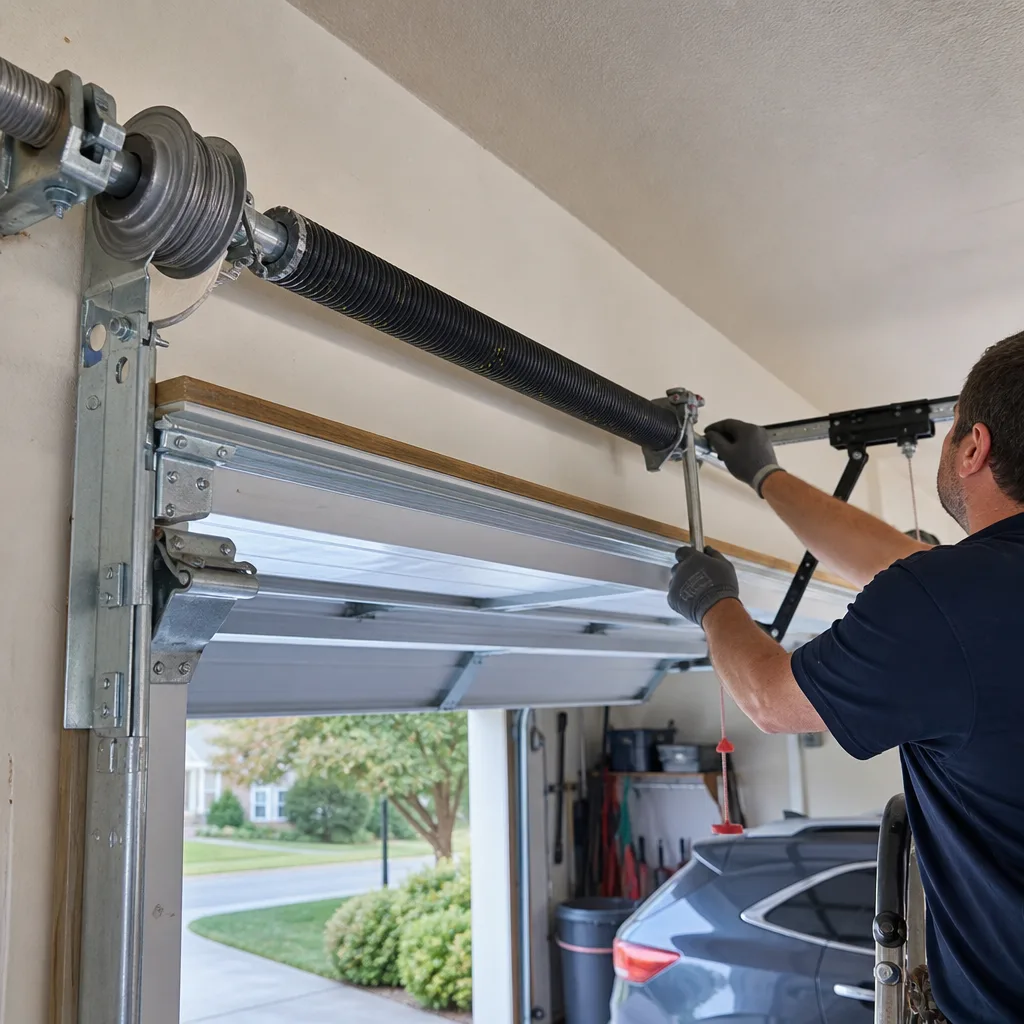 After
AfterGarage Door Warning Signs: A Marietta Homeowner’s Reference Guide
A garage door that reverses before closing fully has three distinct mechanical causes, each with a different repair cost - and a technician who doesn’t explain which one they found before quoting has either skipped the diagnosis or is charging for all three. Most Marietta homeowners don’t know this. They hear the grinding, watch the door hesitate, and call the first company that answers. Then they get a quote for a full spring replacement when the actual problem was a misaligned photo eye that cost a tenth as much to fix. Our Complete Guide to Garage Door in Marietta exists so that never happens to you. We’re going to walk through every observable warning sign a garage door produces, name the specific component behind each one, and tell you which signs mean “keep an eye on it” versus which mean “leave the door closed and call someone who will show you the failed part before quoting.” By the time you finish reading, you’ll know more about your door than most technicians will expect you to know - and that’s exactly the point.
Quick Answer
The most common garage door warning signs in Marietta fall into nine observable categories covered in our Seasonal Garage Door Care for Marietta: Year-Round Homeowner’s Guide: grinding or squealing during movement, slow or uneven operation, the door reversing before closing, sagging when partially open, visible cable fraying, roller wear, track gaps, opener LED error codes, and unusual balance behavior when disengaged. Each sign maps to a specific component - springs, rollers, cables, track, opener logic board, or limit switches. Some signs allow continued use with monitoring; others, particularly cable fraying and torsion spring damage, mean the door should stay closed until a professional inspects it.
Table of Contents
- The Symptom-to-Component Map: Nine Signs and What They Actually Mean
- Two Tiers of Severity: Monitor It vs. Stop Using the Door
- How to Photograph and Measure Wear Before Anyone Quotes You
- Opener LED Flash Codes as a Diagnostic Tool
- The Chain of Escalation: What Neglect Costs in Marietta
- How Marietta’s Climate Accelerates Component Wear
- What a Documented Inspection Should Confirm Before You Authorize Work
- Common Mistakes to Avoid
- When to Call a Professional
- Frequently Asked Questions
- The Bottom Line
BeforeAfterThe Symptom-to-Component Map: Nine Signs and What They Actually Mean
Every warning sign your garage door produces is a mechanical component talking to you. The problem is that most guides stop at the symptom - “grinding noise means worn rollers” - without explaining which roller, why it’s grinding, or what happens if you ignore it. Here’s the full map. Each sign below is cross-referenced with the specific hardware implicated, because a diagnosis without a component named isn’t a diagnosis.
1. Grinding or metal-on-metal squealing during operation
Component implicated: Rollers, hinges, or (less commonly) the torsion spring bearing plates.
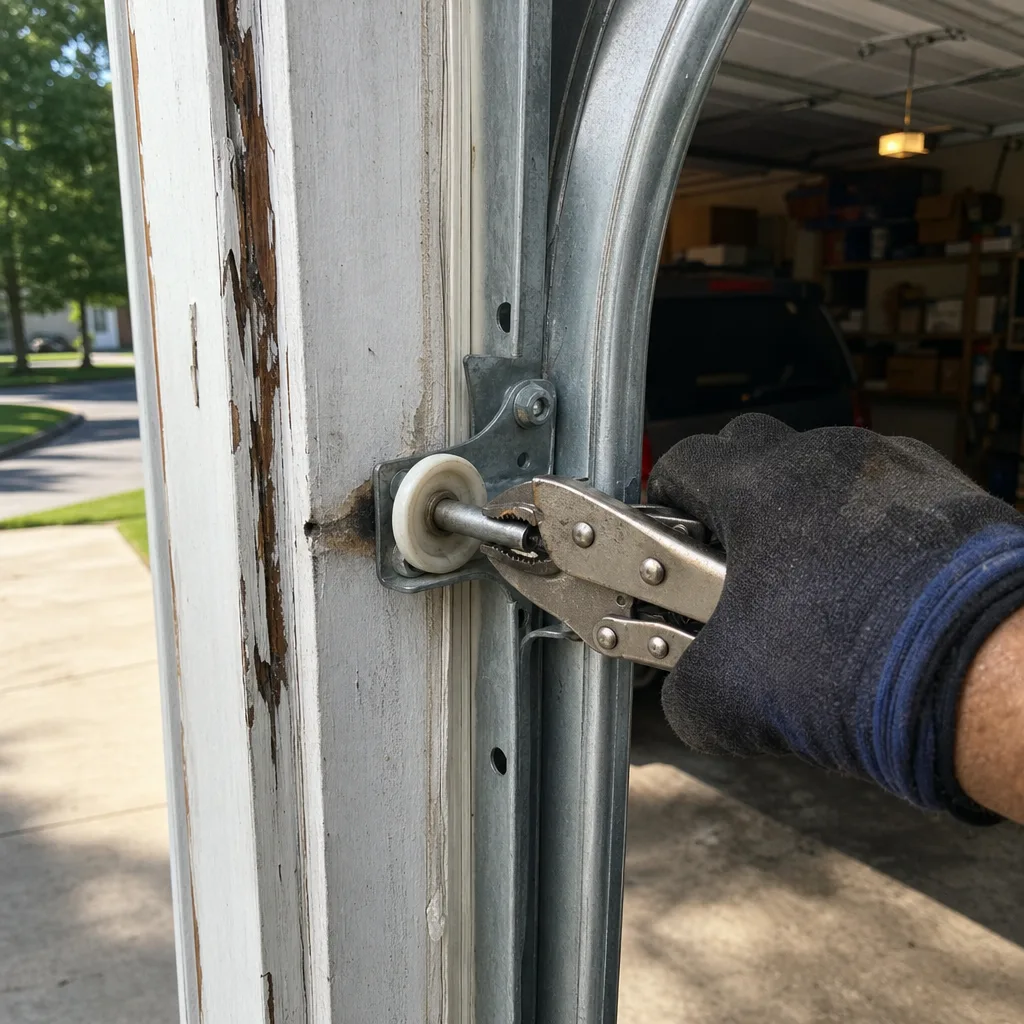
Rollers are the wheels that carry the door along the vertical and horizontal track. In Marietta, where humidity sits high from May through September, steel roller bearings lose their internal grease faster than in dry climates. The noise you hear is the bearing running dry or the roller surface flat-spotting against the track. Hinges produce a similar sound when their pivot pins wear, but hinge noise tends to be sharper and more localized.
2. Slow or uneven movement with visible hesitation
Component implicated: Opener motor capacitor, belt or chain tension, or the door’s balance against its springs.
A door that moves at different speeds during the cycle is almost always fighting something. If it’s the opener, the motor capacitor - the component that gives the motor its initial push - may be degrading. If the door is heavy to lift manually when disengaged from the opener, the springs have lost tension and the opener is doing work it was never designed to do. A LiftMaster or Chamberlain opener pushing a poorly balanced door will burn out its logic board within a couple of years of that strain. We’ve replaced enough boards in Marietta garage door openers to know the pattern.
3. Door reverses before fully closing
Component implicated: Photo eye sensors, limit switch settings, or (rarely) a failing logic board.
This is the symptom that inspired this guide’s opening line. Three distinct causes, three different price points. Cause one: the photo eyes at the bottom of the track are misaligned or dirty - a $75 to $150 fix in this market. Cause two: the down-limit setting on the opener is set too high, so the door believes it has reached the floor when it hasn’t - a simple adjustment. Cause three: the opener’s logic board is misreading sensor input and needs replacement - typically $180 to $350 on a Chamberlain or Genie unit. A technician who can’t tell you which of these three applies before quoting hasn’t finished the diagnostic.
4. Visible sagging when the door is halfway open
Component implicated: Torsion or extension springs.
A properly balanced door will hold position at any point in its travel when disengaged from the opener. If it droops or drops when released, the springs are either fatigued or broken. In this condition, the opener is carrying the entire weight of the door - typically 150 to 250 pounds for a double door in a Marietta home. No opener is rated for that duty cycle.
5. Frayed or rusted cables
Component implicated: Lift cables and cable drums.
The cables are the load-bearing link between the spring system and the door itself. When a cable frays along its length or shows rust at the drum, you’re looking at the most dangerous failure mode a garage door has. Cables under spring tension can snap violently. If you see fraying, leave the door in the closed position and do not operate it until a professional has inspected the full system.
6. Roller wear you can see without tools
Component implicated: Rollers - specifically flat-spotting on the wheel surface or play in the stem.
Steel rollers develop flat spots after years of running the same track curve. Nylon rollers wear more evenly but can crack at the hub. Either condition accelerates track wear, which is a significantly more expensive repair than replacing the rollers themselves. This is the single cheapest intervention point in the entire system - and the most commonly ignored.
7. Track gap or visible bend
Component implicated: Vertical or horizontal track sections, track brackets, or mounting bolts.
A track gap usually appears at the curve where vertical meets horizontal - the highest-stress point in the track system. Loose mounting bolts allow the track to flex, which increases the gap and accelerates roller wear on both sides of the curve. This is a compounding failure: track gap feeds roller wear, which widens the gap, which eventually lets the door jump the track entirely.
8. Opener LED flash codes
Component implicated: The opener’s internal diagnostic system - but the codes point to mechanical components more often than electrical ones.
Both LiftMaster and Chamberlain openers use a numbered LED flash sequence to report fault conditions. We’ll cover the specific codes in the opener section below, but the key insight is this: an opener that flashes a force-reversal code isn’t telling you the board is bad. It’s telling you the door’s spring tension has drifted and the opener is working harder than its force profile allows.
9. Balance drift when the door is disengaged
Component implicated: Springs - specifically spring fatigue over time.
Pull the red emergency release cord when the door is closed, then manually lift the door to waist height. A healthy door stays where you put it. A door that drifts downward has springs losing tension; a door that drifts upward has springs with too much residual tension. Either condition shortens opener lifespan and indicates a spring adjustment or replacement is approaching.
Two Tiers of Severity: Monitor It vs. Stop Using the Door
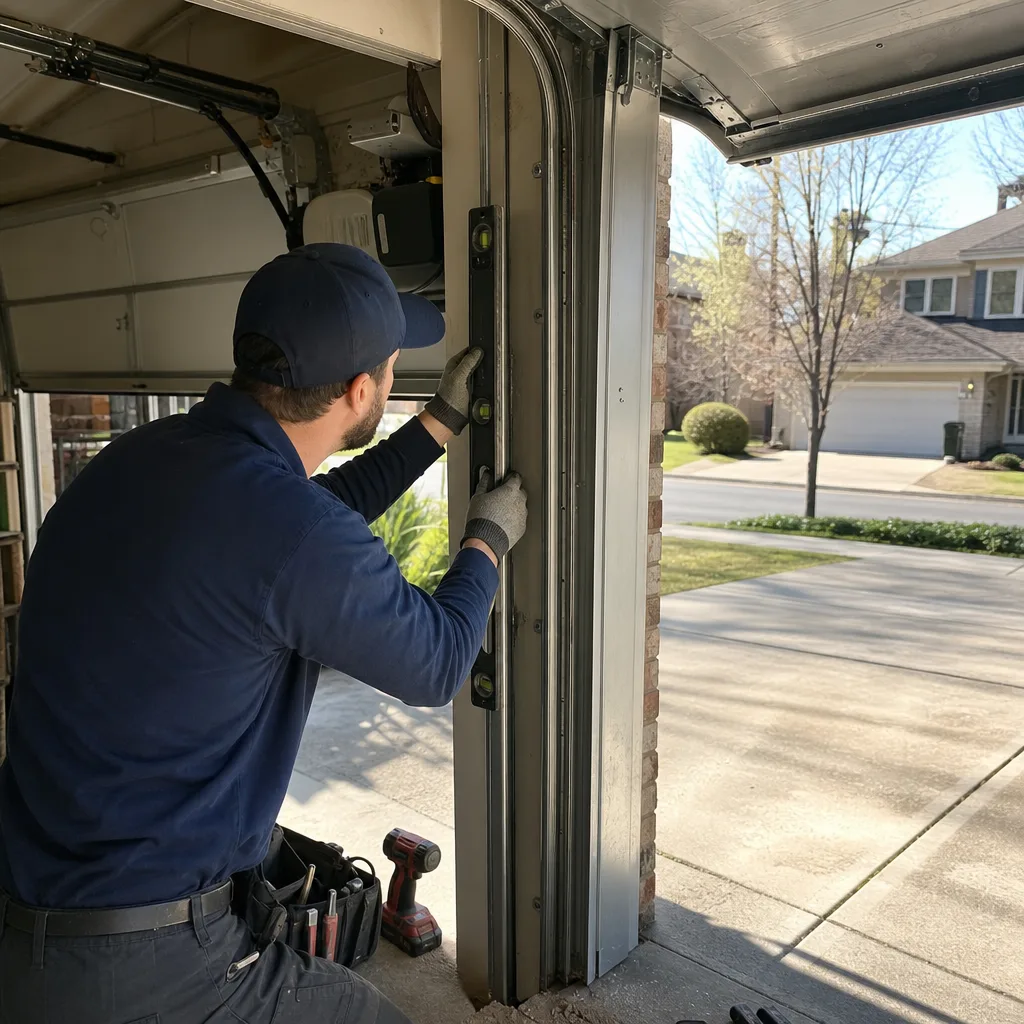
Not every warning sign is an emergency. But some are - and the difference is knowable. Here’s the two-tier classification we use when a Marietta homeowner calls in with a symptom description. It’s the same framework our technicians apply on site.
Tier 1: Monitor and schedule service within two to four weeks
- Roller wear without flat-spotting: A squeal that hasn’t become a grind. Replacement is approaching but not urgent.
- Photo eye misalignment: The door reverses occasionally, not on every cycle. Clean the lenses, check the bracket alignment, and schedule a tune-up.
- Mild balance drift: The door will stay at waist height but drifts slowly. Springs are fatiguing, not failed.
- Opener noise without resistance: A chain that’s getting louder but the door still moves smoothly. Tension may simply need adjustment.
Tier 2: Leave the door closed and call a professional immediately
- Cable fraying or rust at the drum: This is a potential violent failure. Do not operate the door. The cable assembly holds spring tension - a snap releases that energy unpredictably.
- Visible torsion spring break: A spring with a clean break at the coil will show a visible gap in the coil spacing. Two inches of gap is a failed spring, full stop.
- Door jumping or binding on the track: A door that catches on one side while moving is a derailment in progress. The track could release the rollers at any point in the cycle.
- Any loud bang during operation followed by uneven movement: That’s a spring failing immediately. The door may still open on the opener, but it’s running on one spring and the opener is now overloaded.
How to Photograph and Measure Wear Before Anyone Quotes You
The best negotiating position in any repair is documentation. This isn’t our recommendation - it’s the philosophy this company was built on. In 2015, Marcus Deller founded Servo on a single rule: the customer sees the failed part before anyone quotes a replacement. That rule is now Clause 4 of The Haven Standard, and it’s why every Servo visit includes a documented photo record of findings and completed work.
But you can do this yourself before any technician arrives. Here’s how.
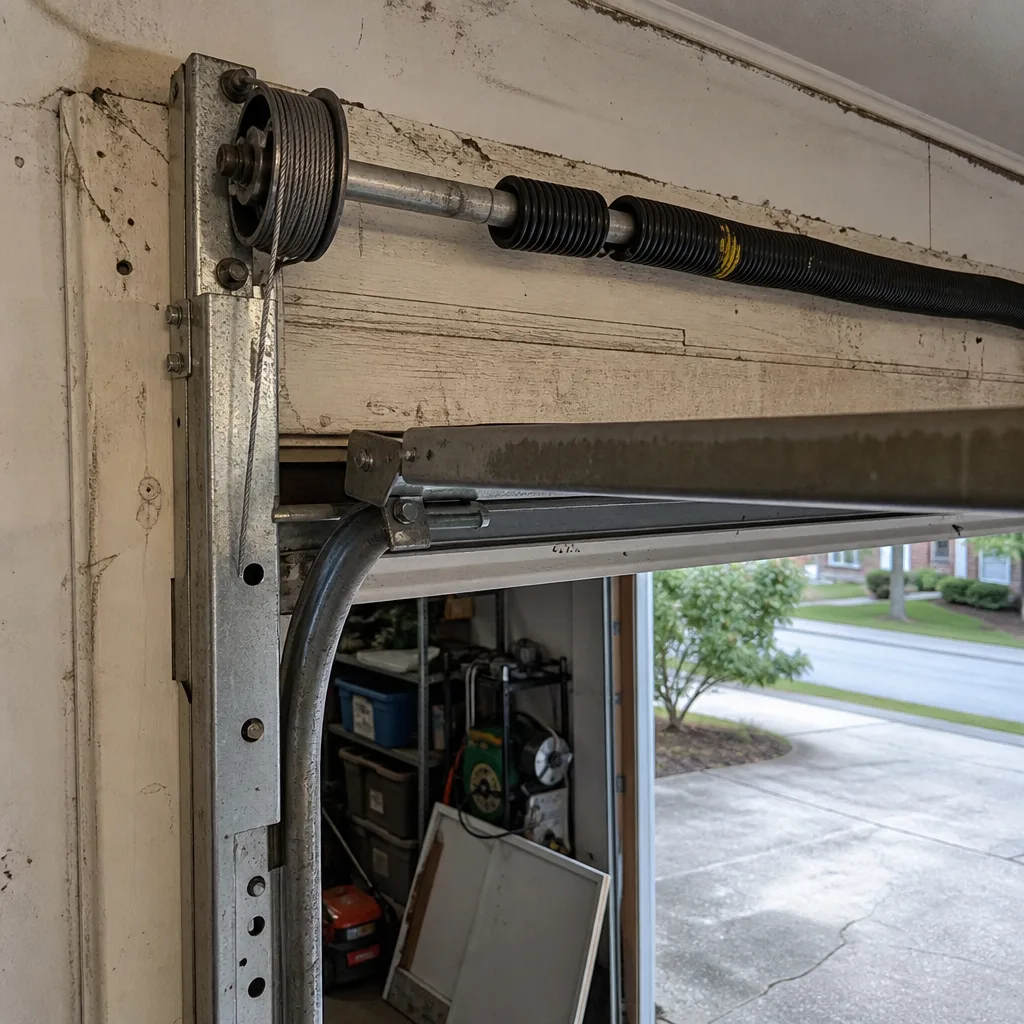
- Photograph the springs from both sides. Stand inside the garage, door closed, and take photos of the torsion spring assembly above the door. Capture the entire spring from bracket to bracket. A broken spring shows a visible gap in the coil. A fatigued spring shows uneven spacing along its length.
- Photograph each cable at the drum and at the bottom bracket. Look for frayed strands, rust, or a cable that’s wrapped irregularly around the drum. A healthy cable wraps in tight, even coils. Irregular winding means the door was forced at some point.
- Photograph the rollers - all of them. You’ll need to inspect each roller where it enters the track. Rollers wear unevenly; the bottom two on each side typically wear fastest because they carry the most load through the track curve. Look for flat spots on the wheel and lateral play in the stem.
- Measure the track gap. Use a ruler at the curve where vertical meets horizontal. A gap wider than a quarter-inch between the track and roller at any point is out of spec for residential doors.
- Record the opener’s LED code. If the opener is flashing a sequence, note the flash count and the opener brand. The code pattern is the diagnostic, not just the light.
When you have these photos and measurements, you’ve done the diagnostic groundwork. Any technician who quotes a component replacement without being able to point to the specific photo and measurement that justifies it is quoting on guesswork. We’ve found that Marietta homeowners who document first get different quotes than those who don’t - because the evidence is on the table before pricing is.
Opener LED Flash Codes as a Diagnostic Tool
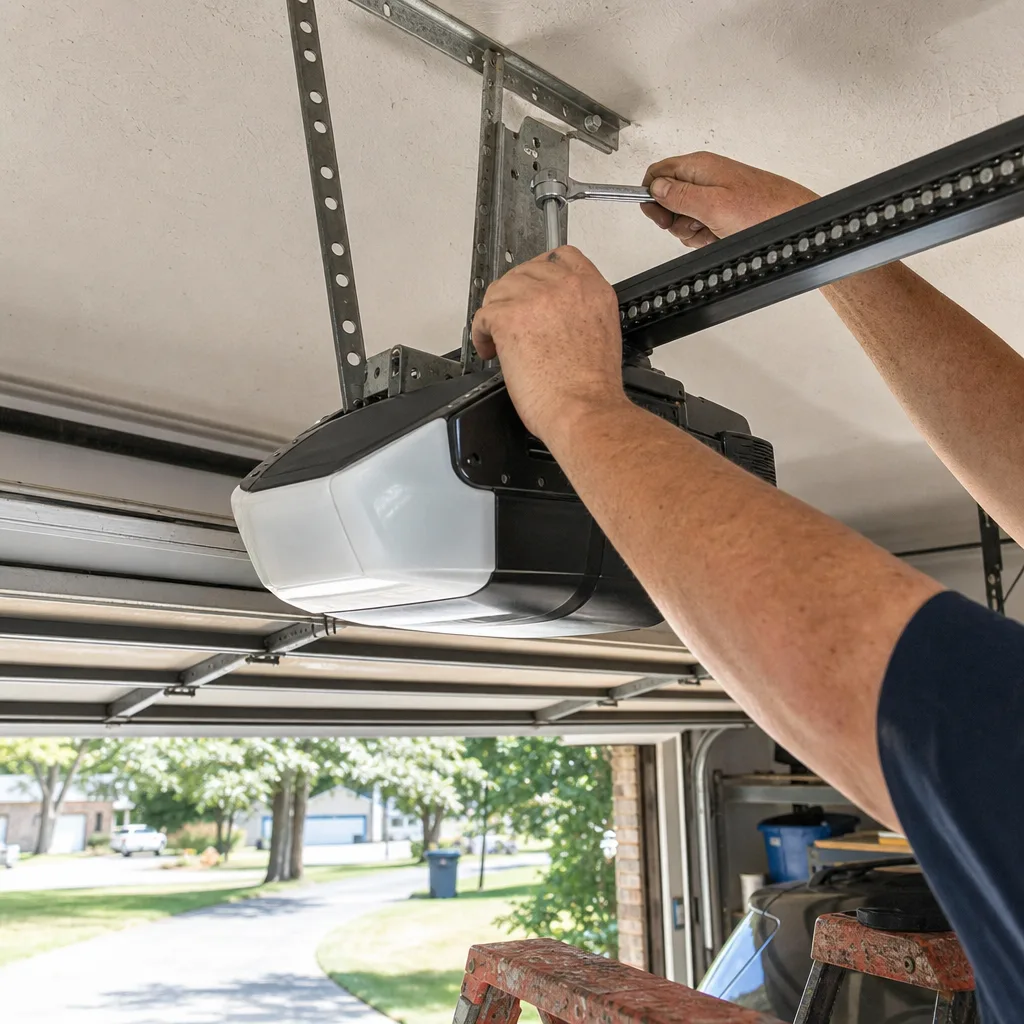
Your opener is running a self-diagnostic every time you press the button. The problem is that most homeowners never learn to read the output. Here’s how the major brands communicate fault conditions, and what the codes actually mean for the mechanical system.
LiftMaster and Chamberlain (same parent company, same code architecture)
- 1 flash: The safety sensors are misaligned or blocked. This usually points to a photo eye issue, not an electronics failure.
- 2 flashes: The door won’t close completely, or reverses before the floor. This is a force-reversal event - the opener detected resistance above its programmed threshold. The most common cause is spring tension drift.
- 4 flashes: The door is obstructed or the opener’s motor is overloaded. If no obstruction is visible, check the door’s balance - a heavy door triggers this code before the board fails.
- 5 flashes: The opener’s internal thermal protection has tripped. This means the motor is working too hard for too long - again, usually a spring or balance issue, not a board problem.
Genie
- 1 red flash, 1 green flash: The door is binding. Genie’s language for “the track or spring system is fighting the opener.”
- 2 red flashes, 2 green flashes: Safety sensor obstruction. Similar to LiftMaster’s 1-flash code.
- 3 red flashes: The opener’s force settings are exceeded. This is Genie’s version of the force-reversal event, and it points to the same root cause: spring fatigue.
Here’s the key insight most guides miss: opener flash codes are usually mechanical diagnostics in disguise. A flashing code doesn’t mean the opener board is bad - it means the opener is reporting a condition elsewhere in the system. Replacing the logic board without checking spring tension and track alignment is a $300 fix for a $150 problem. That’s why a proper opener diagnostic includes a manual door balance check and a visual inspection of the cable and spring system. The garage door repair process in Marietta should start with the mechanical system, not the electrical one.
The Chain of Escalation: What Neglect Costs in Marietta
Warning signs don’t stay warning signs. They escalate. And the cost curve is not linear - it’s compounding. Here’s what a single ignored roller wear sign becomes over time, with typical Marietta market pricing at each stage.
| Stage | Condition | Typical Cost to Repair |
|---|---|---|
| Stage 1 | Roller bearing running dry, audible squeal, no visible flat-spotting | $25-$40 per roller to replace, $50-$75 for a full set replacement |
| Stage 2 | Roller flat-spotting visible, track wear beginning | $75-$150 for full roller replacement plus minor track smoothing |
| Stage 3 | Track gap widening at the curve, roller play increasing, door binding on one side | $150-$300 for track adjustment or section replacement |
| Stage 4 | Door jumps the track, hangs by one cable, secondary damage to panels or hinges | $300-$600 for track repair, cable replacement, and panel assessment |
| Stage 5 | Repeated derailment overloads springs, spring replacement needed alongside full track and roller overhaul | $600-$900 for full mechanical system reset |
The math is straightforward: a $75 roller replacement in Stage 1 becomes a $600-plus overhaul by Stage 5. And that’s before factoring in the inconvenience of a door that won’t close (or won’t open) while you’re waiting for a service call. The same escalation applies to cable fraying - ignore it for long enough, and the cable snaps, the door drops, and the spring unwinds violently. The cheapest fix in garage door repair is always the earliest one.
How Marietta’s Climate Accelerates Component Wear
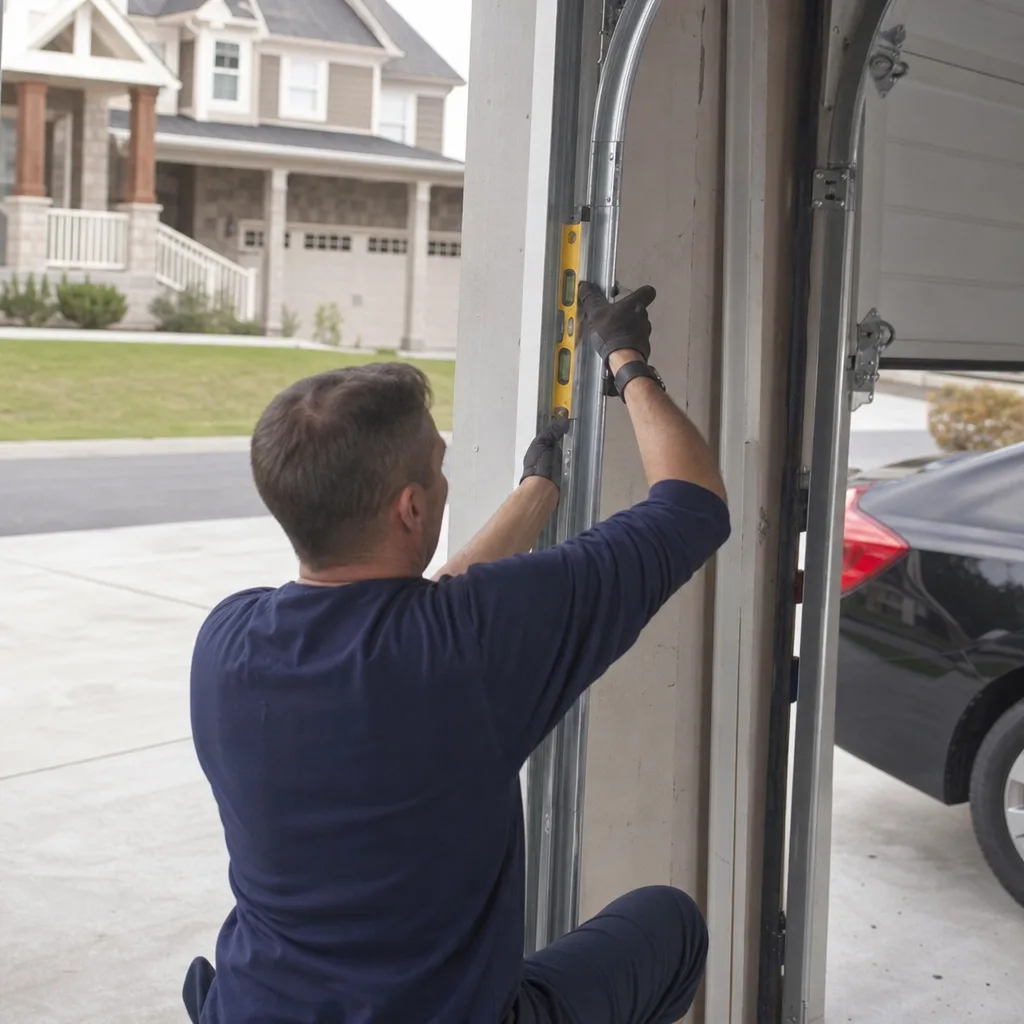
Garage doors age differently in different climates. A door in Phoenix degrades differently than one in Seattle. Marietta sits in a specific band: high summer humidity, moderate winter cold, and rapid temperature swings in spring and fall. Here’s what that means for your components.
Humidity and roller bearings
Marietta’s summer humidity ranges from 60% to 90% on any given day. Steel roller bearings lose their internal lubrication faster in high-humidity environments because the grease breaks down more quickly and the bearing races develop micro-corrosion. If your door’s rollers were installed before 2020, they’re running on degraded lubrication by now. This is the single most common wear item we see on Marietta garage doors.
Temperature swings and spring fatigue
Spring steel has a fatigue life measured in cycles, not years. But temperature accelerates the process. The rapid heating and cooling that Marietta experiences from October through April causes the spring’s internal stress patterns to shift. A spring rated for 10,000 cycles in a stable climate might only deliver 7,000 in Marietta’s swing climate. That’s not a manufacturer defect - it’s thermodynamics. It means you should expect spring replacement at the earlier end of the manufacturer’s rated range.
Rain and cable corrosion
Garage door cables sit in the weather path at the bottom brackets. Every time it rains in Marietta, water runs down the track and pools at the bottom bracket unless the garage floor has proper drainage slope. That’s where cables rust first - at the bottom bracket, not along the length. A rusted cable at the bracket is a failure waiting to happen because that’s the highest-tension point in the cable’s entire run.
What a Documented Inspection Should Confirm Before You Authorize Work
Here’s what a proper garage door inspection in Marietta should deliver - regardless of which company you call. If any of these items are missing from the report, the diagnostic was incomplete.
- Spring measurement, in writing. The technician should record the spring’s wire diameter, inside diameter, and length. A spring replacement quote without these three numbers on paper is a guess, not a quote.
- Balance test result. The door should be disengaged from the opener and manually lifted to three points: bottom, middle, and top. The behavior at each point should be recorded.
- Cable inspection result, with photos. Both cables, at both ends, photographed and assessed. If the technician can’t point to a specific photo showing the cable condition, they didn’t look.
- Roller condition for all rollers. Not “the rollers are worn” - which rollers, on which side, and with what wear pattern.
- Opener diagnostic, including LED code interpretation. The technician should read the opener’s flash codes and explain what they indicate for the mechanical system, not just the electrical one.
- A written price before any work starts. This is Clause 1 of The Haven Standard, and it’s non-negotiable. If the price is verbal, the quote is negotiable - and that’s not how this should work.
Servo Garage Doors Marietta operates under The Haven Standard, which codifies these requirements. Clause 4 - the one that requires a photo record of the failed component before a replacement is quoted - exists because 2015 taught us that a written price without a documented finding is just a number. The two belong together. When a Marietta homeowner receives a Servo quote, it includes the finding, the measurement, the photo, and the price, in that order.
Common Mistakes to Avoid
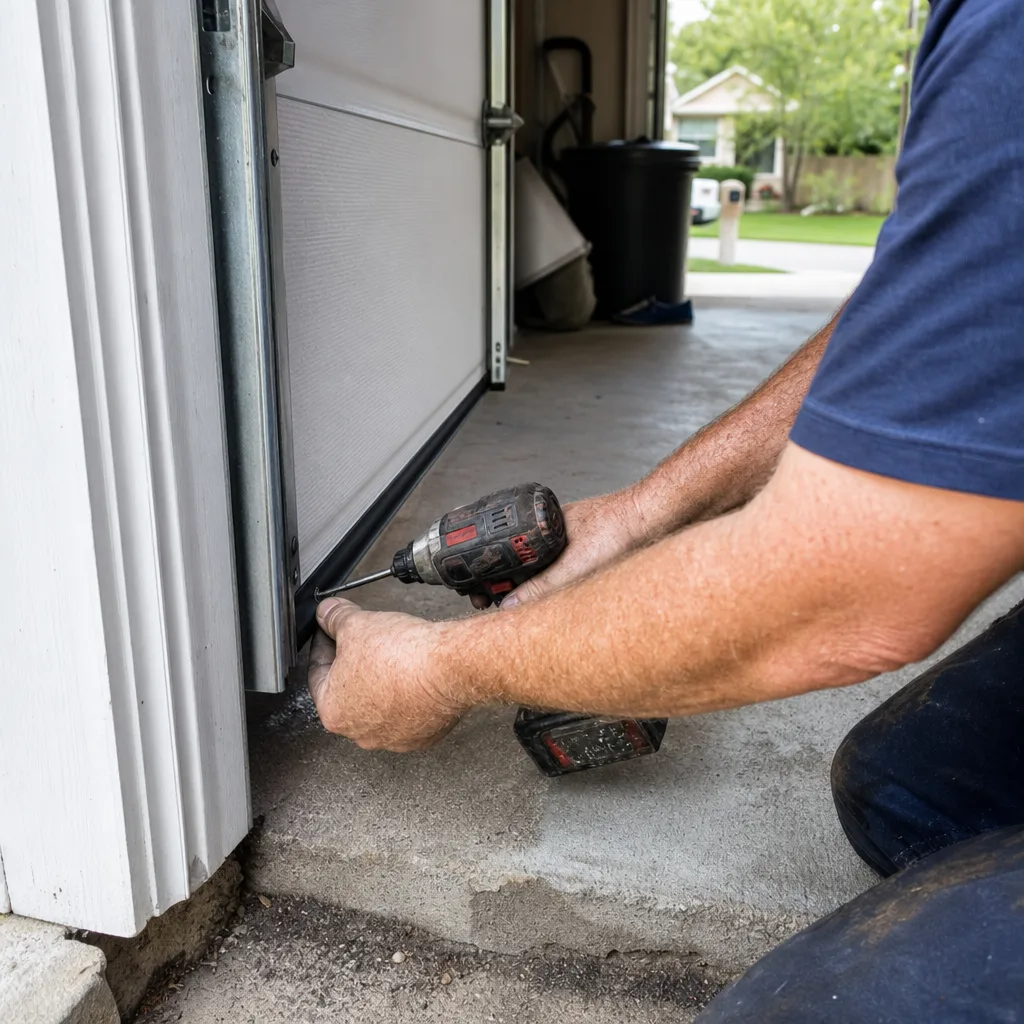
- Lubricating a noisy door without diagnosing the noise first. Spray lubricant on a worn roller bearing quiets it for about a week, then the grinding returns - and now the roller has been running dry for longer than it would have if you’d diagnosed it right away. Noise is information. Don’t mask it.
- Testing a suspect door by running it repeatedly. If the door is binding or reversing, each additional cycle puts more load on the components that are already failing. One final test can turn a $75 roller replacement into a $500 track repair. When a door misbehaves, operate it as little as possible until a professional has looked at it.
- Ignoring opener flash codes because “the door still works.” The opener is reporting a fault condition while the system still has enough reserve to operate. That reserve runs out. The code is your earliest warning - read it and record it.
- Replacing the opener when the problem is spring tension. A new opener on a poorly balanced door will work briefly, then develop the same force-reversal symptoms as the old one. The springs are the foundation; the opener is the operator. Fix the foundation first.
- Accepting a verbal quote and letting the technician start work immediately. A verbal price is a suggestion, not a commitment. A written price and written scope - the way it’s done under Clause 1 of The Haven Standard - is the only thing that protects you from surprise line items at the end of the job.
- Deferring roller and cable replacement because “the door still opens.” The door opens until the day it doesn’t. And that day is usually the one where you’re late for work and the door is hanging by one cable. Early replacement is always cheaper than reactive repair.
- Not photographing the door’s current condition before a service visit. Documentation is yours to create. Five minutes of photos gives you a baseline and makes every quote you receive accountable to evidence.
When to Call a Professional
Call a professional when a cable shows fraying or rust at the drum, when a torsion spring has a visible break, when the door has jumped or is binding on the track, or when the opener flashes a force-reversal code that won’t clear. These are not DIY situations - a garage door under spring tension stores enough energy to cause serious injury if a cable or spring fails during handling. Servo Garage Doors Marietta offers free estimates throughout Marietta and the surrounding area. We don’t charge for an inspection, and every quote is delivered as a flat, written price with a written scope before any work starts. Call (470) 486-7771 and a real person will answer - not a recording, not a callback window.
Frequently Asked Questions
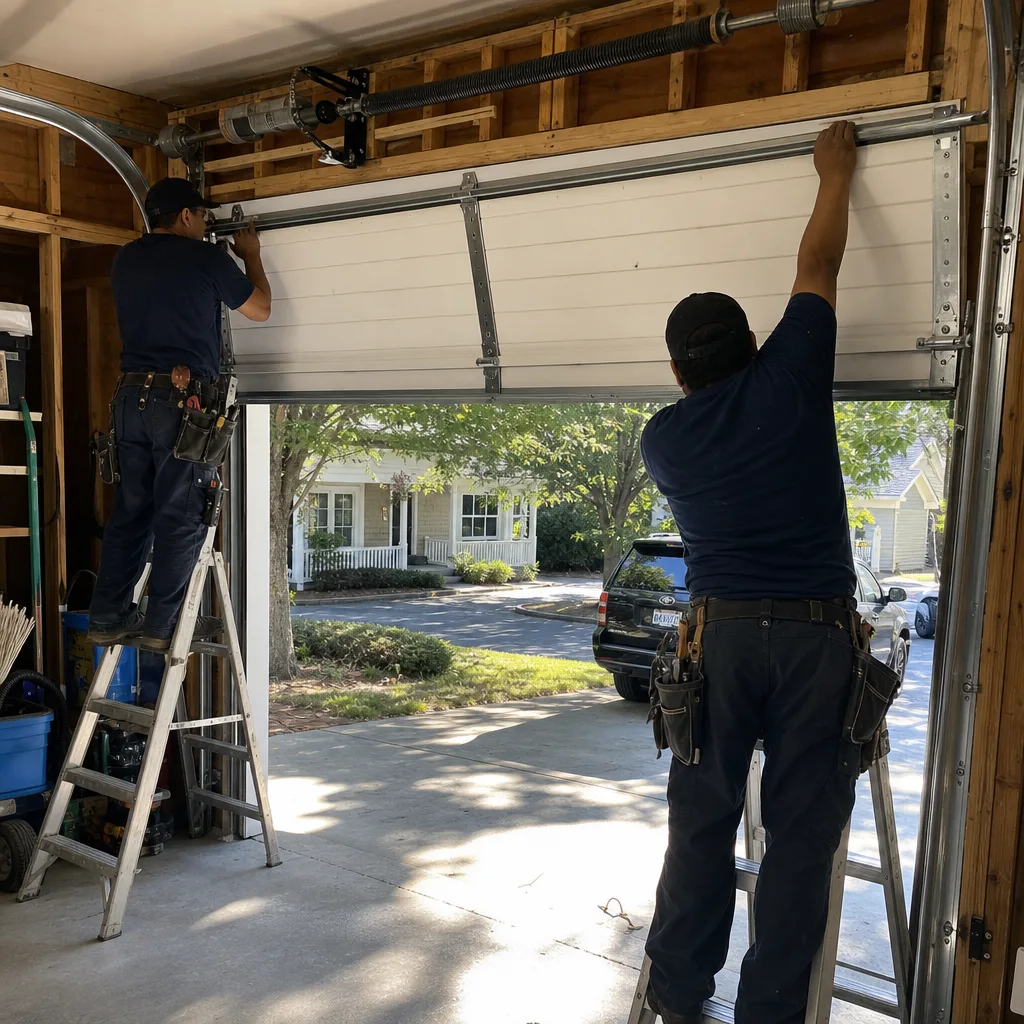
Roller bearing wear caused by humidity-driven lubrication breakdown is the single most common issue we see in Marietta, followed closely by spring fatigue from the region’s temperature swings. Both are predictable and both are cheap to fix early. Call (470) 486-7771 for a free inspection and we’ll document exactly which components are wearing before quoting anything.
Springs need replacement when they show a visible break, when their coil spacing is uneven along the length, or when the door fails a balance test at multiple points despite adjustment. A technician who measures the spring’s wire diameter, inside diameter, and length can tell you definitively. We provide those measurements in writing with every quote.
No. Cables carry spring tension, and a cable under tension releases its energy violently if released incorrectly. This is a job for a trained professional with the proper tools and experience. Servo technicians are background-checked and uniformed, and every cable replacement is documented with before-and-after photos so you can see exactly what was found and what was done.
A proper tune-up includes spring measurement and balance testing, cable inspection at both ends, roller inspection on all positions, track alignment verification, opener diagnostic with LED code reading, and lubrication of all moving parts. If any item on that list is missing from your tune-up, the service was incomplete. Servo includes every one of them on every visit.
Repair costs in Marietta range from $75 to $900 depending on the component and the severity. Roller replacements sit at the low end, full mechanical system resets at the high end. Every Servo quote includes a flat, written price before work starts - no ranges on the invoice, no surprises. A free second opinion is available on any written estimate from another company.
It will work for a while - and that’s the problem. The opener will lift the door on one spring until its motor or logic board fails from the overload. If you suspect a broken spring, disengage the opener and leave the door closed until a professional has inspected it. Operating the door on a broken spring turns a $200 spring replacement into a $500 spring-and-opener job.
The Bottom Line
Garage door warning signs are the mechanical system’s equivalent of an engine light - they tell you something specific if you know how to read them, and they get more expensive the longer you ignore them. The nine signs in this guide each point to a named component. The severity tiers tell you what’s urgent and what can wait. The escalation chain shows you the cost of waiting. And the documentation framework - photograph the wear, record the measurement, demand the written price - is yours to use with any company you call. We built Servo Garage Doors Marietta on the principle that evidence beats persuasion. That’s what The Haven Standard is: a written commitment to documentation before pricing, on every job, since 2015. If you’re in Marietta and your door is talking to you, call (470) 486-7771 for a free estimate, or explore more guides & resources. We’ll listen to what it’s saying, show you the proof, and give you a flat, written price before anyone touches anything.
Written by Marcus Deller, Owner at Servo Garage Doors Marietta, serving Marietta since 2015.